5070 Ti, 5080 or 9070 XT: Which Wins?
The questionWhere do these come from?
Cheapest 5070 ti or 5080?
5070 ti - 900€ Asus Prime model 5080 - 1200-300€ Palit GamingPro OC model CPU: 5700X3D Current GPU: 3060 ti PSU: Corsair RMX-Shift 850W ATX 3.
Choose the RTX 5070 Ti for balanced 1440p longevity, the RTX 5080 for maximum headroom, or the RX 9070 XT for raster-first gaming.
The RTX 5070 Ti is the best default for five years of 1440p high-refresh gaming. Choose the RTX 5080 if maximum performance matters more than power consumption, especially for future 4K gaming; choose the RX 9070 XT if you primarily play rasterized games and do not prioritize NVIDIA’s ray-tracing, DLSS, CUDA, or creator ecosystem.
| Specification | RTX 5070 Ti | RTX 5080 | RX 9070 XT |
|---|---|---|---|
| Memory | 16GB GDDR7 | 16GB GDDR7 | 16GB GDDR6 |
| Memory interface | 256-bit | 256-bit | 256-bit |
| Reference board power | 300W | 360W | 304W |
| Recommended system PSU | 750W | 850W | 750W |
| Reference power connection | 300W PCIe Gen 5 cable or 2× 8-pin adapter | 450W PCIe Gen 5 cable or 3× 8-pin adapter | 2× 8-pin |
These are manufacturer reference specifications. NVIDIA lists the figures on its RTX 5070 Ti specification page and RTX 5080 specification page; AMD supplies the corresponding figures for the Radeon RX 9070 XT. Factory-overclocked partner cards can have different power limits, dimensions, and connector arrangements.
The five-year 1440p pick is the RTX 5070 Ti
Choose the RTX 5070 Ti. It already occupies the right performance class for high-refresh 1440p, has 16GB of VRAM, and supports DLSS Super Resolution, Ray Reconstruction, Frame Generation, and Multi Frame Generation. It also retains NVIDIA-specific advantages in CUDA applications, NVIDIA Broadcast, Studio drivers, and software that uses NVENC.
The RX 9070 XT is extremely close in current games. TechSpot’s updated 52-game RTX 5070 Ti and RX 9070 XT comparison found them effectively tied at 1440p overall. The result moved significantly from game to game: Radeon led in some rasterized titles and several console-derived games, while the GeForce card performed better in other engines and demanding ray-tracing workloads.
That makes the RTX 5070 Ti the broader default rather than an automatic winner in every game. If your regular rotation consists of Call of Duty, Starfield, PlayStation ports, or other titles that favor Radeon, check benchmarks for those exact games before selecting the GeForce card.
No current GPU can guarantee five years of maximum settings. New rendering features may eventually require reducing shadows, volumetrics, ray tracing, or texture quality. The useful longevity point is that none of these three begins with a VRAM-capacity advantage: all have 16GB. The RTX 5080 provides more processing headroom, but it does not raise that memory ceiling.
Ray tracing puts the RTX 5080 first
Choose the RTX 5080 for the strongest result, or the RTX 5070 Ti if the system is staying at 1440p. NVIDIA is the safer platform when games such as Cyberpunk 2077, Alan Wake 2, Indiana Jones and the Great Circle, or other path-traced releases define the purchase.
Tom’s Hardware’s current GPU hierarchy and ray-tracing comparison places the RTX 5080 ahead of the RTX 5070 Ti and shows the RTX 5070 Ti holding a substantial advantage over the RX 9070 XT in its demanding ray-tracing suite. The RX 9070 XT can still perform well with moderate ray tracing, and individual games occasionally favor it, but it is not the most consistent choice for heavy RT or path tracing.
DLSS and frame generation should not be treated as substitutes for adequate native performance. They work best when the GPU already produces a responsive base frame rate. Multi Frame Generation can make motion look smoother, but generated frames do not eliminate the input latency associated with a low base rate.
Just want the recommendation?
Skip to the picksRasterized games favor the RX 9070 XT
Choose the RX 9070 XT when ray tracing, CUDA, and NVIDIA-specific creator tools are unimportant. Its 16GB memory capacity and 256-bit interface match the other cards on the two specifications most likely to affect texture-heavy 1440p gaming.
The Radeon is not categorically faster than the RTX 5070 Ti. The two trade places depending on the engine, preset, and resolution. TechSpot’s broad comparison found Radeon particularly capable with ray tracing disabled, while the aggregate result remained effectively tied. That distinction matters: an overall average can conceal a large advantage for either card in one specific game.
AMD lists FSR, Radeon Super Resolution, Fluid Motion Frames, Anti-Lag, and AV1 encoding among the RX 9070 XT’s supported features. Its reference design also uses two conventional 8-pin power connectors, although partner manufacturers may change the board layout or power target.
Choose the RTX 5080 for 4K or high refresh
Choose the RTX 5080 if a move to 4K is already planned or if the goal is to preserve maximum-quality settings for as long as possible. Its advantage is additional rendering performance, not extra VRAM. It is the fastest of these three cards and therefore has the most room to absorb demanding future effects before settings must be reduced.
At 1440p, that headroom will not always appear as a proportional frame-rate increase. Competitive games can become limited by the processor, game engine, or built-in frame-rate cap. A faster GPU cannot remove those limits. For a system targeting very high refresh rates, pair the decision with CPU benchmarks from the exact games you play.
The RTX 5080’s trade-offs are concrete: NVIDIA specifies 360W total graphics power, an 850W system-power recommendation, and a 450W-or-greater PCIe Gen 5 GPU cable or the supplied multi-cable adapter. Its Founders Edition also requires careful case and power-cable clearance. A weak or aging power supply should be replaced rather than stretched beyond its documented connector and output limits.
What to check before ordering
First, verify the exact partner-card model rather than relying only on the GPU name. NVIDIA does not sell a 5070 Ti Founders Edition, so its length, thickness, cooler, power limit, and connector position are determined by ASUS, MSI, Gigabyte, Zotac, PNY, and other board manufacturers.
Second, confirm all three physical constraints: card length, slot thickness, and space for the power cable to exit without being sharply forced against the side panel. Then check that the PSU has the connector arrangement required by that exact card. Follow the PSU and graphics-card manuals when using a native 16-pin cable or the supplied adapter.
Finally, choose according to the actual workload:
- RTX 5070 Ti: the balanced recommendation for 1440p, mixed rasterization and ray tracing, streaming, and creator applications.
- RTX 5080: the performance-first choice for 4K, heavy ray tracing, or maximum long-term rendering headroom.
- RX 9070 XT: the raster-first alternative for gaming workloads that do not require NVIDIA-specific software.
For a five-year 1440p build, the RTX 5070 Ti is sufficient without pretending it will hold maximum settings forever. The RTX 5080 is justified by a concrete 4K or heavy-ray-tracing plan, while the RX 9070 XT makes the most sense when your own game list consistently favors Radeon.
The bottom line
Both are defensible — the split is what you do with it:
Top pick
Buy this
ASUS ROG Strix NVIDIA GeForce RTX 5070 Ti 16GB GDDR7 OC Edition Gaming Graphics Card, (PCIe 5.0, HDMI/DP 2.1, 3.2-Slot, MaxContact Design, Phase-Change GPU Thermal Pad), 3 Year Warranty
ASUS
The RTX 5070 Ti is the article’s default for five-year 1440p gaming, combining 16GB of VRAM with DLSS and NVIDIA-specific creator support.
A specific 2.5-slot RTX 5070 Ti suited to the balanced 1440p recommendation. Its 304mm length and 16-pin power connector still require careful case and cable-clearance checks.Available at Amazon(paid link) — opens Amazon in a new tab. Price and availability shown there.The alternative
It depends
NVIDIA GeForce RTX 5080 Founders Edition
NVIDIA
The RTX 5080 is justified for planned 4K gaming or heavy ray tracing, but requires 360W board power and a recommended 850W system PSU without increasing VRAM beyond 16GB.
The performance-first option for future 4K gaming and demanding ray tracing. Its drawbacks are higher board power, an 850W system recommendation, and stricter power-cable clearance.Available at Amazon(paid link) — opens Amazon in a new tab. Price and availability shown there.
Recommended products
Ordered by how well each one fits the situations above. Each link below is a paid link.
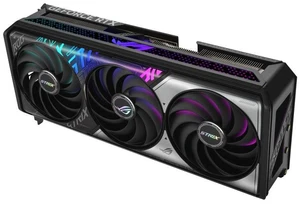
ASUS ROG Strix NVIDIA GeForce RTX 5070 Ti 16GB GDDR7 OC Edition Gaming Graphics Card, (PCIe 5.0, HDMI/DP 2.1, 3.2-Slot, MaxContact Design, Phase-Change GPU Thermal Pad), 3 Year Warranty
ASUS
Buy — The RTX 5070 Ti is the article’s default for five-year 1440p gaming, combining 16GB of VRAM with DLSS and NVIDIA-specific creator support.
A specific 2.5-slot RTX 5070 Ti suited to the balanced 1440p recommendation. Its 304mm length and 16-pin power connector still require careful case and cable-clearance checks.Available at Amazon(paid link) — opens Amazon in a new tab. Price and availability shown there.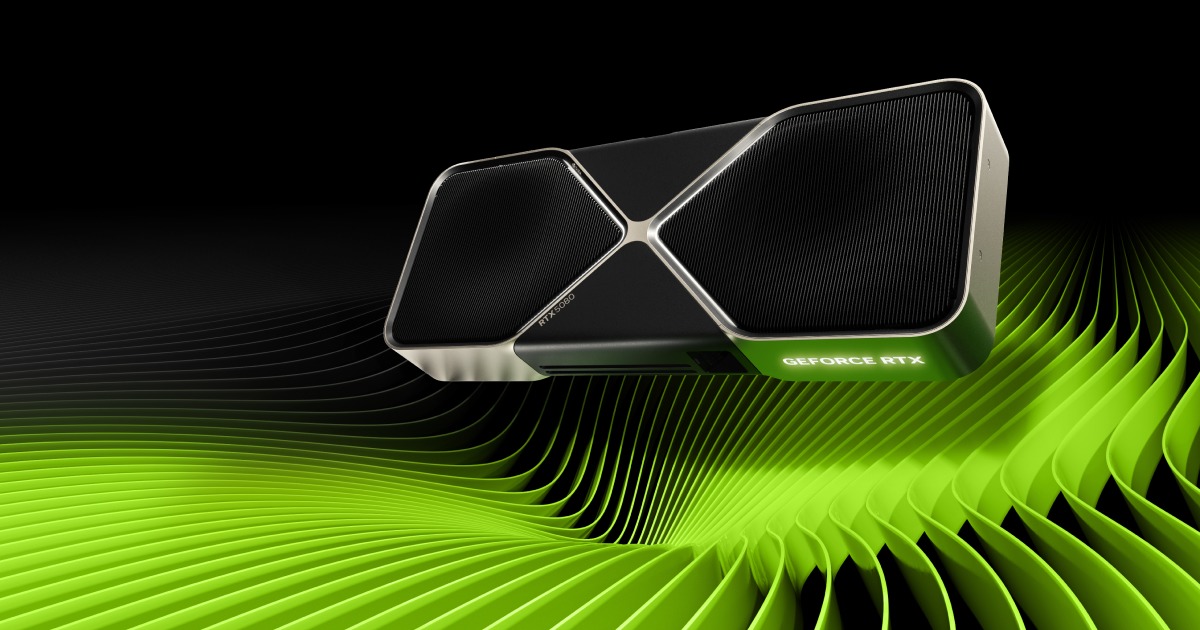
NVIDIA GeForce RTX 5080 Founders Edition
NVIDIA
It depends — The RTX 5080 is justified for planned 4K gaming or heavy ray tracing, but requires 360W board power and a recommended 850W system PSU without increasing VRAM beyond 16GB.
The performance-first option for future 4K gaming and demanding ray tracing. Its drawbacks are higher board power, an 850W system recommendation, and stricter power-cable clearance.Available at Amazon(paid link) — opens Amazon in a new tab. Price and availability shown there.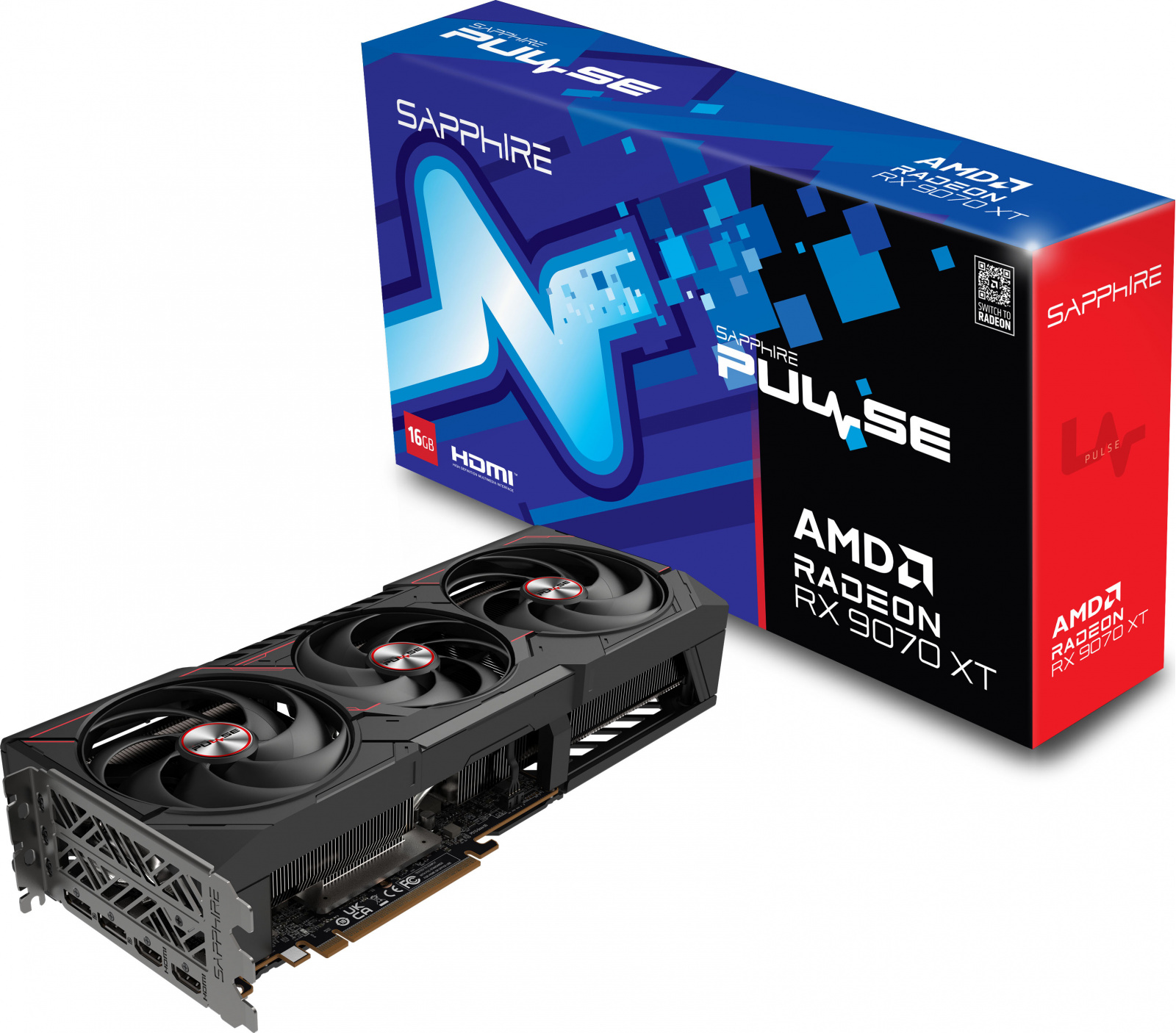
Sapphire 11348-03-20G Pulse AMD Radeon™ RX 9070 XT Gaming Graphics Card with 16GB GDDR6, AMD RDNA 4
Sapphire
It depends — The RX 9070 XT suits raster-focused gaming when NVIDIA-specific software is unnecessary, but is less consistent in heavy ray tracing and lacks the CUDA ecosystem.
A restrained RX 9070 XT model for raster-focused gaming with conventional 8-pin power connections. The trade-off is weaker consistency in heavy ray tracing and no CUDA ecosystem.Available at Amazon(paid link) — opens Amazon in a new tab. Price and availability shown there.
Sources
Pages consulted while researching this article. None of these are affiliate links.
- GeForce RTX 5070 Family Graphics Cards | NVIDIA — nvidia.com
- GeForce RTX 5080 Graphics Cards | NVIDIA — nvidia.com
- Radeon RX 9070 XT | AMD — amd.com
- Nvidia RTX 5070 Ti vs AMD Radeon 9070 XT: 52 Game Benchmark — techspot.com
- GPU Benchmarks Hierarchy 2026 | Tom's Hardware — tomshardware.com