GT 1030 Low-Profile 2GB: Best Fit for an OptiPlex 9020 SFF
The questionWhere do these come from?
Looking for advice
I recently acquired a Optiplex 9020 SFF, I currently have an R7 240 in it, wondering what the best graphics card I could possibly fit in there, ideally one without needing an additional power supply.
The GT 1030 2GB GDDR5 low-profile card draws all 30W from the PCIe slot, so it needs no 6-pin power connector the OptiPlex 9020 SFF's 255W PSU lacks.
A GT 1030 2GB GDDR5 low-profile card is the correct fit here: its entire 30W board power draws from the PCIe slot, so it needs none of the 6-pin or 8-pin connectors the OptiPlex 9020 SFF’s stock power supply doesn’t have in the first place. That single fact — no auxiliary power pin, full stop — is what rules almost everything else out before performance even enters the conversation.
Why the stock power supply rules out almost everything else
The OptiPlex 9020 SFF ships with a 255W power supply built to Dell’s own connector layout, not a standard ATX pinout, and it carries no spare 6-pin or 8-pin PCIe power lead for a graphics card. Dell’s own specifications for the SFF chassis confirm the 255W rating, and the machine’s single x16 expansion slot is limited to whatever the PCIe bus itself can deliver — up to 75W by spec. Anything that needs more than that has to pull power from somewhere the case doesn’t provide, which is why the usual workaround is a SATA-to-PCIe power adapter tapped off the drive cabling. That adapter is the “adding a PSU” problem in miniature: it works electrically, but it loads a rail the OEM supply wasn’t sized for, and it’s the first thing to blame when a 9020 starts rebooting under GPU load. A card that draws everything it needs from the slot avoids that risk entirely, and the GT 1030 is built around exactly that constraint: NVIDIA’s own reference design gives it a 30W board power rating and no power connector pad on the PCB at all.
The expansion slots, and why only low-profile cards fit
The SFF board carries two card slots: a primary PCIe x16 slot wired for the full sixteen lanes, and a second x16-length slot wired electrically for far fewer lanes. Both openings are cut for low-profile brackets only — the chassis is too short for a full-height bracket to line up with the rear I/O panel, which is the space constraint every OptiPlex 9020 SFF upgrade guide flags. That’s a second filter independent of power: a card needs a low-profile bracket in the box (or a separate LP bracket sold for it) before wattage is even relevant. GT 1030 cards are sold almost exclusively as low-profile-first products, short enough (under six inches on most boards) to clear the chassis without touching the drive cage.
GT 1030 GDDR5 versus the DDR4 card sold under the same name
Not every card badged “GT 1030 2GB” is the same silicon-and-memory pairing. NVIDIA’s reference GT 1030 uses 2GB of GDDR5 on a 64-bit bus; several board partners — MSI, Gigabyte, and Palit among them — also sell a GT 1030 with 2GB of plain DDR4 instead, clocked far lower on the same bus width. GamersNexus benchmarked the DDR4 card directly against the GDDR5 version and found the memory swap cost a consistent, substantial performance penalty across every game tested, enough that the outlet called the DDR4 card one of the worst graphics cards it had reviewed. The listing title is often the only clue: check for “GDDR5” specifically, not just “2GB,” before buying.
Just want the recommendation?
Skip to the picks| Card | Board power | Extra power connector | Memory | Verdict |
|---|---|---|---|---|
| GT 1030 2GB GDDR5 LP | 30W | None — slot only | 2GB GDDR5, 64-bit | Buy |
| GT 1030 2GB DDR4 LP (same name) | ~20W | None — slot only | 2GB DDR4, 64-bit, far less bandwidth | Skip |
| Radeon RX 6400 LP | 53W | None on most reference/AIB cards | 4GB GDDR6, 64-bit, x4 lanes only | Consider |
| GTX 1650 LP (GDDR5) | 75W | Added on most LP boards | 4GB GDDR5, 128-bit | Consider |
| NVIDIA T400 LP | 30W | None — slot only | 2GB or 4GB GDDR6, 64-bit | Consider |
Where the Radeon RX 6400 pulls ahead — and its one catch
AMD’s Radeon RX 6400 is a legitimate step up: 768 stream processors and 4GB of GDDR6 against the GT 1030’s 384 CUDA cores and 2GB of GDDR5, on newer RDNA2 silicon. It’s also designed around the same constraint — AMD rated it at 53W and most reference and board-partner cards, including ASRock’s Challenger ITX, ship with zero power connectors, running entirely off the slot. The catch is that the Navi 24 chip inside it only wires up four PCIe lanes regardless of the physical slot it sits in, which matters less on this board than it would elsewhere but still caps its ceiling on an older PCIe 3.0 platform. The bigger practical risk is that “no power connector” isn’t guaranteed the way it is on the GT 1030 — check the specific listing, because a handful of RX 6400 SKUs do add a 6-pin for extra headroom.
Is the GTX 1650 worth chasing anyway?
NVIDIA’s reference GTX 1650 design is rated at 75W and can technically run off slot power alone, and TechPowerUp has documented specific boards, like the Palit StormX, that do exactly that. But 75W is close enough to the PCIe slot’s ceiling that most board partners hedge by adding a 6-pin connector on their low-profile cards anyway, even when the reference spec doesn’t require one. Unless the listing explicitly states no external connector, assume it needs one — and if it does, it’s off the table without a PSU change, which is the requirement being avoided here.
If the goal is multiple displays for work, not gaming
The NVIDIA T400 is worth naming separately because it solves a different problem: it matches the GT 1030’s 30W, connector-free power draw but trades gaming performance for three mini-DisplayPort outputs off a single low-profile card, aimed at CAD and productivity multi-monitor setups rather than frame rates. It costs more than a GT 1030 for weaker 3D performance, so it only makes sense if the extra display outputs are the actual goal.
For a similar power-budget tradeoff in a different SFF chassis, see RTX 3050 Low Profile in a 3070 SFF: Skip It?
The actual verdict
Buy the GT 1030 2GB GDDR5 low-profile card if the priority is a guaranteed fit with zero power-connector risk. Skip any card in the same family badged with DDR4 instead of GDDR5 — it’s a real, separately sold product, and it’s measurably slower. Consider the RX 6400 only after confirming the exact SKU ships without a 6-pin connector, since that isn’t universal the way it is on the GT 1030.
The bottom line
Two that fit, depending on the model you have:
Top pick
Buy this
ASUS GeForce GT 1030 2GB GDDR5 Low Profile Graphics Card
ASUS
Its 30W board power draws entirely from the PCIe slot's 75W budget, so it needs none of the 6-pin or 8-pin connectors the OptiPlex 9020 SFF's 255W stock PSU doesn't provide.
This is the card the question is about, and it’s the safe answer: its 30W reference board power draws entirely from the PCIe slot, with no power-connector pad on the PCB at all. Confirm the listing says GDDR5, not DDR4 — both are sold under the same ‘2GB’ name.Available at Amazon(paid link) — opens Amazon in a new tab. Price and availability shown there.The alternative
It depends
PowerColor Radeon RX 6400 ITX Low Profile 4GB
PowerColor
AMD's reference 53W design needs no external power, but a handful of RX 6400 SKUs still add a 6-pin, so the connector-free guarantee has to be checked per listing rather than assumed.
A genuine rival: 768 stream processors and 4GB of GDDR6 against the GT 1030’s 384 cores and 2GB, and most reference-spec cards also skip the power connector entirely. The gap is that this isn’t guaranteed across every board partner the way it is on the GT 1030.Available at Amazon(paid link) — opens Amazon in a new tab. Price and availability shown there.
Recommended products
Ordered by how well each one fits the situations above. Each link below is a paid link.
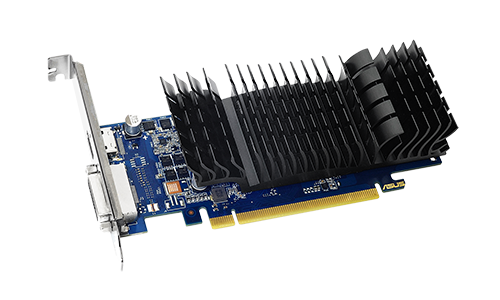
ASUS GeForce GT 1030 2GB GDDR5 Low Profile Graphics Card
ASUS
Buy — Its 30W board power draws entirely from the PCIe slot's 75W budget, so it needs none of the 6-pin or 8-pin connectors the OptiPlex 9020 SFF's 255W stock PSU doesn't provide.
This is the card the question is about, and it’s the safe answer: its 30W reference board power draws entirely from the PCIe slot, with no power-connector pad on the PCB at all. Confirm the listing says GDDR5, not DDR4 — both are sold under the same ‘2GB’ name.Available at Amazon(paid link) — opens Amazon in a new tab. Price and availability shown there.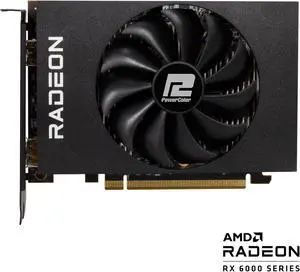
PowerColor Radeon RX 6400 ITX Low Profile 4GB
PowerColor
It depends — AMD's reference 53W design needs no external power, but a handful of RX 6400 SKUs still add a 6-pin, so the connector-free guarantee has to be checked per listing rather than assumed.
A genuine rival: 768 stream processors and 4GB of GDDR6 against the GT 1030’s 384 cores and 2GB, and most reference-spec cards also skip the power connector entirely. The gap is that this isn’t guaranteed across every board partner the way it is on the GT 1030.Available at Amazon(paid link) — opens Amazon in a new tab. Price and availability shown there.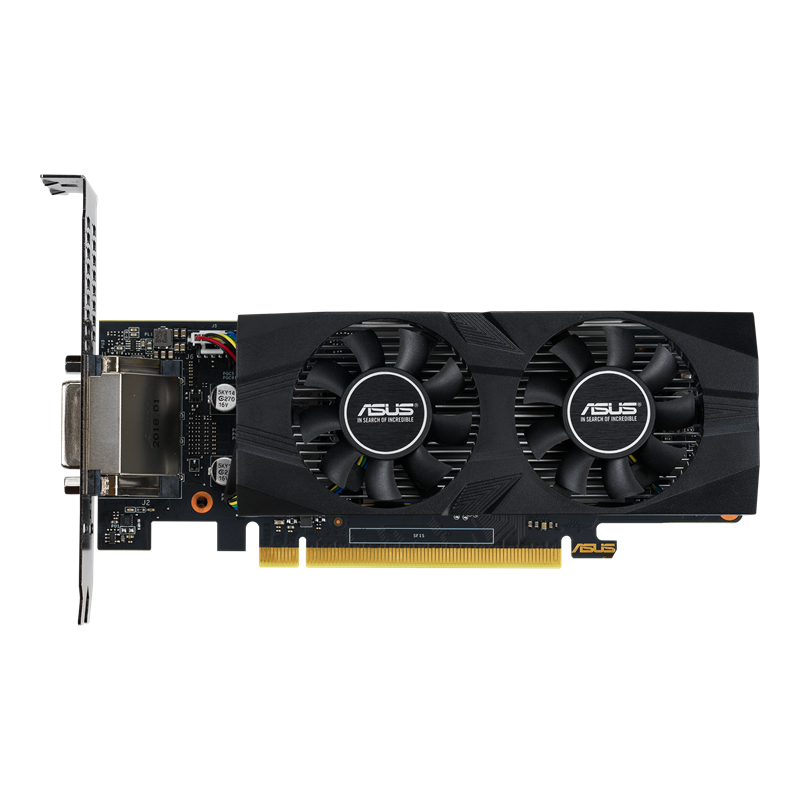
ASUS GeForce GTX 1650 Low Profile 4GB GDDR5
ASUS
It depends — TechPowerUp has documented specific slot-only SKUs like the Palit StormX, but most other GTX 1650 low-profile boards add a 6-pin connector this machine has nowhere to plug in.
Faster again than either Nvidia or AMD’s lower cards above, and NVIDIA’s 75W reference design can technically run off slot power alone — but most low-profile board-partner cards add a 6-pin anyway for stability margin at that wattage.Available at Amazon(paid link) — opens Amazon in a new tab. Price and availability shown there.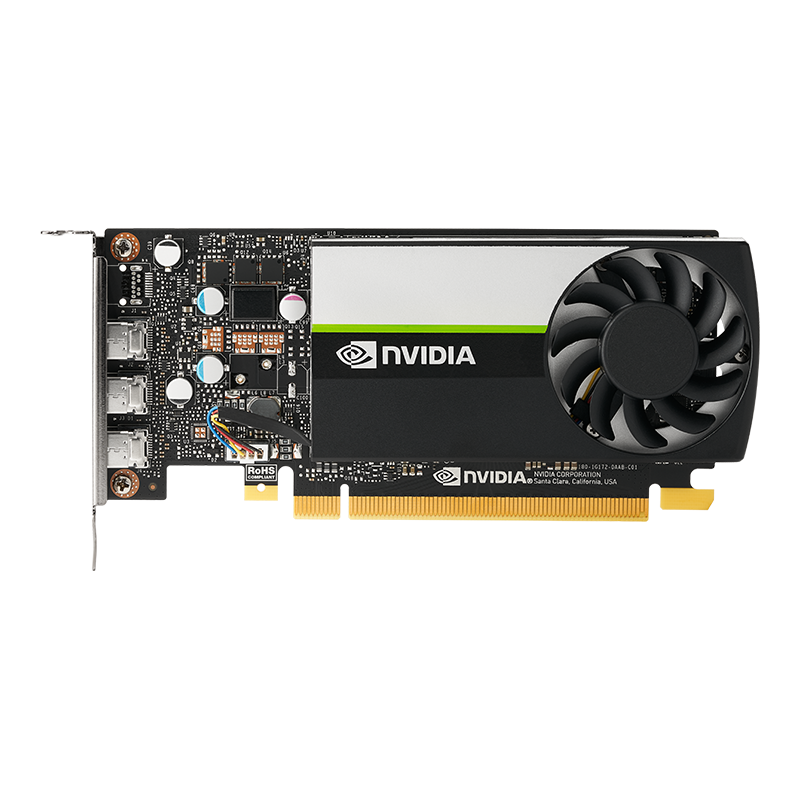
PNY NVIDIA T400 2GB Low Profile Graphics Card
PNY NVIDIA
It depends — It shares the GT 1030's zero-power-connector profile but costs more for weaker 3D gaming performance, so it only wins when extra display outputs matter more than frame rate.
Not a gaming alternative but a genuine complement for a different goal: it matches the GT 1030’s connector-free 30W power draw while adding triple mini-DisplayPort outputs for CAD or multi-monitor productivity work.Available at Amazon(paid link) — opens Amazon in a new tab. Price and availability shown there.
Sources
Pages consulted while researching this article. None of these are affiliate links.
- Dell OptiPlex 9020 Small Form Factor Owner's Manual – Specifications — dell.com
- Dell OptiPlex 9020 SFF – Specs and Upgrade Options — hardware-corner.net
- NVIDIA GeForce GT 1030 Specifications Revealed — techpowerup.com
- NVIDIA GeForce GT 1030 Shipping with DDR4 Instead of GDDR5 — techpowerup.com
- GT 1030 DDR4 vs. GDDR5 Benchmark: A Disgrace of a Graphics Card — gamersnexus.net
- AMD Launches Radeon RX 6400 Low-Power RDNA2 Graphics Card — videocardz.com
- ASRock Preps Tiny Radeon RX 6400 With Zero Power Connectors — tomshardware.com
- ASRock Radeon RX 6400 Challenger ITX: SFF Card With No Power Connector — tweaktown.com