RTX 3050 Low Profile in a 3070 SFF: Skip It?
The question
rtx 3050 low profile the user wants to know whether an rtx 3050 low-profile is safe and reliable in an optiple
Skip the 70W RTX 3050 low-profile for a stock OptiPlex 3070 SFF: it exceeds Dell’s documented 50W graphics-slot limit.
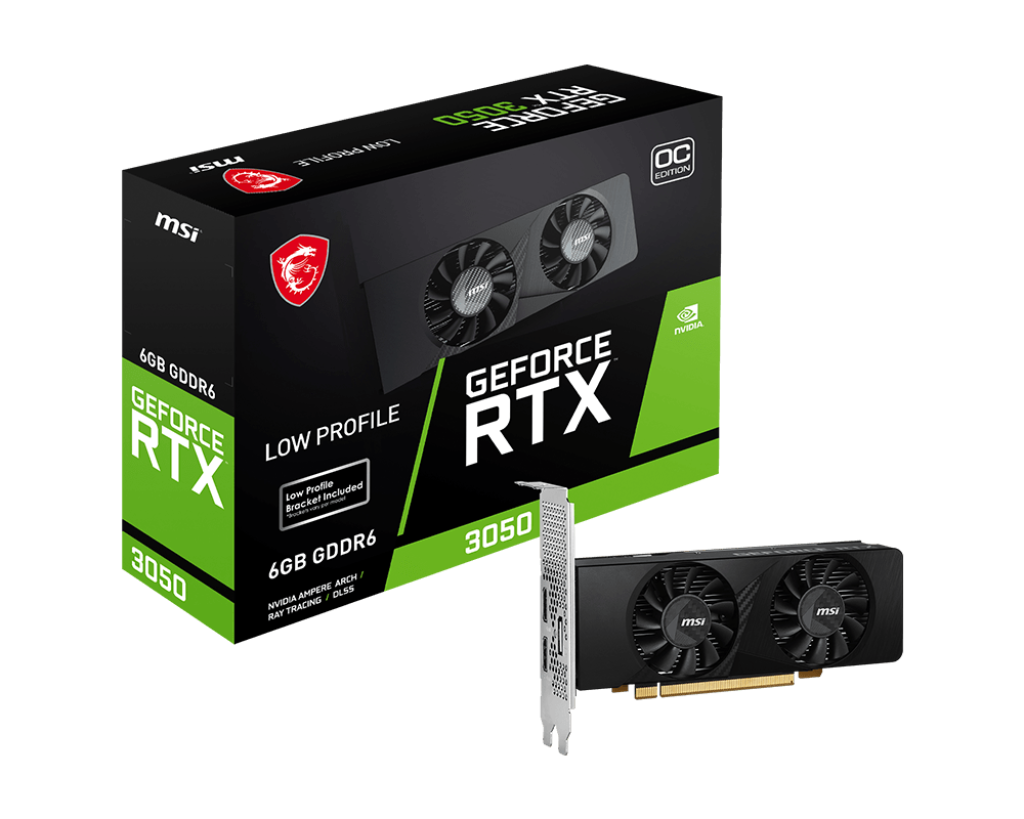
An RTX 3050 low-profile is not a supported, reliably recommendable upgrade for an OptiPlex 3070 SFF with its stock 200W PSU. Skip the MSI GeForce RTX 3050 LP 6G OC for this configuration: MSI specifies 70W consumption, while Dell documents a 50W maximum for the 3070 SFF’s PCIe x16 card. MSI specifications, Dell’s cross-chassis specifications, page 16.
That is a compatibility judgement, not evidence that every installation will fail or damage the computer. A card booting successfully does not establish that the combination stays within the computer’s documented electrical and mechanical limits.
The 50W slot limit decides more than the 200W PSU
The easily missed detail is in Dell’s table titled “System board connector maximum add-in card allowable dimensions.” Although the linked manual’s cover says Micro, the table explicitly separates Tower, Small Form Factor and Micro. It lists 75W for the Tower’s x16 card and 50W for the SFF’s. Advice based on the Tower column gives the wrong answer for this machine. Dell specifications, page 16.
The MSI card’s rating exceeds the SFF figure by 20W, or 40%. Dell’s table does not explain whether that limit is actively enforced. Consequently, neither “the motherboard will automatically restrict it” nor “it will definitely burn out” is justified by this documentation.
Dell separately lists 200W power supplies for the 3070 SFF. That is the supply’s overall capacity, not permission to deliver the entire available balance through one expansion slot. Dell power-supply specifications.
Adding the GPU rating to a processor’s advertised thermal rating is not a complete power assessment. It leaves out other components and does not establish peak demand or the condition of an older PSU. More importantly, even a convincing whole-system calculation cannot override a separate slot restriction.
A higher-capacity replacement PSU therefore cannot, by itself, establish compatibility. You would still need confirmation that the motherboard supports the card’s demand. Ask Dell about the specific Service Tag and card if you need an exception to the published limit.
Low profile does not mean the cooler fits
Low profile describes card height; it does not guarantee suitable length or thickness. MSI specifies 174 × 69 × 42mm for the RTX 3050 LP 6G OC and recommends a 300W system PSU. That recommendation is distinct from the card’s own consumption. MSI specifications.
Dell’s cross-chassis table gives the SFF an allowable card length of 16.77cm, or 167.7mm. The MSI model is 6.3mm longer than that published envelope. Its thick cooler also requires clearance beside the slot; counting two openings at the back of the case does not establish that clearance. Dell card-dimension limits.
Before ordering any substitute, inspect the space between the graphics slot, power supply and drive assembly. Check the cooler’s full dimensions and the supplied bracket. Do not rely on photographs of a different OptiPlex generation.
Just want the recommendation?
Skip to the picksThe 3070 SFF has one PCIe x16 slot and one x1 slot. It does not have a second x4 slot you can simply use to reposition a bulky graphics card. That distinction makes some upgrade instructions for other OptiPlex models inapplicable. Dell system-board connectors.
What independent testing actually establishes
TechSpot measured a 72°C peak hotspot after an hour of load, with 21°C ambient temperature, on an MSI RTX 3050 6GB Ventus 2X in an enclosed ATX case. Its fans reached approximately 2,000rpm. Those are measurements of a different cooler in a different enclosure. They cannot predict temperatures beside the PSU in a 3070 SFF. TechSpot’s RTX 3050 6GB review.
No independent measurement cited here validates long-term operation of the MSI low-profile card in the stock 3070 SFF. The available evidence supports rejecting an unconditional reliability claim; it does not supply a failure probability.
If the RTX 3050 is already installed
A working desktop or completed gaming session establishes that the card operated during that workload. It does not validate the motherboard’s power delivery over time.
Undervolting, limiting frame rate or reducing a software power target may reduce demand, but this article cannot establish that a particular setting remains effective through startup, driver changes and every workload. Treat those measures as experimentation, not certification of an otherwise unsupported combination.
If the computer now shuts down, loses display output or repeatedly resets under load, stop repeatedly provoking the fault. Return it to its previous graphics configuration using Dell’s removal procedure, then check whether the symptoms remain. Persistent faults in the original configuration need hardware diagnosis; they are not proof that the RTX 3050 itself needs an RMA. Dell expansion-card removal instructions.
A narrower alternative for extra displays
For additional monitor connections and modest professional graphics work, the PNY NVIDIA T400 4GB is a more conservative candidate.
| Specification | MSI RTX 3050 LP 6G OC | PNY NVIDIA T400 4GB |
|---|---|---|
| Manufacturer power rating | 70W | 30W maximum |
| Card length | 174mm | 155.9mm, converted from 6.137 inches |
| Graphics memory | 6GB GDDR6 | 4GB GDDR6 |
The figures come from MSI’s specifications and PNY’s T400 specifications.
PNY specifies a single-slot, low-profile design with three Mini DisplayPort connectors. Its published dimensions and power demand fit the relevant Dell limits, making it worth considering when display connectivity is the objective. Check whether your monitors require adapters and whether the correct low-profile bracket is included.
The T400 is not presented here as an equivalent gaming replacement for the RTX 3050. Its narrower recommendation is for readers who can trade gaming ambition for lower power demand and a smaller card. Matching these specifications also does not establish Dell certification of that particular aftermarket model.
If RTX 3050 gaming performance is the requirement, choose a host with documented power support and clearance for the exact card. The stock 3070 SFF does not provide a sound basis for promising that upgrade will be safe and reliable.
The bottom line
Two that fit, depending on the model you have:
Top pick
Skip this
MSI GeForce RTX 3050 LP 6G OC
NVIDIA
MSI specifies 70W consumption and 174mm length, exceeding Dell’s documented 50W and 167.7mm SFF limits.
Skip this model for a stock OptiPlex 3070 SFF. Its low-profile design does not overcome the motherboard’s documented power limit or Dell’s published card-length envelope.Available at Amazon(paid link) — opens Amazon in a new tab. Price and availability shown there.The alternative
It depends
PNY NVIDIA T400 4GB VCNT4004GB-PB
PNY
Its 30W maximum consumption, 6.137-inch length and single-slot low-profile design fit the relevant published Dell limits, without establishing model-specific Dell certification.
Consider it for extra displays and modest professional graphics work while retaining the stock chassis and PSU. It is not an equivalent gaming replacement, and its Mini DisplayPort outputs may require adapters.Available at Amazon(paid link) — opens Amazon in a new tab. Price and availability shown there.
Recommended products
Ordered by how well each one fits the situations above. Each link below is a paid link.
MSI GeForce RTX 3050 LP 6G OC
NVIDIA
Skip — MSI specifies 70W consumption and 174mm length, exceeding Dell’s documented 50W and 167.7mm SFF limits.
Skip this model for a stock OptiPlex 3070 SFF. Its low-profile design does not overcome the motherboard’s documented power limit or Dell’s published card-length envelope.Available at Amazon(paid link) — opens Amazon in a new tab. Price and availability shown there.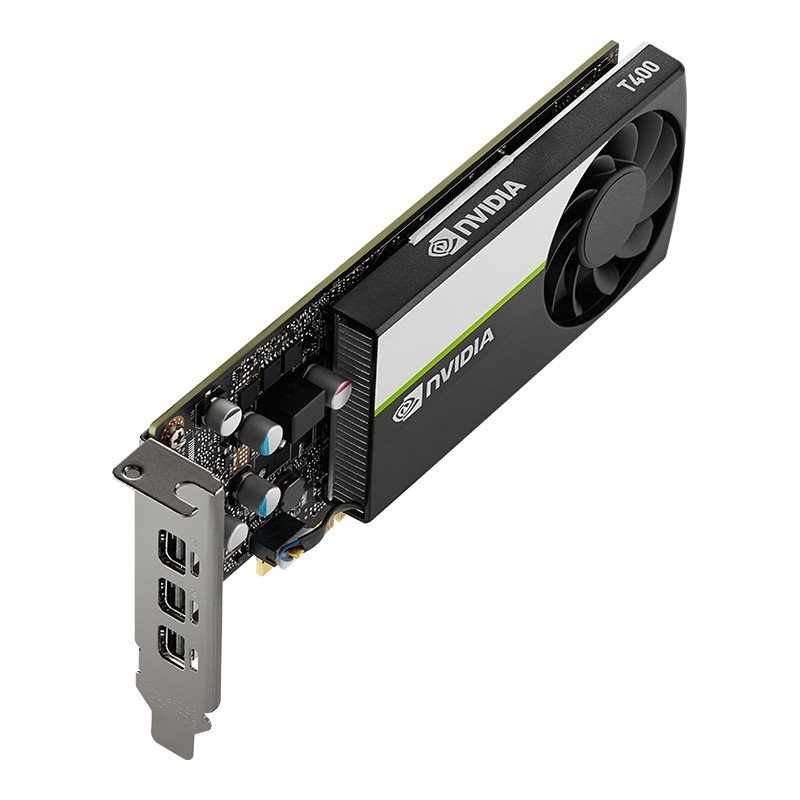
PNY NVIDIA T400 4GB VCNT4004GB-PB
PNY
Consider — Its 30W maximum consumption, 6.137-inch length and single-slot low-profile design fit the relevant published Dell limits, without establishing model-specific Dell certification.
Consider it for extra displays and modest professional graphics work while retaining the stock chassis and PSU. It is not an equivalent gaming replacement, and its Mini DisplayPort outputs may require adapters.Available at Amazon(paid link) — opens Amazon in a new tab. Price and availability shown there.
Sources
Pages consulted while researching this article. None of these are affiliate links.
- Dell OptiPlex 3070 Micro Setup and Specifications — cross-chassis card limits, page 16 — dl.dell.com
- MSI GeForce RTX 3050 LP 6G OC specifications — msi.com
- Dell OptiPlex 3070 SFF power-supply specifications — dell.com
- Dell OptiPlex 3070 SFF system-board connectors — dell.com
- TechSpot: Nvidia GeForce RTX 3050 6GB Review — techspot.com
- Dell OptiPlex 3070 SFF service manual — removing an expansion card — dell.com
- PNY NVIDIA T400 4GB specifications — pny.com