Sony Bravia 5 85: When 100 Inches Wins
The questionWhere do these come from?
Sony B5 85” vs B3ii 100”
Need a big tv for a huge wall. 98”/100” will look better, but mid range 98” are out of my budget. I can swing the B5 for 85” or spend a little more and get a B3 in 100” which will be more immersive.
At 13 feet, choose the 100-inch Bravia 3 II for immersion; choose the 85-inch Bravia 5 when dark-room picture quality matters more.
At 13 feet, choose the 100-inch Bravia 3 II for immersion; choose the 85-inch Bravia 5 when dark-room picture quality matters more. The larger television crosses the useful 30-degree viewing-angle threshold, while the BRAVIA 5’s Mini LED local dimming produces the stronger picture—especially with the lights down.
| TV | Horizontal angle at 13 feet | Deciding hardware | Verdict |
|---|---|---|---|
| Sony BRAVIA 3 II 100-inch (K-100XR30M2) | About 31° | Direct LED, no local dimming, native 120Hz | Buy for fixed 13-foot seating |
| Sony BRAVIA 5 85-inch (K-85XR50) | About 27° | Mini LED local dimming, native 120Hz | Consider for dark-room quality or closer seating |
| Sony BRAVIA 5 98-inch (K-98XR50) | About 31° | Mini LED local dimming; independently measured differently from smaller sizes | Consider if its size and cost are acceptable |
None of these three deserves a blanket skip; the difference is viewing angle, backlight control and whether the seating can move.
The 13-foot math decides the size
Viewing distance should be measured from your eyes to the screen, not from the sofa’s back to the wall. At a true 13 feet, the BRAVIA 5’s 84.6-inch panel occupies approximately 26.6 degrees of horizontal vision. The BRAVIA 3 II’s 99.5-inch panel reaches roughly 31.1 degrees.
That seemingly modest 15-inch diagonal difference gives the 100-inch television about 38% more screen area. It is a visible change in scale, not a rounding error.
RTINGS uses 30 degrees as its mixed-use target and 40 degrees as a more cinematic target. Its distance table puts an 85-inch screen at 11 feet 6 inches for 30 degrees and a 98-inch screen at 13 feet 3 inches. Consequently, an 85-inch television at 13 feet is adequate for news, sports and ordinary television, but it sits outside that 30-degree baseline. A 98- or 100-inch screen lands almost exactly on it. Even 100 inches is not a 40-degree home-theater image at this distance; reaching that angle would require a screen around 130 inches. RTINGS’ viewing-distance measurements support treating 100 inches as the mixed-use choice here, rather than describing it as overwhelmingly cinematic.
What the 85-inch BRAVIA 5 gets wrong is scale: for anyone locked at 13 feet and seeking immersion, its roughly 27-degree image is below the 30-degree mixed-use target. This is why the 100-inch BRAVIA 3 II is the primary recommendation for that specific distance.
Why the 85-inch BRAVIA 5 still looks better
The K-85XR50 is not merely a smaller version of the same display. Sony specifies an 84.6-inch, 3840-by-2160 LCD panel with a Mini LED backlight, local dimming and a native 120Hz refresh rate. It supports 4K at 120Hz and VRR through HDMI inputs 3 and 4. The cabinet measures 74.63 inches wide and 42.88 inches tall without its stand. Sony’s K-85XR50 specifications provide those exact dimensions and panel details.
Local dimming is the important difference. It lets the backlight reduce output behind dark areas while retaining brighter highlights elsewhere. That produces deeper blacks and more separation between bright and dark portions of a scene than a television whose entire backlight remains active.
RTINGS tested the 65-inch BRAVIA 5 and says most of its findings also apply to the 85-inch K-85XR50. With Auto Local Dimming set to High, the lab measured a 53,827:1 contrast ratio. It also praised the set’s upscaling and low-quality-content smoothing, although it found mediocre HDR brightness, slow pixel transitions and degraded color and blacks from aggressive off-axis positions. RTINGS’ BRAVIA 5 measurements show that “better picture quality” here principally means better dark-scene contrast and processing—not flawless HDR or gaming motion.
Just want the recommendation?
Skip to the picksChoose the 85-inch BRAVIA 5 when movie nights happen in a dim room, black levels matter more than sheer scale, or the main seat can move forward. Moving from 13 feet to approximately 11 feet 6 inches restores a 30-degree presentation without sacrificing the Mini LED backlight. Around 10 feet, the screen becomes noticeably more enveloping while remaining short of the 40-degree cinema target.
The 100-inch compromise is real
The K-100XR30M2 is a 99.5-inch, direct-lit LED television. Sony specifies a native 120Hz panel, 4K/120 input, VRR and four high-bandwidth HDMI 2.1 ports. Therefore, moving to the BRAVIA 3 II does not require surrendering 120Hz console support. The compromise is its absence of Mini LED local dimming, not its basic refresh rate. Sony’s K-100XR30M2 specifications confirm the 120Hz panel, connections and 99.5-inch diagonal.
RTINGS tested the 65-inch BRAVIA 3 II, not the 100-inch unit. It expects most results to apply across sizes but explicitly lists the 100-inch panel type as unknown. Its tested 65-inch sample had poor dark-room contrast because it lacked local dimming, while its processing, 4K/120 support and motion with normal video content performed well. The BRAVIA 3 II lab review therefore establishes the series-level backlight limitation, but it should not be misrepresented as a direct measurement of the 100-inch panel.
That limitation makes the 100-inch model the wrong choice for viewers who predominantly watch dark films with the room lights off and are sensitive to gray-looking blacks. It remains the right choice for fixed 13-foot seating when sports, television, gaming and the physical impact of a larger image matter most.
The 98-inch BRAVIA 5 combines both advantages
The K-98XR50 is the cleaner answer when neither the budget nor the installation rules it out. It produces almost the same field of view as the 100-inch BRAVIA 3 II while retaining Mini LED local dimming.
It should not be assumed to perform exactly like the 85-inch version. RTINGS bought and measured the 98-inch BRAVIA 5 separately and found higher brightness, better black levels, greater HDR color volume and faster pixel response than its 65-inch sample. The lab also recorded roughly 430–450 watts while streaming Netflix, illustrating one practical cost of the much larger backlight. RTINGS’ size-specific BRAVIA 5 comparison documents those differences.
Treat the 98-inch model as a genuine third path, not an automatic upsell: consider it when you want the 30-degree image at 13 feet without accepting the BRAVIA 3 II’s backlight limitation.
Check the physical fit before choosing immersion
The 100-inch BRAVIA 3 II is 87.75 inches wide, 50.56 inches tall and 117 pounds without its stand. Its supplied feet span about 79.56 inches. The 85-inch BRAVIA 5 is 74.63 inches wide, 42.88 inches tall and 102 pounds without its stand; its feet can use a much narrower 23.88-inch inside position.
Mark both rectangles on the wall with painter’s tape. Also verify the mount’s weight rating, VESA pattern and fastener suitability for the wall structure. A television that overhangs the available wall, blocks speakers or requires an unsuitable stand is not the more immersive choice—it is simply the one that does not fit.
For a fixed 13-foot viewing distance, buy the 100-inch BRAVIA 3 II when screen presence is the priority. Consider the 85-inch BRAVIA 5 when you can bring the main seat to roughly 10–11.5 feet or when dark-room contrast matters enough to accept the smaller image. The same viewing-angle logic also explains why shorter rooms reach different size decisions, as shown in this 55-versus-65-inch Sony sizing guide.
The bottom line
The choice turns on one thing:
Top pick
Buy this
Sony BRAVIA 3 II 100-Inch K-100XR30M2 4K HDR LED Google TV 2026
Sony
Its 99.5-inch panel provides about 38% more screen area than an 84.6-inch panel and reaches roughly a 31-degree viewing angle at 13 feet.
This is the size-first choice for a fixed 13-foot seat, producing a roughly 31-degree image while retaining native 120Hz and 4K/120 support. Its drawback is the direct LED backlight without local dimming, so dark-room blacks cannot match the BRAVIA 5.Available at Amazon(paid link) — opens Amazon in a new tab. Price and availability shown there.The alternative
It depends
Sony BRAVIA 5 85-Inch K-85XR50 Mini LED 4K HDR Google TV 2025
Sony
The K-85XR50 has a 120Hz Mini LED panel with local dimming, but its 84.6-inch diagonal falls below a 30-degree viewing angle at 13 feet.
Choose this for Mini LED local dimming, stronger dark-scene contrast and seating around 10–11.5 feet. At 13 feet, however, its roughly 27-degree image sacrifices the immersion that prompted the size question.Available at Amazon(paid link) — opens Amazon in a new tab. Price and availability shown there.
Recommended products
Ordered by how well each one fits the situations above. Each link below is a paid link.

Sony BRAVIA 3 II 100-Inch K-100XR30M2 4K HDR LED Google TV 2026
Sony
Buy — Its 99.5-inch panel provides about 38% more screen area than an 84.6-inch panel and reaches roughly a 31-degree viewing angle at 13 feet.
This is the size-first choice for a fixed 13-foot seat, producing a roughly 31-degree image while retaining native 120Hz and 4K/120 support. Its drawback is the direct LED backlight without local dimming, so dark-room blacks cannot match the BRAVIA 5.Available at Amazon(paid link) — opens Amazon in a new tab. Price and availability shown there.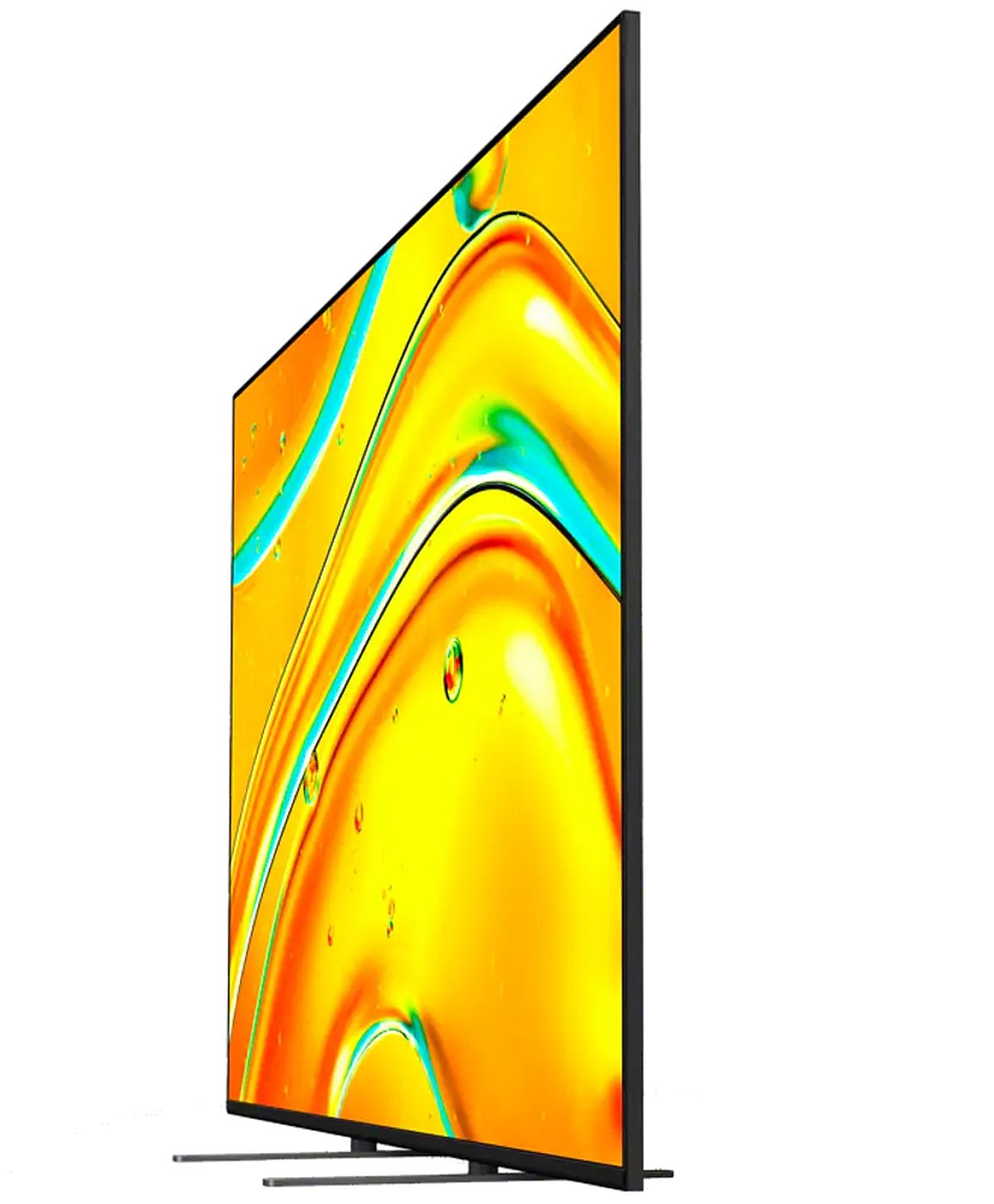
Sony BRAVIA 5 85-Inch K-85XR50 Mini LED 4K HDR Google TV 2025
Sony
It depends — The K-85XR50 has a 120Hz Mini LED panel with local dimming, but its 84.6-inch diagonal falls below a 30-degree viewing angle at 13 feet.
Choose this for Mini LED local dimming, stronger dark-scene contrast and seating around 10–11.5 feet. At 13 feet, however, its roughly 27-degree image sacrifices the immersion that prompted the size question.Available at Amazon(paid link) — opens Amazon in a new tab. Price and availability shown there.-1500x1500.jpg)
Sony BRAVIA 5 98-Inch K-98XR50 Mini LED 4K HDR Google TV 2025
Sony
It depends — A 98-inch screen is close to the 30-degree mixed-use target at 13 feet, and RTINGS measured better brightness, black levels and motion on this size than on the smaller BRAVIA 5 it compared.
This combines near-100-inch scale with BRAVIA 5 local dimming when the room, installation and budget permit it. The drawback is its much greater power consumption and physical bulk.Available at Amazon(paid link) — opens Amazon in a new tab. Price and availability shown there.
Sources
Pages consulted while researching this article. None of these are affiliate links.
- TV Size To Distance Calculator And Viewing-Angle Guide — RTINGS — rtings.com
- Sony K-85XR50 Specifications — sony.com
- Sony BRAVIA 5 Review and Measurements — RTINGS — rtings.com
- Sony K-100XR30M2 Specifications — sony.com
- Sony BRAVIA 3 II Review and Measurements — RTINGS — rtings.com
- 65-inch vs 98-inch Sony BRAVIA 5 Measurements — RTINGS — rtings.com