TCL 75QM5K: What the Specs Say Before You Buy
The questionWhere do these come from?
My 2nd TCL Buy, 75" 75QM5K
The TCL 75QM5K is a solid mini-LED buy if you accept its 60Hz native-4K cap, HDR banding, and weak built-in sound.
Yes, the TCL 75QM5K is a reasonable buy for a moderately lit living room, but only if you already know it caps out at 60Hz when it’s actually displaying 4K, and that its built-in audio is the weakest part of the set. Both of those are checkable before you leave the house, and both change the decision for some buyers.
What RTINGS actually measured
RTINGS tested the 75-inch QM5K directly (its results are shared across the 50, 55, 65, and 85-inch versions of the same panel) and came away calling it “a surprisingly decent TV for the price” with “great PQ EOTF tracking,” meaning HDR content is mapped close to the brightness the creator intended rather than crushed or blown out. That’s a real result for a Best Buy-exclusive model TCL positions below its own QM6K in the 2025 QD-Mini LED lineup.
The catches RTINGS also documented are specific enough to plan around:
Just want the recommendation?
Skip to the picks- Mediocre HDR gradient handling. Noticeable banding shows up in most shades, especially greens, in dark HDR content. Consumer Reports’ testing of the same panel family found no obvious banding in shadow detail specifically, but flagged the built-in sound as “sub-par” and “below average,” and rated the viewing angle as only moderate, with color loss and raised black levels once you move off-center.
- 60Hz native refresh at 4K. TCL’s Game Accelerator raises this to 144Hz for PC or 120Hz for a console, but only after you drop the input to 1080p or 1440p. Feed it a native 4K/120 signal from a PS5 or Xbox Series X and the panel does not follow.
- Three HDMI inputs, one of them full-bandwidth. Only one of the three HDMI ports on the 75-inch model carries full HDMI 2.1 (48Gbps) bandwidth; the other two are HDMI 2.0. If you’re connecting a current-gen console, a soundbar with eARC, and a streaming box at once, only one of those slots has room for a high-bandwidth signal.
- Around 300 local dimming zones, with independent measurements putting peak HDR brightness in the 900-to-1,000-nit range on a 25% window, dropping to roughly 500 nits in Game Master mode. That’s enough for consistent HDR highlights in a normal living room but not the kind of blinding specular punch some marketing implies.
None of that makes the 75QM5K a bad set. It makes it a set with a specific shape: good contrast and accurate HDR tone-mapping for the price, in exchange for a native-4K refresh ceiling, visible banding in the toughest content, and audio you’ll likely want to replace with a soundbar regardless of which TV you land on.
TCL 75QM5K vs. the sets it actually competes with
| Native 4K refresh | Local dimming zones | Peak HDR brightness (measured) | |
|---|---|---|---|
| TCL 75QM5K | 60Hz (144Hz/120Hz only after dropping to 1080p/1440p) | ~300 | ~900-1,000 nits |
| TCL 75QM6K | 144Hz native, full chain | ~500 (LD500) | Not independently confirmed at time of writing |
| Hisense 75U7N | 144Hz native | ~384 (measured on 65-inch; may vary at 75-inch) | 1,300+ nits |
When the TCL QM6K is worth stepping up to
Skip the QM6K if you mainly watch cable, streaming, and movies — the extra dimming zones help HDR consistency but won’t transform a non-gaming setup. Step up to it if you play on a PS5, Xbox Series X, or gaming PC and actually want native 4K at 120Hz or 144Hz without dropping resolution first. Techaeris measured a genuine 144Hz refresh across the QM6K’s full 4K chain, plus VRR up to 288Hz, which the QM5K’s Game Accelerator workaround does not match at native resolution. The nearly 70% increase in dimming zones (roughly 500 vs. 300) also gives the QM6K more consistent control over bright HDR highlights sitting next to dark backgrounds, which is exactly where the QM5K’s banding shows up.
When the Hisense 75U7N is the better rival
The U7N is the set to consider if raw HDR brightness matters more to you than TCL’s Game Accelerator branding or its Onkyo-tuned speaker system. RTINGS measured native 144Hz across all resolutions on the U7N (no resolution drop required) along with more than 1,300 nits of peak HDR brightness on a 25% window — well above the QM5K’s independently measured 900-to-1,000-nit range — and gave it a Mixed Usage score of 8.2 out of 10, driven by strong contrast, high HDR brightness, and low response time. The trade-off is that you’re leaving TCL’s specific feature set and its 2.1-channel Onkyo audio tuning behind for a competing brand’s implementation of the same mini-LED formula.
What to check on the showroom floor
Before you commit to the 75QM5K specifically, do three things at the store: watch a dark scene with a slow gradient (a night sky or a sunset) on the demo unit and look for visible color banding, since that’s the documented weak point; stand or sit off to the side of the display rather than dead-center, since the VA-type panel’s moderate viewing angle is where color and contrast fall off fastest; and confirm the SKU on the box actually reads 75QM5K rather than 75QM6K or a different QM-series number, since TCL sells several visually similar Mini-LED lines in the same size at the same time. If any of those three checks bothers you, that’s the signal to look at the QM6K or the Hisense U7N instead, not a reason to walk away from mini-LED at this size altogether.
The bottom line
Two readings, two answers:
Top pick
Buy this
TCL 75QM5K QD-Mini LED Google TV
TCL
RTINGS measured great PQ EOTF tracking and decent contrast for a Best Buy-exclusive entry-level mini-LED, with the real limitation being a 60Hz native refresh at 4K and visible HDR banding.
The set in question: accurate HDR tone-mapping and roughly 300 dimming zones for the price, but native 4K tops out at 60Hz and only one of its three HDMI ports is full-bandwidth 2.1.Available at Amazon(paid link) — opens Amazon in a new tab. Price and availability shown there.The alternative
It depends
TCL 75QM6K QD-Mini LED Google TV
TCL
Techaeris measured a true 144Hz refresh across the QM6K's full 4K signal chain with VRR up to 288Hz, which matters specifically for PS5/Xbox Series X or PC gamers who want native-4K high refresh without a resolution drop.
The alternative one tier up in TCL’s own lineup: roughly 500 dimming zones and a genuine 144Hz refresh at full native 4K, which the QM5K only reaches after dropping to 1080p or 1440p.Available at Amazon(paid link) — opens Amazon in a new tab. Price and availability shown there.
Recommended products
Ordered by how well each one fits the situations above. Each link below is a paid link.
TCL 75QM5K QD-Mini LED Google TV
TCL
Buy — RTINGS measured great PQ EOTF tracking and decent contrast for a Best Buy-exclusive entry-level mini-LED, with the real limitation being a 60Hz native refresh at 4K and visible HDR banding.
The set in question: accurate HDR tone-mapping and roughly 300 dimming zones for the price, but native 4K tops out at 60Hz and only one of its three HDMI ports is full-bandwidth 2.1.Available at Amazon(paid link) — opens Amazon in a new tab. Price and availability shown there.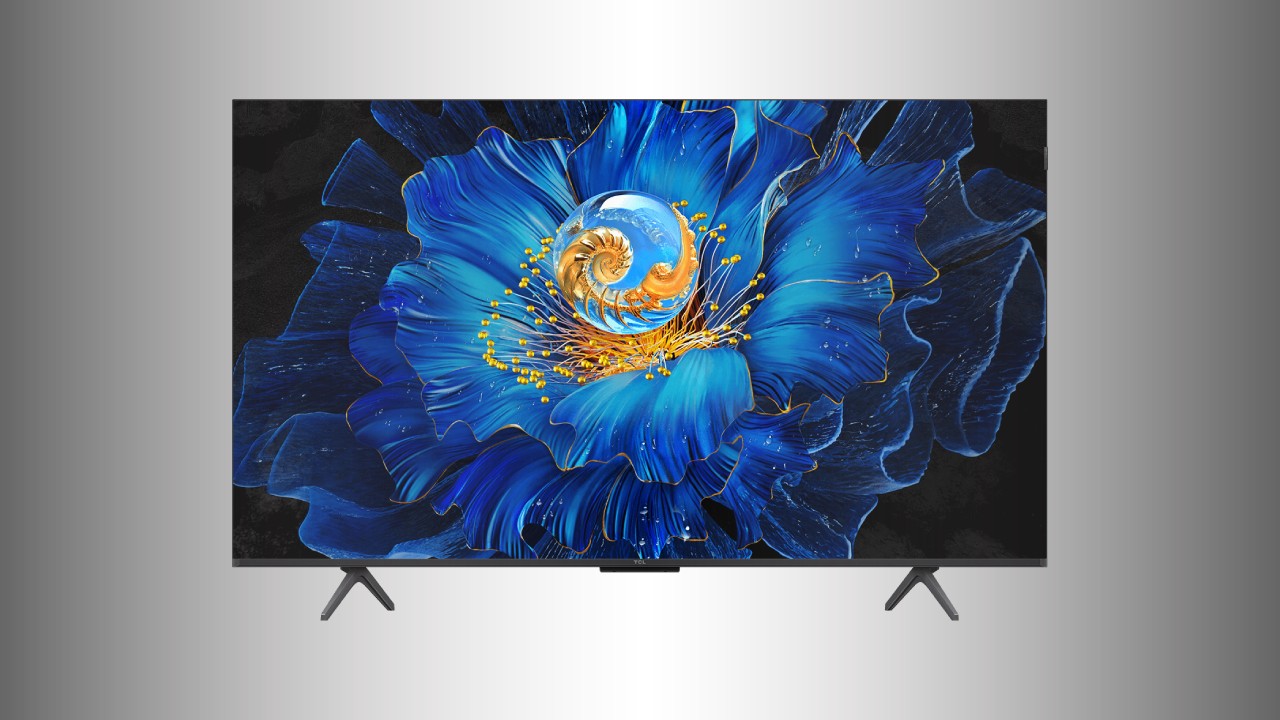
TCL 75QM6K QD-Mini LED Google TV
TCL
It depends — Techaeris measured a true 144Hz refresh across the QM6K's full 4K signal chain with VRR up to 288Hz, which matters specifically for PS5/Xbox Series X or PC gamers who want native-4K high refresh without a resolution drop.
The alternative one tier up in TCL’s own lineup: roughly 500 dimming zones and a genuine 144Hz refresh at full native 4K, which the QM5K only reaches after dropping to 1080p or 1440p.Available at Amazon(paid link) — opens Amazon in a new tab. Price and availability shown there.
Hisense 75U7N ULED Mini-LED TV
Hisense
It depends — RTINGS measured over 1,300 nits of peak HDR brightness and native 144Hz at all resolutions on the U7N, versus the QM5K's independently measured 900-to-1,000-nit range, and scored it 8.2/10 Mixed Usage.
The rival outside TCL’s lineup: brighter and faster on paper, at the cost of TCL’s Game Accelerator branding and Onkyo-tuned 2.1-channel audio.Available at Amazon(paid link) — opens Amazon in a new tab. Price and availability shown there.
Sources
Pages consulted while researching this article. None of these are affiliate links.
- TCL QM5K Review - RTINGS.com — rtings.com
- TCL QM6K Review - RTINGS.com — rtings.com
- Hisense U7N Review - RTINGS.com — rtings.com
- TCL 50QM5K TV Review - Consumer Reports — consumerreports.org
- New TCL QM5K 4K QD-Mini LED TV specifications - NotebookCheck — notebookcheck.net
- TCL QM5K Review: The Best Budget Mini-LED TV of 2025 - Stereoindex — stereoindex.com
- TCL QM5K Mini-LED TV Review - EcoPicksGo — ecopicksgo.com
- TCL QM6K 4K TV Review: An All-Around Good TV At A Good Price - Techaeris — techaeris.com