Local AI hardware
5 articles on this topic.
Local AI hardware questions almost always reduce to one thing: will this specific memory, GPU, or unified-memory machine actually hold the model someone wants to run, at the context length they need, without stalling, swapping, or crashing partway through. The people landing here usually already own a laptop or graphics card, or are working from a fixed budget, and are trying to find the real ceiling — how much headroom a given amount of memory leaves, when a cheaper part starts forcing compromises a spec sheet never mentions, and whether capacity or speed is the thing actually limiting them.
These questions start as one person’s laptop, budget, or half-finished build, described in their own words on a public forum. The answers gathered here come from reading widely across published reviews, what owners report once they’ve actually run models on comparable hardware, and manufacturer documentation — then reconciling where those sources agree and where they don’t, rather than leaning on any single one.
- Buyrecommendationr/LocalLLM
MS-01: The Cheapest Barebone With Socketed DDR5 SO-DIMM
The MS-01's entry Core i5 barebone tier is the cheapest way to get socketed DDR5 SO-DIMM and PCIe expansion for a local-model box.
- Buyrecommendationr/LocalLLM
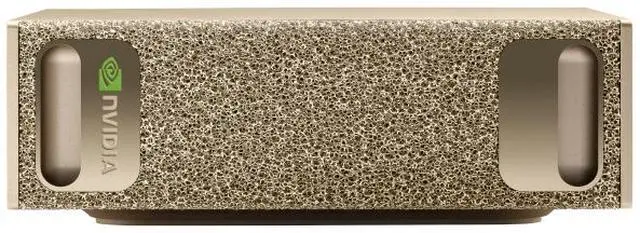
DGX Spark's Unified Memory: Capacity vs. Speed
DGX Spark's 128GB unified pool holds long-context agent sessions without crashing, but decode speed stays capped at 273 GB/s of memory bandwidth.
- Buyrecommendationr/LocalLLM
The Practical RTX 4090 LLM Build: Exact Parts
Pair a 24GB RTX 4090 with a 1000W ATX 3.1 PSU, a wide airflow case, 64GB of RAM and a modest AM4 CPU for a practical LLM box.
- It dependscompatibilityr/LocalLLM
Phi-3 Mini on a Low-End Laptop: Use Q4
Phi-3 Mini’s 2.2GB Q4_K_M GGUF works with llama.cpp on an 8GB laptop; cap context at 2K, expect modest CPU speed, and skip FP16.
- Buycomparison
18GB or 32GB for Local LLMs? Where 18GB Runs Out
Choose 32GB for regular local LLM use; 18GB works for smaller quantized models, but larger models and long contexts expose its limits.