XDJ-RX3 or DDJ-FLX10 for a Vinyl DJ Going Digital
The questionWhere do these come from?
RX-3 vs FLX-10 — standalone vs controller/laptop
I’m about to purchase one of these in the next few days. Old vinyl DJ since the 90’s who’s been slowly learning the DJ controller digital world the past year.
For a vinyl DJ who wants to leave the laptop at home, the RX-3 (XDJ-RX3) is the pick; choose the DDJ-FLX10 only if you need four channels and stems.
The RX-3 (Pioneer DJ’s XDJ-RX3) is the better fit for a vinyl DJ moving to digital who wants to stop carrying a laptop: it plays rekordbox-prepared USB sticks on its own and also works as a USB-HID controller when you do plug a computer in. The DDJ-FLX10 is the better fit only if you specifically need four channels and stem play, and you accept that it is a controller, so every set needs a computer running DJ software.
The short comparison
| XDJ-RX3 (RX-3) | DDJ-FLX10 | |
|---|---|---|
| Type | Standalone all-in-one, also a controller | Controller only |
| Channels | 2 | 4 |
| Screen | 10.1-inch, 1280x800 touchscreen | Small jog displays; browsing happens on the laptop |
| Without a laptop | Plays rekordbox USB exports | Does nothing |
| Stems | Reported to need a computer in the loop | Stem controls on the hardware, software does the separation |
The RX-3 figures come from Pioneer DJ’s launch page and the Crossfader review. Check the FLX10 overview for its current software support. No independent lab has published measurements for either unit, so everything here rests on manufacturer specifications and what reviewers and owners report.
Why the RX-3 suits a vinyl background
Vinyl DJs are used to turning up with a bag and plugging into the house system. The RX-3 is built for that: prepare tracks in rekordbox, export to USB, play. The 10.1-inch screen is the largest on a Pioneer all-in-one and shows 12 browse rows at once, up from 8 on the older XDJ-RX2. That addresses the common worry that standalone means squinting at a tiny display, and it is the main reason people coming from records find the RX-3 less alien than a laptop-centred setup.
Retailer spec sheets list two line/phono inputs, so turntables can be connected directly, which matters if you plan to keep playing some records alongside digital files. Listings disagree on the exact aux and mic input counts, so confirm those against Pioneer DJ’s own spec sheet if inputs matter to you.
Just want the recommendation?
Skip to the picksHID mode: what it does and does not fix
When you connect a laptop over USB, the RX-3 can control rekordbox in Performance mode over HID. Because it is a hardware-unlock device, rekordbox does not need a paid subscription for that. It also works with Serato DJ Pro. That means you are not locked into standalone use: you can use it as a controller on nights when you want software features, then go back to a USB stick when you want to travel light.
The limit to know is stems. Owners report that stem controls on the RX-3 only work when it is driven by a computer, and not from a USB stick. This is user-reported rather than an official statement, so check Pioneer DJ’s current rekordbox and firmware notes before relying on it.
Where the FLX10 is the right call
- You want four decks. The RX-3 is two channels. If your sets layer or you share the booth with a second source, the FLX10’s four channels matter and the RX-3 cannot match them.
- Stems are central to your sets. The FLX10 puts stem controls on the decks, and the laptop does the separation. The trade is that it cannot work without that laptop.
- You already prepare and perform from a laptop. Then standalone gives you nothing, and the FLX10 is the more capable controller.
Which one to skip, and for whom
Skip the FLX10 if the reason you are leaving vinyl is to carry less and trust a single piece of hardware at the gig: a controller with a laptop adds a computer, a cable and a software licence to the list of things that can fail mid-set. Skip the RX-3 if you play sets built on four-deck layering, because two channels is a hard ceiling that no firmware changes.
The two traps
Do not pick the FLX10 for its small jog displays as a substitute for a screen: your library lives on the computer. And do not pick the RX-3 expecting four channels or stems straight from a USB stick; it offers neither by the reports above.
What to do
If the point of the move is to keep the vinyl-style, no-laptop workflow, buy the XDJ-RX3 and treat HID mode as a bonus. If four channels and stems matter more than independence from a laptop, the DDJ-FLX10 is the one to get. Nobody should buy the FLX10 expecting standalone use, because it does not offer it.
The bottom line
The choice turns on one thing:
Top pick
Buy this
Pioneer DJ XDJ-RX3 All-In-One DJ System (Black)
Pioneer DJ
It plays rekordbox USB sticks with no laptop, has a 10.1-inch 1280x800 screen, two line/phono inputs, and a USB-HID mode when you do bring a computer.
The RX-3 is the pick for a vinyl DJ who wants a club-style, laptop-free rig that still behaves like a controller when needed. The catch: two channels, and reviewers report stems are only available when it is driven by a computer, not standalone.Available at Amazon(paid link) — opens Amazon in a new tab. Price and availability shown there.The alternative
It depends
Pioneer DJ DDJ-FLX10 4-Channel DJ Controller, Track Separation, Black
Pioneer DJ
It is a four-channel controller with stem controls on the decks, but it does nothing without a laptop or phone running DJ software.
The rival to the RX-3 in this comparison: right if you want four decks and stem play and accept a laptop on every gig. It is wrong for anyone whose main goal is turning up with a USB stick and nothing else.Available at Amazon(paid link) — opens Amazon in a new tab. Price and availability shown there.
Recommended products
Ordered by how well each one fits the situations above. Each link below is a paid link.

Pioneer DJ XDJ-RX3 All-In-One DJ System (Black)
Pioneer DJ
Buy — It plays rekordbox USB sticks with no laptop, has a 10.1-inch 1280x800 screen, two line/phono inputs, and a USB-HID mode when you do bring a computer.
The RX-3 is the pick for a vinyl DJ who wants a club-style, laptop-free rig that still behaves like a controller when needed. The catch: two channels, and reviewers report stems are only available when it is driven by a computer, not standalone.Available at Amazon(paid link) — opens Amazon in a new tab. Price and availability shown there.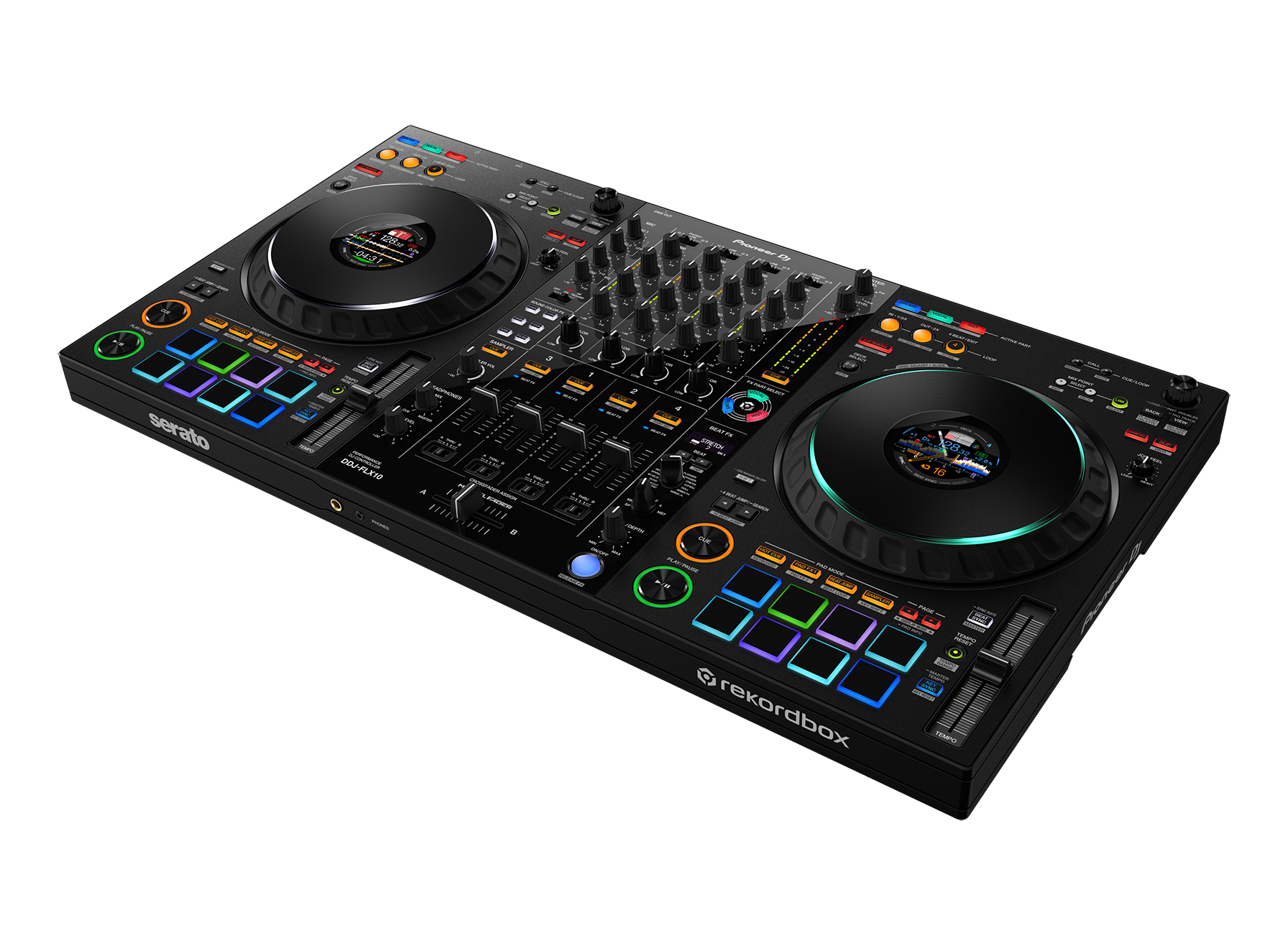
Pioneer DJ DDJ-FLX10 4-Channel DJ Controller, Track Separation, Black
Pioneer DJ
It depends — It is a four-channel controller with stem controls on the decks, but it does nothing without a laptop or phone running DJ software.
The rival to the RX-3 in this comparison: right if you want four decks and stem play and accept a laptop on every gig. It is wrong for anyone whose main goal is turning up with a USB stick and nothing else.Available at Amazon(paid link) — opens Amazon in a new tab. Price and availability shown there.
Sources
Pages consulted while researching this article. None of these are affiliate links.
- Pioneer DJ: XDJ-RX3 new 2-channel performance all-in-one DJ system — pioneerdj.com
- Pioneer DJ XDJ-RX3 – Review and Guide (Crossfader) — wearecrossfader.co.uk
- Pioneer DJ: DDJ-FLX10 product overview — pioneerdj.com