Pioneer DM-50D: The Right Monitors for a DDJ-FLX4?
The questionWhere do these come from?
Budget DJ Monitors with Good Bass?
Hey everyone, I’m a complete beginner just getting into DJing and I recently picked up a Pioneer DDJ-FLX4. I don't have much technical knowledge about audio gear yet, so I'm looking for some guidance from the community.
The DM-50D's 5-inch woofers reach 55Hz and its RCA input matches the DDJ-FLX4's output directly, giving it real low-end without an adapter.
The Pioneer DJ DM-50D is the right call for a DDJ-FLX4 setup: its 5-inch woofers are rated down to 55Hz, and its RCA input matches the FLX4’s RCA master output directly, so there’s no adapter or audio interface to buy. That low-end figure is the number that matters for bass-heavy practice — it’s well below where kick drums and basslines in house, hip-hop, and dubstep sit, and it beats the 3.5–4-inch monitors beginners usually default to.
Why the DM-50D fits a DDJ-FLX4 specifically
The DDJ-FLX4’s rear panel carries a single set of MASTER output terminals, described in Pioneer DJ’s own spec sheet as RCA pin jacks “compatible with RCA pin-jack type unbalanced outputs” and meant for “connection to a powered speaker.” The DM-50D’s input panel has an RCA pin jack alongside a 3.5mm stereo mini jack and a 1/4-inch TRS jack, per Pioneer DJ’s DM-50D specifications. One stereo RCA cable connects the two, with the controller’s built-in sound card doing the work an external audio interface would otherwise handle.
The DM-50D also carries the same DJ/Production DSP switch as the rest of Pioneer’s DM series. Digital DJ Tips, reviewing the DM-50D hands-on, found the difference between the two modes subtle enough that they recommended beginners “set it to where you think it sounds best” rather than treating it as a critical setting — useful to know before assuming the switch needs precise tuning.
Is 55Hz actually enough low-end for bass-heavy practice?
Pioneer DJ lists the DM-50D’s frequency response as 55Hz–22kHz (-10dB), driven by a 5-inch fiberglass woofer and a 3/4-inch dome tweeter through a 25W-per-channel (50W total) Class D amplifier. That extension covers the fundamental of most kick drums and basslines used in club genres — the low end that defines whether a DJ set “feels” heavy on a desktop setup, even if true sub-bass below 40Hz is out of reach for any speaker this size.
Home DJ Studio’s hands-on review backs this up, describing the DM-50D’s low end as “meaty and full without muddiness” and noting the DJ mode adds “greater emphasis on the lower end” that testers called “satisfying and fun to listen to.” Digital DJ Tips reported the woofer stayed clean “even at higher volume levels,” which matters for practice sessions run louder than casual listening.
Where the cheaper DM-40D falls short
Pioneer DJ’s own DM-40D — the smaller, cheaper sibling in the same lineup — trades down to a 4-inch woofer with a 60Hz–20kHz (-10dB) response and 19W per channel (38W total), against the DM-50D’s 25W per channel. Digital DJ Tips’ review of the DM-40D found “good bass for the size of speaker” and called it well suited to “home DJ practice and producing” — but that’s a different claim than having enough headroom for bass-heavy material specifically.
Just want the recommendation?
Skip to the picksIf desk space is genuinely tight and the material being practiced isn’t especially bass-forward, the DM-40D is a reasonable way to save money and stay in the same connector ecosystem (it also has a plain RCA input). For bass-heavy practice specifically, the extra 5Hz of extension and 12W of power per side on the DM-50D are the difference the question is actually asking about, so the DM-40D is the wrong pick here even though it’s cheaper.
Skip the PreSonus Eris E3.5 for this specific need
The PreSonus Eris E3.5 is the default answer to “cheap beginner studio monitors” across most gear forums, and it’s a legitimate pair of speakers for its price. But PreSonus’s own specifications put its low-frequency driver at 3.5 inches with a 25W-per-side Class AB amplifier, and it’s built around general production monitoring rather than DJ-tuned bass response. For a reader specifically asking about enough low-end for bass-heavy practice, a 3.5-inch driver simply moves less air than the DM-50D’s 5-inch woofer, and the Eris line has no DJ/Production switch to add emphasis where it’s needed. It’s a fine general desktop monitor; it’s the wrong tool for this particular question.
If you outgrow the DM-50D: KRK Rokit 5 G4
For a reader with more budget who wants to go lower than the DM-50D’s 55Hz, KRK’s official specifications put the Rokit 5 G4 at 43Hz–40kHz with 55W of combined Class D power — a genuine step down in extension and step up in headroom. Sound On Sound’s review of the Rokit line found the bass “full and solid but still tight enough to give good definition to dry kick drums.”
The catch is connectivity: KRK dropped RCA entirely on the G4 in favor of a combo XLR/TRS jack, so connecting it to a DDJ-FLX4’s RCA master output means buying a dual RCA-to-TRS (or RCA-to-XLR) cable the DM-50D doesn’t need. That’s a small extra step and cost for a beginner setup, which is why it’s worth considering only once the DM-50D’s bass genuinely feels insufficient rather than as a first purchase.
Comparison at a glance
| Speaker | Woofer / response | Power | Input match to FLX4 | Verdict |
|---|---|---|---|---|
| Pioneer DJ DM-50D | 5" / 55Hz–22kHz | 50W total | Direct RCA, no adapter | Buy |
| Pioneer DJ DM-40D | 4" / 60Hz–20kHz | 38W total | Direct RCA, no adapter | Consider |
| PreSonus Eris E3.5 | 3.5" / 80Hz–20kHz | 50W total | Direct RCA, no adapter | Skip |
| KRK Rokit 5 G4 | 5" / 43Hz–40kHz | 55W total | Combo jack, needs adapter cable | Consider |
Setting it up
Run a single stereo RCA cable from the DDJ-FLX4’s MASTER output — the red and white jacks on the rear panel — to the RCA inputs on the back of each DM-50D. Set the DM-50D’s mode switch to DJ mode for practice sessions, and use the front-panel volume knob on the primary speaker rather than relying on the controller’s master level alone; both digitaldjtips and Home DJ Studio’s reviews flagged the front-panel volume and headphone jack as genuinely convenient for a desk setup, with the power switch on the rear as the only awkward control to reach.
If bass still feels thin after setup, the usual cause is room placement rather than the speakers themselves — monitors pushed flush against a wall or sitting directly on a hard desk will lose low-end definition regardless of driver size, something worth ruling out before assuming a bigger woofer is needed.
The bottom line
Two of these work — the difference is which situation you are in:
Top pick
Buy this
Pioneer DJ DM-50D Active Monitor Speakers
Pioneer
55Hz-22kHz response and 50W total power give real low-end for bass-heavy practice, and the RCA input needs no adapter with the FLX4.
5-inch woofers rated to 55Hz, a direct RCA input for the DDJ-FLX4’s master output, and a DJ/Production DSP switch aimed at exactly this setup.Available at Amazon(paid link) — opens Amazon in a new tab. Price and availability shown there.The alternative
It depends
Pioneer DJ DM-40D Active Monitor Speakers
Pioneer
the 4-inch woofer only reaches 60Hz and 38W total power, so it suits lighter material but runs short of headroom for bass-heavy tracks.
The cheaper sibling in the same Pioneer DM line, with the same RCA connectivity, for readers on an even tighter budget.Available at Amazon(paid link) — opens Amazon in a new tab. Price and availability shown there.
Recommended products
Ordered by how well each one fits the situations above. Each link below is a paid link.

Pioneer DJ DM-50D Active Monitor Speakers
Pioneer
Buy — 55Hz-22kHz response and 50W total power give real low-end for bass-heavy practice, and the RCA input needs no adapter with the FLX4.
5-inch woofers rated to 55Hz, a direct RCA input for the DDJ-FLX4’s master output, and a DJ/Production DSP switch aimed at exactly this setup.Available at Amazon(paid link) — opens Amazon in a new tab. Price and availability shown there.
Pioneer DJ DM-40D Active Monitor Speakers
Pioneer
It depends — the 4-inch woofer only reaches 60Hz and 38W total power, so it suits lighter material but runs short of headroom for bass-heavy tracks.
The cheaper sibling in the same Pioneer DM line, with the same RCA connectivity, for readers on an even tighter budget.Available at Amazon(paid link) — opens Amazon in a new tab. Price and availability shown there.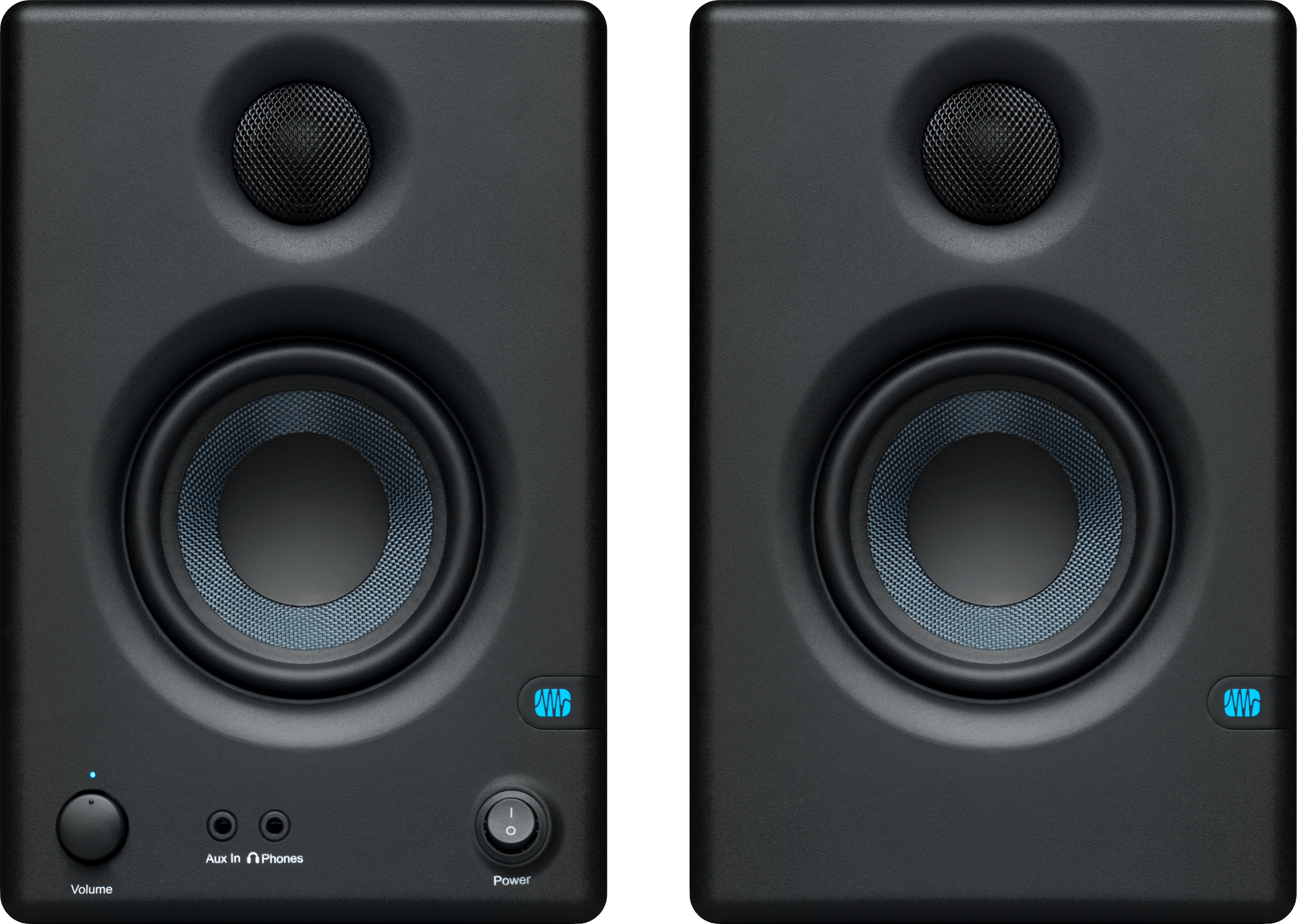
PreSonus Eris E3.5 Studio Monitors
PreSonus Eris
Skip — the 3.5-inch driver's frequency response starts around 80Hz, well above where kick drums and basslines sit in most club genres.
The speaker most beginner threads default to for a cheap desktop pair, and a rival worth ruling out here specifically.Available at Amazon(paid link) — opens Amazon in a new tab. Price and availability shown there.
KRK Rokit 5 G4 Powered Studio Monitor
KRK Rokit
It depends — 43Hz-40kHz response and 55W of power go lower than the DM-50D, but it drops RCA for a combo jack, so it needs an adapter cable to work with the FLX4.
A step-up rival for readers who outgrow the DM-50D and want more bass extension than a 5-inch Pioneer monitor delivers.Available at Amazon(paid link) — opens Amazon in a new tab. Price and availability shown there.
Sources
Pages consulted while researching this article. None of these are affiliate links.
- Pioneer DJ – DM-50D Specifications — pioneerdj.com
- Pioneer DJ – DM-40D Specifications — pioneerdj.com
- Pioneer DJ – DDJ-FLX4 Product Page — pioneerdj.com
- Digital DJ Tips – Pioneer DJ DM-50D Monitor Speakers Review — digitaldjtips.com
- Digital DJ Tips – Pioneer DJ DM-40D DJ/Producer Monitor Speakers Review — digitaldjtips.com
- Home DJ Studio – Pioneer DM-50D Review — homedjstudio.com
- PreSonus – Eris E3.5 Studio Monitor Specifications — presonus.com
- KRK – Rokit 5 Generation 4 Powered Studio Monitor — krkmusic.com