Pioneer DJM-450: The Budget Mixer for CDJ-3000 Beginners
The questionWhere do these come from?
Dj mixer
Hey, I just bought a pair of Pioneer CDJ-3000 and some Yamaha HS7. What would be the best option for a mixer without spending too much? I’m still a beginner.
For two CDJ-3000s and Yamaha HS7 monitors, the two-channel Pioneer DJM-450 is the budget-conscious mixer that matches club-standard workflow.
For two CDJ-3000s feeding a pair of Yamaha HS7 monitors, the Pioneer DJM-450 is the right call: it is a two-channel mixer, which is all two players need, its channel strip layout mirrors the DJM-900NXS2/DJM-A9 mixers actually installed in clubs, and its balanced XLR output wires straight into the HS7’s XLR input without an adapter. The two mixers you’ll see suggested instead — the cheaper DJM-250MK2 and the four-channel DJM-750MK2 — each solve a problem you don’t have, and understanding which problem tells you why they’re the wrong buy here.
Why two channels, not four
A CDJ-3000 pair needs two line/digital inputs and nothing else. The DJM-450 gives you exactly that: two channels, each with a trim knob, a 3-band EQ with isolator, a Sound Color FX selector, and a channel fader on a Magvel contact-free crossfader. That is the entire signal path a two-deck bedroom setup uses.
A four-channel mixer doesn’t make a two-deck setup more stable — it adds two channel strips, two more trim pots, and two more EQ sections you will never touch, plus the extra weight and cost that come with them. Stability here means a signal path with nothing extraneous in it to misconfigure, not a bigger mixer “for later.” If you outgrow two channels, that’s a different rig and a different mixer, not a reason to buy the bigger one now.
What the DJM-450 has that the DJM-250MK2 doesn’t
The DJM-250MK2 looks like the budget move because it shares the DJM-450’s chassis, its Magvel crossfader, and its 3-band isolator EQ. Where it diverges is the effects section: the 250MK2 gives you a single Sound Color FX (a filter) per channel and no Beat FX section at all. The DJM-450 adds three more Sound Color FX (Noise, Crush, Dub Echo, plus Sweep depending on revision), eight tempo-synced Beat FX (Delay, Echo, Spiral, Reverb, Trans, Flanger, Pitch, Roll), a USB send/return for routing external effects, and split cue headphone monitoring.
That gap matters for a specific reason tied to your CDJ-3000s: every club mixer built around the same Pioneer workflow — the DJM-900NXS2, the DJM-A9 — puts Beat FX and multiple Sound Color FX on the same control layout the DJM-450 uses. Learning to trigger a synced Echo or ride a Filter knob on the DJM-450 is learning the actual muscle memory those mixers expect. Learning on a DJM-250MK2 means learning EQ and fader work only, then relearning an entire effects section later. That’s the real cost of the cheaper mixer: not worse audio, a workflow gap you pay down later instead of now.
Just want the recommendation?
Skip to the picksThe DJM-250MK2 is still the sensible pick if effects genuinely aren’t the point yet — if the goal for now is pure beatmatching, phrasing and EQ blending on a strict budget, it does that on the same build quality as the 450 for less money. It just isn’t teaching the same instrument the CDJ-3000/DJM club pairing is built around.
Where the DJM-750MK2 stops being worth it
The DJM-750MK2 is the mixer beginners get talked into as a “future-proof” purchase, and for a two-CDJ home rig it’s the wrong trade. It’s a four-channel mixer inheriting its effects suite and converters from the DJM-900NXS2 — genuinely closer to club spec than the DJM-450 — but two of those four channels sit unused with only two players connected, and it weighs roughly twice as much (about 14.5 lb versus the DJM-450’s 7 lb) for a desk that’s already carrying two CDJ-3000s and a pair of HS7s.
Buy the DJM-750MK2 when you’re actually running four sources — two CDJs plus a laptop channel and a phono input, say — or prepping for a booth that expects four channels. If you eventually want the full club-standard four-channel experience with two CDJ-3000s specifically, DJM-A9 vs DJM-V10 for CDJ-3000s covers that upgrade path directly; it’s a later purchase, not a substitute for the DJM-450 now.
| Mixer | Channels | Onboard effects | Best fit | Verdict |
|---|---|---|---|---|
| DJM-250MK2 | 2 | 1 Sound Color FX (filter), no Beat FX | Pure EQ/beatmatching practice on the tightest budget | Consider |
| DJM-450 | 2 | 4 Sound Color FX, 8 Beat FX, USB send/return | Two CDJ-3000s, learning club-standard workflow | Buy |
| DJM-750MK2 | 4 | Full Club DNA effects suite (from DJM-900NXS2) | Four active sources or a booth spec that requires it | Skip for this rig |
Wiring it to a pair of HS7s
The DJM-450’s master output offers both balanced XLR and unbalanced RCA. The HS7 has two separate inputs — one balanced XLR, one balanced ¼" TRS — and Yamaha’s own spec sheet notes only one of the two can be active at a time on each speaker. Run XLR out of the DJM-450 into the XLR input on each HS7: it’s a balanced connection end to end, which is the version least prone to picking up hum in a bedroom with USB cables, wall warts and a laptop charger all sharing the same desk. Skip the RCA-out-to-TRS-in path unless you’re out of XLR cable — it works, but it’s unbalanced and the more likely source of noise if your monitors sit near the mixer’s power supply.
Getting rekordbox and the USB interface working
The DJM-450 has a built-in 24-bit/48kHz USB audio interface and ships with rekordbox dj and rekordbox dvs license keys included, so the same USB cable that connects it to a laptop also handles mix recording and DVS control without a separate audio interface. For CDJ-3000s running off USB drives or over a LAN with rekordbox, the mixer’s own USB port only needs to be connected if you’re recording the set or running DVS from vinyl/CDJ control — straight CDJ-to-mixer-to-monitor playback doesn’t need the laptop involved at all, which is one less thing that can go wrong in a “stable” setup.
What “stable” actually means on this mixer
The stability the DJM-450 offers isn’t about avoiding crashes — it’s a full-metal chassis rather than the plastic construction found on entry controllers, and the Magvel crossfader uses a contact-free magnetic sensor instead of a wearing physical contact point, which is the usual failure mode on cheaper faders after heavy scratch use. Reviewers at Digital DJ Tips and DJBooth both note the build quality is a step up from what the price bracket usually delivers, closer to the construction of Pioneer’s club mixers than its own beginner controllers. That’s the practical meaning of “stable” for a bedroom rig: fewer moving parts prone to failure, a signal path with only the two channels you need, and a control layout that won’t need to be relearned when you move to a club booth running a DJM-900NXS2 or DJM-A9. For more on why matching a club mixer’s layout at home actually pays off, see CDJ-3000 for Home: When Club Familiarity Wins.
The bottom line
Two good answers to different versions of the question:
Top pick
Buy this
Pioneer DJM-450 2-Channel DJ Mixer
Pioneer
Matches a two-CDJ-3000 signal path exactly and teaches the same Beat FX/Sound Color FX layout used on club mixers, unlike the cheaper alternative.
The two-channel mixer this rig actually needs: its channel strip layout, Sound Color FX and Beat FX section mirror the club-standard DJM-900NXS2/DJM-A9, and its balanced XLR out matches the HS7’s XLR input directly.Available at Amazon(paid link) — opens Amazon in a new tab. Price and availability shown there.The alternative
It depends
Pioneer DJM-250MK2 2-Channel DJ Mixer
Pioneer
Right for a stricter budget focused on beatmatching alone, but its missing Beat FX section means relearning an entire control section later on a club mixer.
A cheaper rival to the DJM-450 on the same chassis and crossfader, but it drops to one Sound Color FX and has no Beat FX section at all — fine for pure EQ and beatmatching practice, not for learning the club effects workflow.Available at Amazon(paid link) — opens Amazon in a new tab. Price and availability shown there.
Recommended products
Ordered by how well each one fits the situations above. Each link below is a paid link.

Pioneer DJM-450 2-Channel DJ Mixer
Pioneer
Buy — Matches a two-CDJ-3000 signal path exactly and teaches the same Beat FX/Sound Color FX layout used on club mixers, unlike the cheaper alternative.
The two-channel mixer this rig actually needs: its channel strip layout, Sound Color FX and Beat FX section mirror the club-standard DJM-900NXS2/DJM-A9, and its balanced XLR out matches the HS7’s XLR input directly.Available at Amazon(paid link) — opens Amazon in a new tab. Price and availability shown there.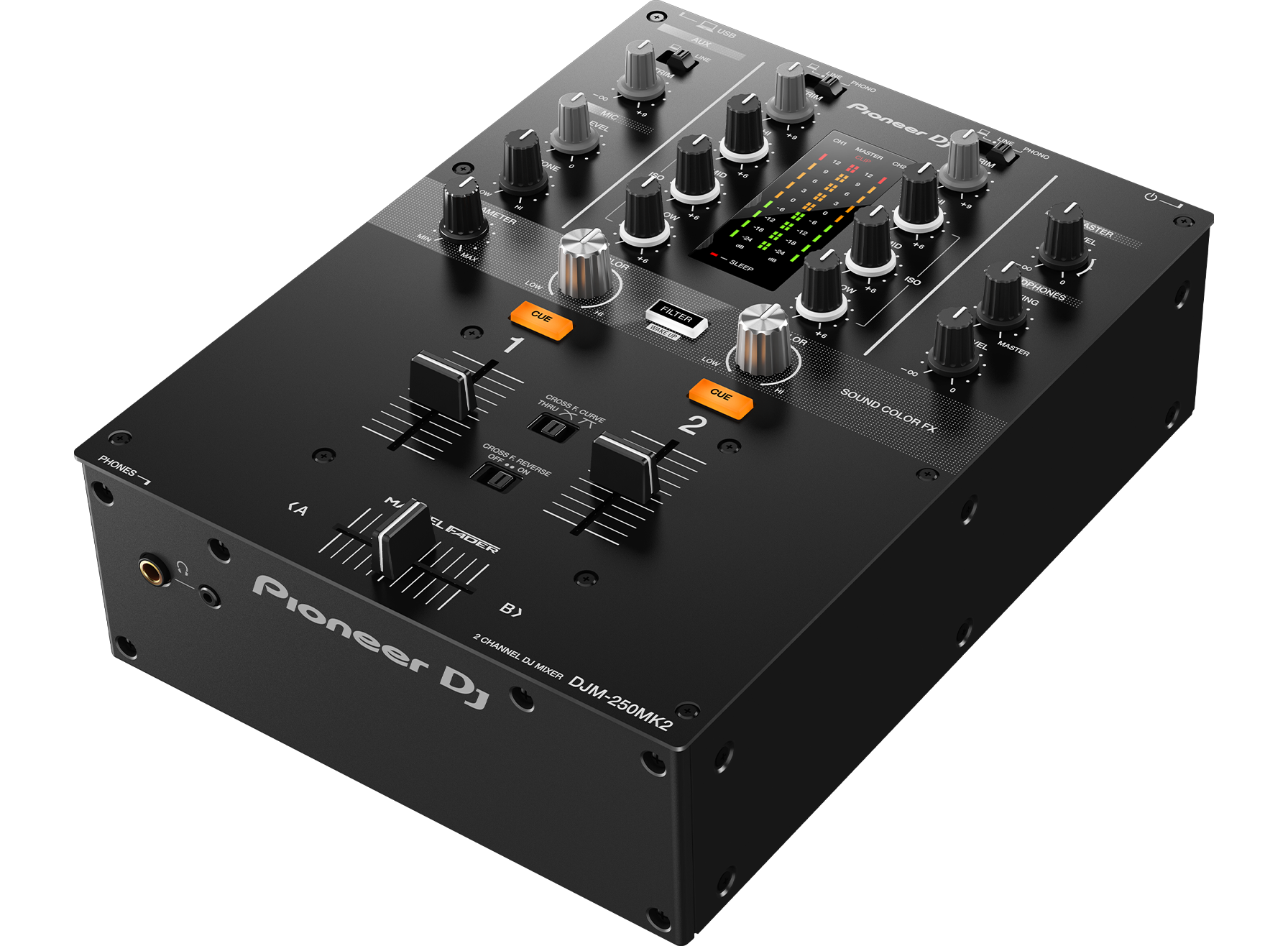
Pioneer DJM-250MK2 2-Channel DJ Mixer
Pioneer
It depends — Right for a stricter budget focused on beatmatching alone, but its missing Beat FX section means relearning an entire control section later on a club mixer.
A cheaper rival to the DJM-450 on the same chassis and crossfader, but it drops to one Sound Color FX and has no Beat FX section at all — fine for pure EQ and beatmatching practice, not for learning the club effects workflow.Available at Amazon(paid link) — opens Amazon in a new tab. Price and availability shown there.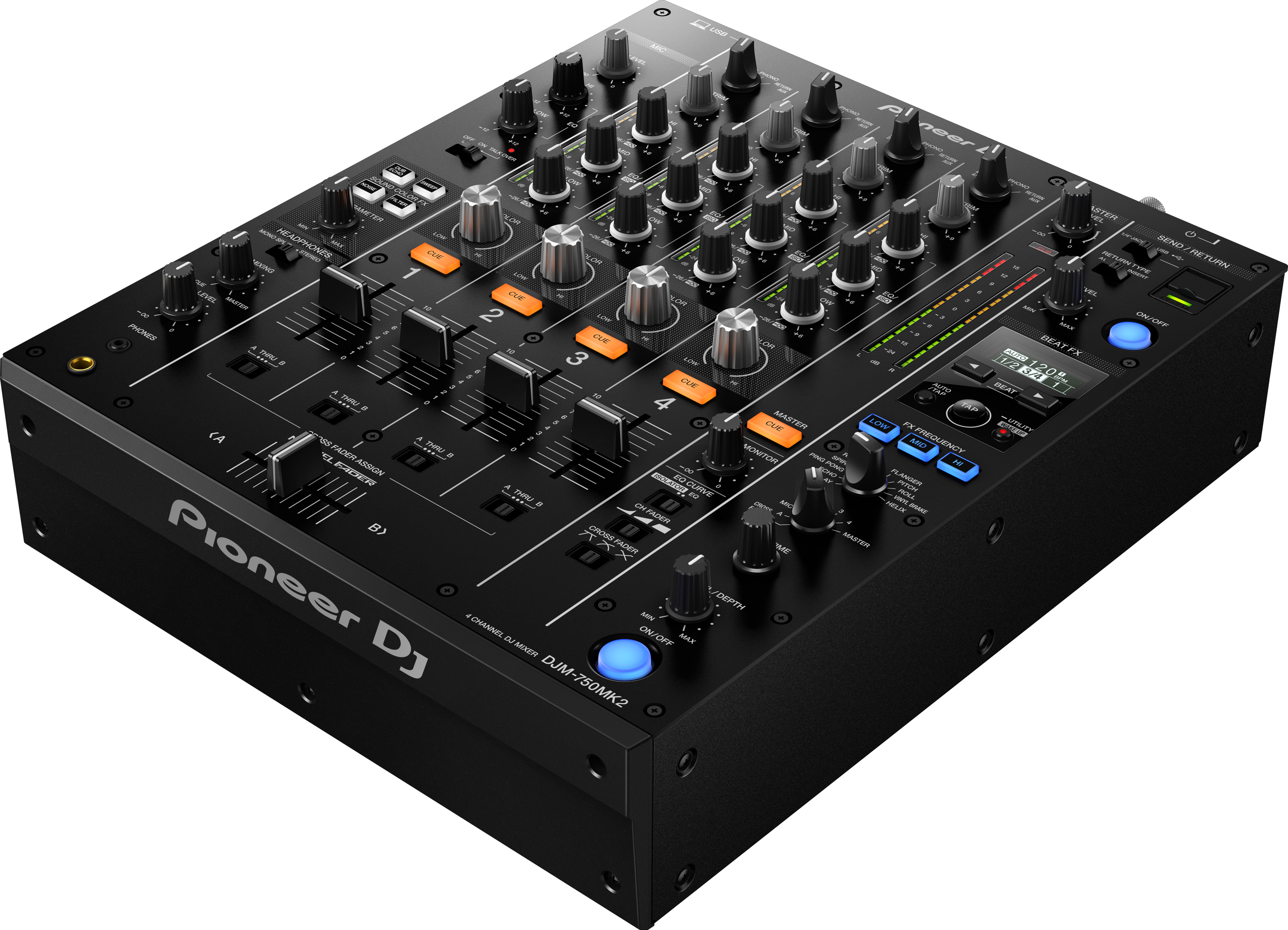
Pioneer DJM-750MK2 4-Channel DJ Mixer
Pioneer
Skip — Two of its four channels go unused in a two-CDJ-3000 setup, and its weight (about 14.5 lb versus 7 lb) and cost aren't earned until a third or fourth source is actually connected.
The four-channel step up beginners get talked into as ‘future-proofing.’ With only two CDJ-3000s connected, two of its channels sit idle while it adds roughly double the weight and cost of the DJM-450.Available at Amazon(paid link) — opens Amazon in a new tab. Price and availability shown there.
Sources
Pages consulted while researching this article. None of these are affiliate links.
- DJM-450 - 2-channel DJ mixer with Beat FX (Pioneer DJ) — pioneerdj.com
- DJM-250MK2 - 2-channel DJ mixer (Pioneer DJ) — pioneerdj.com
- Introducing the DJM-750MK2, professional 4-channel mixer (Pioneer DJ News) — pioneerdj.com
- DJ mixer comparison chart (Pioneer DJ) — pioneerdj.com
- Pioneer DJ DJM-450 Mixer Review - Digital DJ Tips — digitaldjtips.com
- Pioneer DJ DJM-250MK2 Mixer Review - Digital DJ Tips — digitaldjtips.com
- Pioneer DJM-450 Mixer Review - DJBooth — djbooth.net
- HS Series (HS5/HS7/HS8/HS8S) - Specs (Yamaha USA) — usa.yamaha.com