Viltrox 35mm F1.7 Fuji Sample Photos: The Full Answer
The questionWhere do these come from?
Brand new Viltrox 35mm/1.4 or secondhand Fuji XF 35mm/1.4?
I am a beginner and I've got a TTartisan 35mm 1.4 with manual aperture and manual focus. I don't enjoy the manual maneuvering but love the focal length and aperture, so I want to upgrade my lens.
Full-resolution Fuji samples show a sharp standard prime with smooth close-up blur, visible vignetting, and busier distant bokeh.
Full-resolution Fuji samples show a sharp standard prime with smooth close-up blur, visible vignetting, and busier distant bokeh. The Viltrox AF 35mm F1.7 XF is sharp enough to replace a manual everyday prime; the real compromises are wide-open corner vignetting and background rendering that gets busier as the subject moves further from the lens.
Where the full-resolution samples come from
Judge the lens from these galleries rather than from resized social-media posts:
- Amateur Photographer’s Fujifilm X-T5 samples include downloadable full-resolution images. Click an individual photo to open the full-size file. The set includes examples at f/1.7, f/4 and f/8, along with exposure and ISO information.
- Digital Camera World’s 18-image Fujifilm X-T50 gallery covers interiors, buildings, close subjects and low-light scenes. Look for the “View Original” link beneath the gallery. Its EXIF-labelled examples range from f/1.7 to f/5.6.
- Phillip Reeve’s Fujifilm X-S10 samples and optical tests are the most useful for examining bokeh, close-focus sharpness, vignetting, flare, coma and performance at different apertures.
- Viltrox’s official product gallery includes samples identified as being taken with the Fujifilm X-T5, X-T3 and X-S10. These are useful for an initial impression, but the independent full-resolution galleries are better for inspecting fine detail and optical flaws.
Make sure the sample really identifies the AF 35mm F1.7 XF. Searches also surface images from the unrelated Viltrox 35mm F1.2 LAB, 35mm F1.8 full-frame lenses and Viltrox 33mm F1.4. Those photographs do not show how this lens performs.
How sharp it is, wide open and stopped down
At f/1.7, the samples show strong subject separation and generally good detail around the focus point. The X-T5 files are slightly softer wide open than at f/4, but they do not suggest that the lens is unusably soft. Amateur Photographer found its strongest across-frame detail around f/4 to f/8, while noting that the difference at f/1.7 becomes most obvious during close inspection rather than normal viewing.
Stopped down, the lens looks considerably more even. The f/4 and f/8 samples show crisp detail extending toward the edges, which makes the lens suitable for street scenes, environmental portraits and general travel photography. The official specification gives it a 35mm focal length and a 53mm full-frame-equivalent view, so the framing is closer to a classic normal lens than a wide street lens.
What the background blur looks like
Close subjects get the smoothest background rendering. One X-T5 example at f/1.7, 1/120 sec and ISO 125 shows both the benefit and the compromise: soft blur behind the subject, accompanied by a mild glow around fine in-focus detail. That glow is most relevant for close-up photography at large apertures.
Backgrounds become less controlled as subject distance increases. Phillip Reeve’s samples show onion-ring texture inside bright bokeh circles, cat-eye shapes near the frame edges and occasional doubled edges in complex backgrounds. This does not ruin ordinary portraits, but it matters if smooth rendering of foliage, branches or distant lights is the main reason for buying a fast prime.
There can also be a small amount of green fringing around high-contrast objects behind the focus plane. Lateral colour fringing at the frame edges is much less apparent. The practical reading of the samples is straightforward: f/1.7 works well for people and available-light photography, but it is not a flawless “cream machine” in every background.
Just want the recommendation?
Skip to the picksVignetting, distortion and flare
The main visible defect is vignetting at f/1.7. Corners are distinctly darker in suitable scenes, but the effect is largely reduced by f/4. Slight pincushion distortion can also bend straight lines near the edges. It is subtle in ordinary photographs, although architecture and copy work make it easier to see. Amateur Photographer reports that a value of -3 in Adobe Camera Raw’s Optics distortion control is an effective manual correction.
Direct sunlight can produce noticeable flare spots, although overall contrast usually remains intact. Sunstars are weak, so this is not an especially compelling lens for photographers who deliberately stop down to turn streetlights or the sun into sharp rays.
Viltrox or the Fujinon XF35mmF2 R WR
The relevant Fujifilm alternative is usually the FUJINON XF35mmF2 R WR, not the older XF35mmF1.4 R. Manufacturer specifications show how closely the two normal primes match physically:
| Specification | Viltrox AF 35mm F1.7 XF | FUJINON XF35mmF2 R WR |
|---|---|---|
| Full-frame-equivalent focal length | 53mm | 53mm |
| Aperture range | f/1.7–f/16 | f/2–f/16 |
| Minimum focus distance | 0.33m | 0.35m |
| Approximate weight | 170g | 170g |
These figures come from the official Viltrox specification and Fujifilm’s XF35mmF2 specification.
On sample-photo quality alone, there is no compelling reason to reject the Viltrox. Choose it when the priorities are autofocus, the f/1.7 aperture and strong everyday sharpness. Its aperture is roughly half a stop brighter than f/2, and it focuses 2cm closer.
Choose the Fujinon when physical controls and environmental protection matter more. Fujifilm documents an aperture ring and a rubber mount ring for dust and splash protection in the XF35mmF2 owner’s manual. Fujifilm also specifies eight barrel seals and operation down to -10°C. The Viltrox has no aperture ring or full weather-sealed construction; aperture is changed with the camera’s command dial.
For a beginner replacing a manual 35mm lens, the Viltrox is therefore the sensible image-quality choice unless an aperture ring, metal exterior and weather resistance are requirements. The sample files do not reveal an optical shortcoming severe enough to outweigh its autofocus and wider maximum aperture.
What the samples still don’t settle
Sample galleries cannot prove that autofocus will behave identically on every Fujifilm body or firmware combination. Amateur Photographer found the STM autofocus quiet and accurate but not exceptionally fast. Video users should also note reported focus breathing at close distances.
Web samples are affected by the camera body, film simulation, raw processing, sharpening, noise reduction and compression. Download the original file where offered, check the focus point at 100%, and compare an f/1.7 image with an f/4 image from the same gallery. If autofocus reliability on a specific camera is the deciding factor, the honest final check is a returnable purchase or a local trial; still photographs alone cannot answer that part.
The bottom line
Plainly:
Top pick
Buy this
Viltrox 35mm F1.7
Viltrox
The article recommends it for replacing a manual everyday prime because it combines autofocus, an f/1.7 maximum aperture and strong everyday sharpness.
Available at Amazon(paid link) — opens Amazon in a new tab. Price and availability shown there.
Recommended products
Ordered by how well each one fits the situations above. Each link below is a paid link.
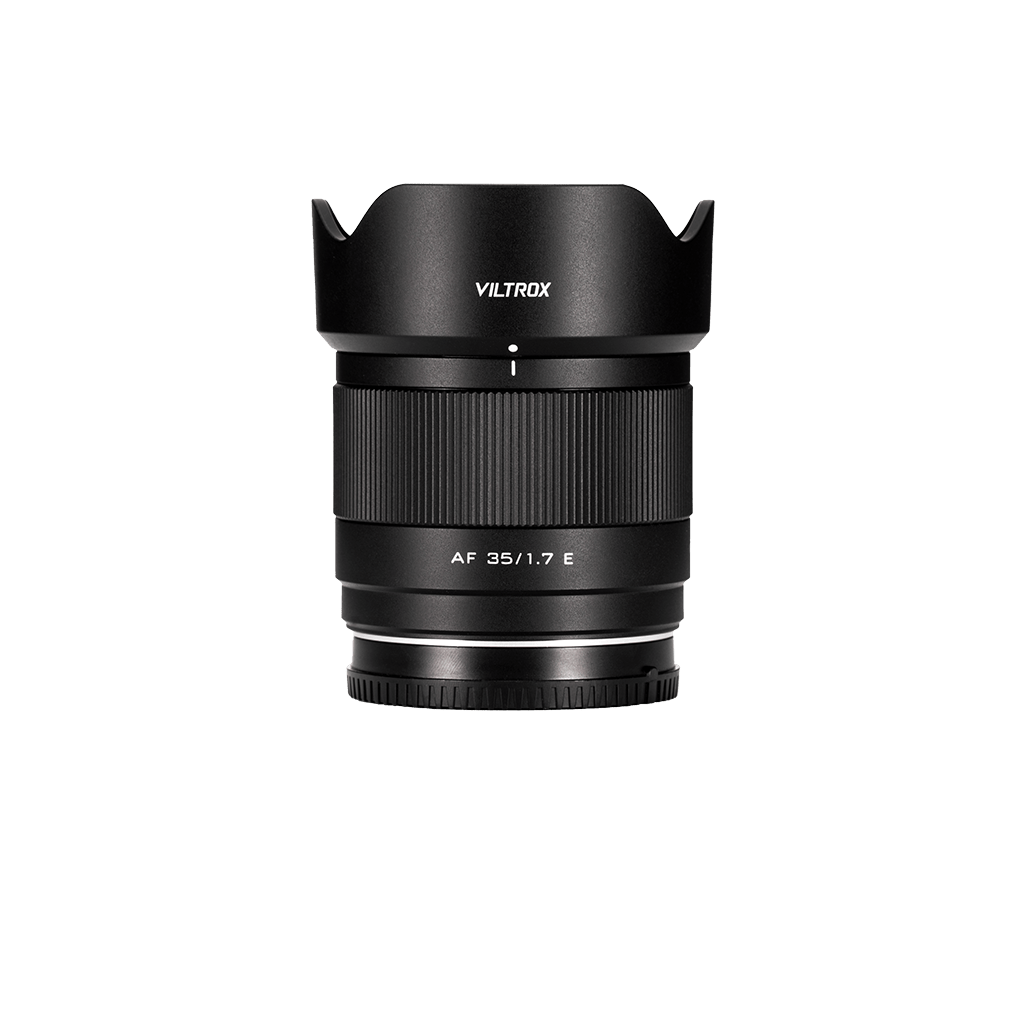
Viltrox 35mm F1.7
Viltrox
Buy — The article recommends it for replacing a manual everyday prime because it combines autofocus, an f/1.7 maximum aperture and strong everyday sharpness.
Available at Amazon(paid link) — opens Amazon in a new tab. Price and availability shown there.
Sources
Pages consulted while researching this article. None of these are affiliate links.
- Viltrox AF 35mm F1.7 Air for Fujifilm X-Mount — viltrox.com
- Viltrox AF 35mm F1.7 XF Review and Full-Resolution Samples — amateurphotographer.com
- Viltrox AF 35mm F1.7 Review and 18-Image Sample Gallery — digitalcameraworld.com
- Viltrox AF 35mm F1.7 XF Review and Optical Samples — phillipreeve.net
- FUJINON XF35mmF2 R WR Specifications — fujifilm-x.com
- FUJINON XF35mmF2 R WR Product Overview — fujifilm-x.com
- FUJINON XF35mmF2 R WR Owner’s Manual — dl.fujifilm-x.com