Sony RX100 VA: Pocket Camera for Night Out Photos?
The questionWhere do these come from?
If the Canon G7X Mark III is an overpriced product of the TikTok influencer hivemind, is there another camera that is smaller, cheaper, and better?
I won't disagree it's overpriced, but I'm looking for a small edc camera and I can't find anything smaller better and cheaper.
The Sony RX100 VA is the better pocket pick for low light, built-in flash and casual social photos, unless you want the Canon G7 X III's longer zoom.
The Sony RX100 VA is the stronger buy if you want a camera that really lives in a jacket pocket and handles dim bars, dinners and parties with a built-in flash. Its 24-70mm f/1.8-2.8 lens and 1-inch stacked sensor deliver sharper, cleaner indoor shots than any phone’s default mode. The Canon G7 X Mark III is the rival worth weighing, and it wins on specific conditions covered below, not on image quality in the dark.
This page rests on published specifications and on what reviewers report. Nobody here has handled either camera. Independent testing that exists is limited: Consumer Reports, which runs lab and field testing, rated the RX100 VA very good for low light without flash and good for flash shots. We found no published head-to-head low-light measurement of the RX100 VA against the G7 X Mark III, so the comparison below uses each maker’s specifications and general reviewer consensus. Treat close calls accordingly.
The short comparison
| Verdict | What decides it | The catch | |
|---|---|---|---|
| Sony RX100 VA | Buy | 24-70mm f/1.8-2.8, pop-up EVF, about 299 g with battery and card (Imaginated) | No touchscreen, micro-USB charging era design, menus are dense |
| Canon G7 X Mark III | Consider | 24-100mm reach, touchscreen, USB-C, vlogging features | No viewfinder, and the sensor is the same 1-inch class so low light is no better |
| Sony ZV-1 | Consider | Same 24-70mm f/1.8-2.8 idea, flip-out screen, better for video | No built-in flash, so it fails the flash part of this question |
Why the RX100 VA fits the social-life brief
Three things matter for photos at night with friends: how much light the lens takes in, whether a flash is always with you, and whether it fits in a pocket you will actually carry.
Just want the recommendation?
Skip to the picks- Light. The lens is f/1.8 at the wide end and f/2.8 at 70mm. Both cameras share that general aperture range, but the Sony holds a wider aperture on a shorter zoom, which is what you use in a restaurant.
- Flash. The RX100 VA has a built-in pop-up flash. Use fill flash with negative flash compensation so faces are lit without the flat, blown-out snapshot look. Slow-sync flash mode keeps the background glow of a bar behind people instead of a black void.
- Size. About 101.6 x 58.1 x 41.0 mm and 299 g, per the Imaginated listing above. That is jacket-pocket size, not trouser-pocket comfortable, but small enough that it does not become a bag-only camera.
- Autofocus. Reviewers consistently describe the 315-point phase-detect system and fast burst as ahead of the older RX100 models, which helps with moving people and candid laughter.
Where the Canon G7 X Mark III wins
Choose the Canon if any of these is true:
- You shoot a lot of vertical video or livestream. The Mark III was marketed for streaming and has a touchscreen and microphone input; the RX100 VA is a stills-first design.
- You often photograph from across a room or at events and need reach. The Canon zooms to 100mm; the Sony stops at 70mm.
- You dislike menu diving. A touchscreen makes setting focus point and switching modes faster.
- You prefer Canon’s JPEG colour straight from the camera, which many casual shooters describe as warm and flattering on skin. This is a taste claim, not a measured one.
If your photos are mostly group shots, food and portraits at arm’s length indoors, the extra 30mm of reach rarely matters, and the Sony’s viewfinder helps outdoors in sun, where a rear screen washes out.
What to watch with the RX100 VA
- Battery. Rated for roughly 220 shots per charge by CIPA standards, so carry a spare NP-BX1 if you will be out all night.
- Age. It dates from 2018. Newer RX100 VII adds a 24-200mm lens, but it is larger in the hand and a different proposition; it is a rival only if you want reach.
- Used and refurbished stock. Because the model is no longer the newest, availability varies; check the battery and lens for wear on second-hand units.
- Menus. Sony’s menu system is deep. Set a custom function to flash mode and flash compensation once and leave it.
Which one to skip
None of the three is a bad camera, so nothing here earns a skip. The ZV-1 is marked consider only because it has no built-in flash: if flash is one of your reasons for the purchase, it fails the brief, though it is excellent if you mostly record video. Do not pay a markup on the Canon assuming it is the safer pick for low light; on specifications, the two share the same sensor class and low-light advantage over a phone, and the Sony costs you nothing in image quality.
For a related decision about a larger step up, see Fuji X-E5 vs Sony A7C II: The Casual-Shooter Verdict, which covers when a pocket compact stops being enough.
The bottom line
Both are defensible — the split is what you do with it:
Top pick
Buy this
Sony Cybershot DSC-RX100 VA Premium Compact Digital Camera Bundle | For Photography & Video + 64GB Memory Card + Tripod + Cleaning Kit + Card Reader + Case (DSC-RX100M5A/B)
Sony
It has a fast f/1.8-2.8 lens, built-in flash and a pop-up viewfinder in a body of about 299 g.
The subject: pocketable 1-inch compact with a 24-70mm f/1.8-2.8 lens, pop-up flash and EVF. Drawbacks are the 70mm limit, no touchscreen and short battery life.Available at Amazon(paid link) — opens Amazon in a new tab. Price and availability shown there.The alternative
It depends
Canon PowerShot G7 X Mark III
Canon PowerShot
It is better for vlogging and reach, but offers no low-light sensor advantage over the Sony.
The rival: same 1-inch class, longer 24-100mm zoom, touchscreen and streaming features; wins if you shoot video or need reach. It has no viewfinder.Available at Amazon(paid link) — opens Amazon in a new tab. Price and availability shown there.
Recommended products
Ordered by how well each one fits the situations above. Each link below is a paid link.

Sony Cybershot DSC-RX100 VA Premium Compact Digital Camera Bundle | For Photography & Video + 64GB Memory Card + Tripod + Cleaning Kit + Card Reader + Case (DSC-RX100M5A/B)
Sony
Buy — It has a fast f/1.8-2.8 lens, built-in flash and a pop-up viewfinder in a body of about 299 g.
The subject: pocketable 1-inch compact with a 24-70mm f/1.8-2.8 lens, pop-up flash and EVF. Drawbacks are the 70mm limit, no touchscreen and short battery life.Available at Amazon(paid link) — opens Amazon in a new tab. Price and availability shown there.
Canon PowerShot G7 X Mark III
Canon PowerShot
It depends — It is better for vlogging and reach, but offers no low-light sensor advantage over the Sony.
The rival: same 1-inch class, longer 24-100mm zoom, touchscreen and streaming features; wins if you shoot video or need reach. It has no viewfinder.Available at Amazon(paid link) — opens Amazon in a new tab. Price and availability shown there.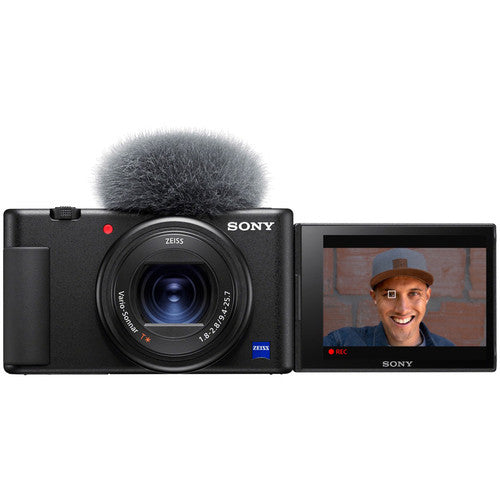
Sony ZV-1 Digital Camera for Content Creators
Sony
It depends — It has no built-in flash, which fails the flash requirement in this question.
An alternative from Sony with a similar 24-70mm f/1.8-2.8 lens and flip-out screen, better suited to video; right only if flash is not a priority.Available at Amazon(paid link) — opens Amazon in a new tab. Price and availability shown there.
Sources
Pages consulted while researching this article. None of these are affiliate links.
- Consumer Reports: Sony Cyber-shot RX100 VA — consumerreports.org
- Imaginated: Sony Cyber-shot DSC-RX100 VA — imaginated.com
- Imaging Resource: Sony RX100 VA comparison — imaging-resource.com