Second M43 Talking-Head Lens: Lumix 42.5mm f/1.7 or Not?
The questionWhere do these come from?
I’m in a bit of a predicament, need lens recommendation. See below
Friends, I come to you again with a request for gear.
For a two-camera talking-head setup, buy a second Lumix 42.5mm f/1.7: matching lenses keep colour and framing consistent for far less than the Leica f/1.2.
The Panasonic Lumix G 42.5mm f/1.7 is the sensible second lens for a two-camera talking-head setup: if camera A already carries a 42.5mm, putting the same model on camera B is the cheapest way to get identical framing, colour and contrast. The Leica DG Nocticron 42.5mm f/1.2 is the upgrade only if you want its shallower depth of field. The Sigma 56mm f/1.4 is the one that breaks consistency, because it is a different focal length from a different maker.
Why a matched pair beats a “better” mismatched lens
In a two-camera interview or talking-head cut, the viewer sees the same person from two angles. Any difference in contrast curve, colour cast or background blur shows up at every cut. Colour grading can fix some of that, but rendering differences between lens designs (flare behaviour, micro-contrast, how the background blurs) are harder to match than a white balance offset.
Two identical lenses on two bodies (ideally the same sensor generation) take most of that problem away. That is the core argument for a second 42.5mm f/1.7, and it holds whichever of the three lenses you started with: match what you already own where you can.
The three lenses compared
| Verdict | What decides it | The catch | |
|---|---|---|---|
| Panasonic Lumix G 42.5mm f/1.7 | Buy | 85mm-equivalent framing, compact lens with built-in stabilisation | Edges are softer wide open than the f/1.2 |
| Panasonic Leica DG Nocticron 42.5mm f/1.2 | Consider | Same focal length, brighter aperture, DXOMark’s top-scoring M43 lens at the time of its review | Several times the weight and cost; a matched pair is expensive |
| Sigma 56mm f/1.4 DC DN Contemporary | Consider | Roughly 112mm equivalent, strong subject separation | Different focal length and different maker, so it will not match a 42.5mm |
Where the Lumix 42.5mm f/1.7 earns its place
Reviewers describe it consistently. Imaging Resource’s lab review and Photozone both test sharpness, and Cameralabs and PhotographyBlog report a sharp centre wide open with good-to-very-good edges. For a talking head, the subject sits in the centre and the edge falls off into background blur, so the edge softness that shows up in charts matters little. Stopping down to around f/2.8 gives a comfortable depth of field for a seated speaker who moves a little.
Just want the recommendation?
Skip to the picksPractical points for video:
- The lens is small and light (roughly 130 g), which keeps two rigs balanced on light tripods or on a slider.
- It has optical stabilisation. Whether it combines with in-body stabilisation depends on the body, so check your camera’s stabilisation menu rather than assuming.
- At f/1.7 on Micro Four Thirds you get a separated background without the razor-thin focus plane that makes a moving speaker drift out of focus.
When the Leica f/1.2 makes sense
DXOMark reviewed the Nocticron as the best-performing Micro Four Thirds lens it had measured at that time, and it notes that the gap to lesser lenses narrows as you stop down. For a talking head recorded at f/2 to f/2.8 to keep the speaker in focus, a good part of what you pay for is therefore not used. Choose the f/1.2 if you shoot wide open in dim rooms, if one camera is a stills-and-video hybrid you also use for portraits, or if you plan to buy two. Mixing one Leica and one Lumix is the worst of both: you pay for the premium lens and still get two different renderings, although at f/2.8 the difference will be smallest.
The Sigma 56mm f/1.4 case, and when it stops applying
The Sigma is a respected portrait lens, but at 56mm it frames about 112mm equivalent, noticeably tighter than the 85mm equivalent of a 42.5mm. If both cameras use the same lens, it works as a matched pair with a tighter look and needs more room: roughly a third more distance from the speaker for the same framing. In a small room that is a real limit. If the second camera is meant to be a tighter cut-in angle from a different position, the Sigma can be a deliberate choice, but you are then matching colour between two lens brands in post.
What to skip
Skip the idea of buying the Leica 42.5mm f/1.2 purely as a “match” for a Lumix 42.5mm f/1.7: it is the same focal length but a different optical design, so it does not produce an identical image, and the extra cost buys aperture you probably will not use on a talking head.
Limits of this answer
No independent lab has published side-by-side video colour matching between these lenses. The recommendation rests on published sharpness tests and the general principle that identical lenses render identically. Before committing, check that the two bodies share a colour profile and match them with a grey card; the lens is only part of the match.
The bottom line
Both are defensible — the split is what you do with it:
Top pick
Buy this
Panasonic LUMIX G Lens, 42.5MM, F1.7 ASPH., MIRRORLESS Micro Four Thirds, Power Optical I.S., H-HS043K (USA Black)
Panasonic
Identical lenses on both cameras keep rendering matched, and reviewers report a sharp centre wide open, which is where a talking head sits.
The pick: a second copy matches the first lens exactly, which is what a two-camera talking-head cut needs. Drawback: softer edges wide open than the f/1.2.Available at Amazon(paid link) — opens Amazon in a new tab. Price and availability shown there.The alternative
It depends
Sigma 56mm f/1.4 DC DN Contemporary Lens for Sony E with 64GB Extreme PRO Bundle
Sigma
Its 56mm focal length does not match a 42.5mm, and it adds a second lens brand to colour-match.
Alternative for a tighter portrait look, roughly 112mm equivalent; works if both cameras use it or the second angle is meant to differ. Needs more room from the speaker.Available at Amazon(paid link) — opens Amazon in a new tab. Price and availability shown there.
Recommended products
Ordered by how well each one fits the situations above. Each link below is a paid link.
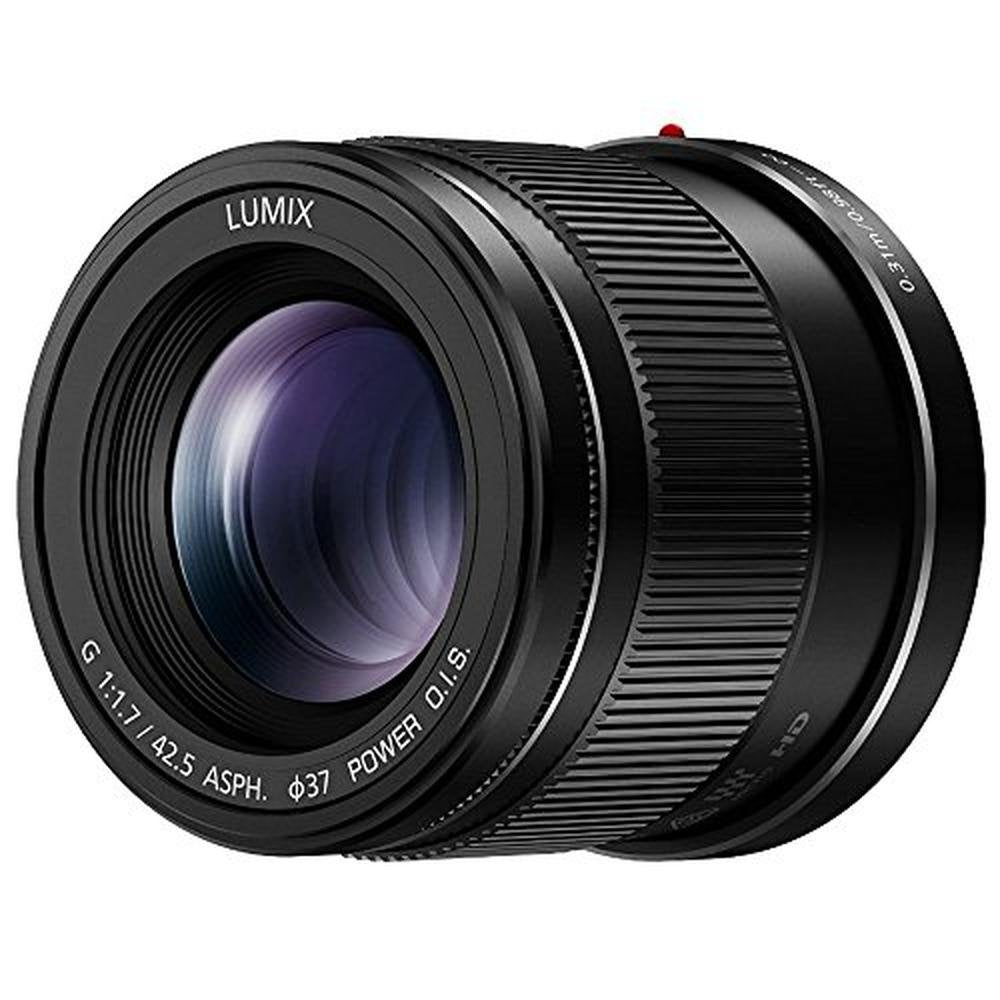
Panasonic LUMIX G Lens, 42.5MM, F1.7 ASPH., MIRRORLESS Micro Four Thirds, Power Optical I.S., H-HS043K (USA Black)
Panasonic
Buy — Identical lenses on both cameras keep rendering matched, and reviewers report a sharp centre wide open, which is where a talking head sits.
The pick: a second copy matches the first lens exactly, which is what a two-camera talking-head cut needs. Drawback: softer edges wide open than the f/1.2.Available at Amazon(paid link) — opens Amazon in a new tab. Price and availability shown there.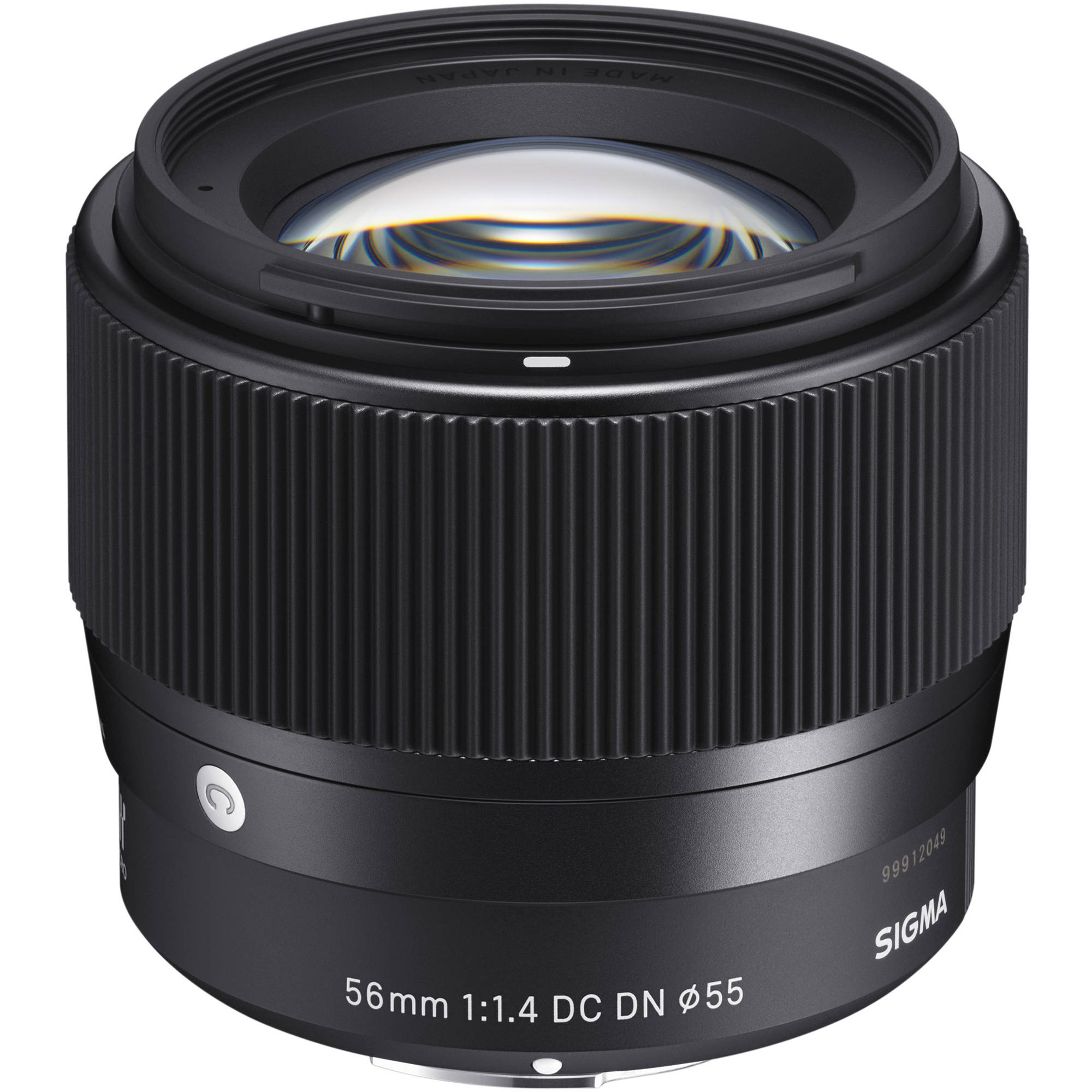
Sigma 56mm f/1.4 DC DN Contemporary Lens for Sony E with 64GB Extreme PRO Bundle
Sigma
It depends — Its 56mm focal length does not match a 42.5mm, and it adds a second lens brand to colour-match.
Alternative for a tighter portrait look, roughly 112mm equivalent; works if both cameras use it or the second angle is meant to differ. Needs more room from the speaker.Available at Amazon(paid link) — opens Amazon in a new tab. Price and availability shown there.
Sources
Pages consulted while researching this article. None of these are affiliate links.
- Panasonic 42.5mm f/1.7 ASPH POWER OIS LUMIX G — Imaging Resource lab review — imaging-resource.com
- Panasonic Lumix G 42.5mm f1.7 review — Cameralabs — cameralabs.com
- Panasonic Lumix G 42.5mm f/1.7 ASPH Power OIS review — Photozone — photozone.de
- Panasonic Leica DG Nocticron 42.5mm f1.2 review — DXOMark — dxomark.com