RX 9070 XT: When the Upgrade Is Worth It
The question
amd radeon rx 9070 xt the user has a clear budgeted gpu choice list and asks whether each option is worth the
The RX 9070 XT is worth the step up for 1440p or 4K gaming, unless the RX 9070 is at least 15% cheaper or heavy ray tracing matters most.
The Radeon RX 9070 XT is the best-value choice on this shortlist for high-refresh 1440p and capable 4K gaming when its premium over the RX 9070 is 15% or less. Skip the RTX 5070 when it occupies the same budget tier: current 52-game testing measured the RX 9070 XT 24% faster at 1440p and 25% faster at 4K, and the Radeon also has 16GB rather than 12GB of memory.
The RTX 5070 Ti is the legitimate alternative, but only for a narrower buyer: choose it when heavy ray tracing, path tracing, CUDA applications or Nvidia-specific software matters enough to outweigh a small overall gaming-performance difference. It gets the value equation wrong for raster-first gamers when its premium is much larger than its measured 1.4% lead at 1440p and 4% lead at 4K.
| GPU | Measured gaming position | Memory and rated power | Verdict |
|---|---|---|---|
| Radeon RX 9070 XT | Baseline; 12% ahead of RX 9070 | 16GB, 304W | Buy |
| Radeon RX 9070 | 12% behind the XT | 16GB, 220W | Consider below a 15% relative premium |
| GeForce RTX 5070 Ti | 1.4% ahead at 1440p; 4% at 4K | 16GB, 300W | Consider for RT or CUDA |
| GeForce RTX 5070 | 24% behind at 1440p; 25% at 4K | 12GB, 250W | Skip near the XT’s budget tier |
The averages come from separate TechSpot 52-game suites conducted in 2026, not manufacturer projections. Individual games can depart sharply from those averages, so the right answer still depends on what you play.
The RX 9070 XT premium that makes sense
TechSpot retested the RX 9070 and RX 9070 XT on Windows 11 25H2 with Radeon Adrenalin 26.7.1. Across 52 games, the XT was 12% faster at both 1440p and 4K. The gap could reach roughly 25% under particularly demanding conditions, but lighter or CPU-limited workloads produced much smaller differences. Their resulting rule is useful: the XT makes sense while its premium stays at 15% or less; beyond that, the non-XT card offers more performance for each unit of spending. TechSpot’s RX 9070 versus RX 9070 XT test
That 12% average is the number to use when comparing real listings. Ignore tiny factory-overclock differences between board partners: a modest clock increase does not turn one RX 9070 XT into a different performance class. Pay extra only for a cooler that is quieter, dimensions that fit, a useful dual-BIOS switch or better power-connector placement.
The XT also has the stronger specification underneath. AMD lists 4,096 stream processors and 64 compute units, compared with 3,584 processors and 56 compute units in the RX 9070. Both retain 16GB of 20Gbps GDDR6 on a 256-bit interface, so buying the non-XT does not reduce VRAM capacity or bandwidth. AMD’s RX 9070 XT specifications
For 1080p esports, neither Radeon necessarily earns its full cost because the CPU or a game-engine frame cap can become the limit. At 1440p with high settings, the XT’s extra performance is easier to use. At native 4K, where the measured gap remains 12% and demanding games can fall near 60 fps, those extra frames become more valuable.
Where the RX 9070 is actually smarter
The non-XT RX 9070 is not a bad GPU. It is the better choice when it sits at least 15% below the XT, when a 220W board-power rating is an important ceiling, or when the case cannot accept a large XT card.
A Sapphire Pulse RX 9070 illustrates the physical difference clearly. Sapphire specifies a 280 × 120.25 × 51.5mm card, two eight-pin power connectors and a 650W minimum PSU. Its Pulse RX 9070 XT counterpart is 320mm long, occupies three slots and carries a 304W rating. Sapphire Pulse RX 9070 specifications
AMD’s reference ratings put 84W between the GPUs. TechSpot’s game testing found the RX 9070 drawing 15% to 23% less power than the XT, confirming that this is more than a paper difference. In a small room, compact enclosure or electricity-constrained system, that lower heat output can be worth surrendering 12% performance.
Just want the recommendation?
Skip to the picksDo not buy the RX 9070 with the plan to make it an XT later. Its disabled cores cannot be restored, and TechSpot found ordinary RX 9070 cards constrained to roughly 2.8GHz by enforced power limits. Cross-flashing an XT BIOS adds failure and warranty risk without restoring the physically disabled hardware. For an older processor, also check whether the GPU will be held back before paying for the XT; this RX 9070 XT and Ryzen 5 3600 pairing guide covers that separate decision.
What the RTX 5070 Ti buys instead
The RTX 5070 Ti is not meaningfully faster in ordinary gaming averages. TechSpot’s May 2026 test used 52 games, Windows 11 25H2, Nvidia driver 596.49 and Radeon driver 26.5.2. The RTX 5070 Ti led by only two frames per second at 1440p—about 1.4%—and averaged 84 fps against the Radeon’s 81 fps at native 4K, a 4% difference. TechSpot’s 52-game RX 9070 XT and RTX 5070 Ti comparison
Heavy ray tracing can reverse the answer. The same test found the RTX 5070 Ti 20% to 24% ahead in F1 25 with Ultra High ray tracing, 56% ahead in Indiana Jones and the Great Circle with high ray tracing at 1440p, and 63% ahead in Doom: The Dark Ages with path tracing. Some of those modes remained too slow on both GPUs without upscaling, but the architectural advantage is real.
Nvidia also specifies 16GB of GDDR7 on a 256-bit interface, DLSS 4, Studio Drivers and Nvidia Broadcast. The MSI Ventus 3X OC implementation uses a 16-pin input, measures 303 × 121 × 49mm and calls for a 750W PSU. Nvidia’s RTX 5070 Ti specifications MSI Ventus 3X OC specifications
That makes the RTX 5070 Ti worth considering for Blender rendering, CUDA-dependent tools, heavy path tracing or a workflow already tied to Nvidia software. For conventional rasterized gaming, its premium should stay close to its single-digit performance advantage; otherwise the RX 9070 XT is the rational purchase.
Why the RTX 5070 is the one to skip
Skip the GeForce RTX 5070 when it costs anywhere near an RX 9070 XT: TechSpot’s September 2026 52-game test measured the Radeon 24% faster at 1440p and 25% faster at 4K, with substantially stronger overall 1% lows. The RTX 5070 also carries only 12GB on a 192-bit interface, while the Radeon supplies 16GB on a 256-bit interface. TechSpot’s updated RX 9070 XT versus RTX 5070 test
The RTX 5070 does have a lower 250W rating, but that alone does not rescue it for a buyer targeting RX 9070 XT performance. MSI’s Ventus 3X OC still measures 302mm long, needs a 16-pin power connection and recommends a 650W PSU, so it is not automatically a compact-card solution either. MSI RTX 5070 Ventus 3X OC specifications
An exception exists for software that specifically requires CUDA or another Nvidia-only feature and cannot justify moving to the 5070 Ti. That is a compatibility purchase, not a gaming-value win. For everyone comparing these cards primarily by game performance, the RTX 5070 is the clear loser.
Power ratings do not reveal real efficiency
The RX 9070 XT’s official 304W rating and the RTX 5070 Ti’s 300W rating look almost identical. Independent measurements tell a different story: TechSpot recorded the Radeon typically consuming about 20% more power while the GPUs delivered almost identical average performance. That makes the RTX 5070 Ti the more efficient card despite the four-watt difference on their specification sheets.
PowerColor’s Hellhound RX 9070 XT avoids the 16-pin connector by using two conventional eight-pin PCIe inputs and provides separate OC and Silent BIOS modes. Its trade-off is size and system headroom: PowerColor lists 327 × 128 × 49mm without the support bracket and recommends an 800W supply. Measure from the rear expansion slots to the front fans or radiator rather than relying on the case’s headline GPU-clearance figure. PowerColor Hellhound RX 9070 XT specifications
The final order is straightforward: take the RX 9070 XT for the strongest gaming value, take the RX 9070 when its saving exceeds the performance lost or the 220W limit solves a real constraint, and take the RTX 5070 Ti for heavy ray tracing or Nvidia-dependent work. Do not pay RX 9070 XT-class money for an RTX 5070; its 12GB frame buffer and measured 24% to 25% performance deficit make it the option this shortlist should eliminate.
The bottom line
The choice turns on one thing:
Top pick
Buy this
PowerColor Hellhound AMD Radeon RX 9070 XT 16GB GDDR6 RX9070XT 16G-L/OC
PowerColor
It delivers the recommended RX 9070 XT performance class with 16GB of memory and two eight-pin inputs, but requires 327mm of clearance.
This is the gaming-value choice for high-refresh 1440p and capable 4K, with dual BIOS and two conventional eight-pin power inputs. Its 327mm length and 800W PSU recommendation rule out some compact or lower-power systems.Available at Amazon(paid link) — opens Amazon in a new tab. Price and availability shown there.The alternative
It depends
Sapphire Pulse AMD Radeon RX 9070 16GB GDDR6 11349-03-20G
Sapphire Pulse
It is 12% slower than the XT in a 52-game average, but its 220W rating is 84W lower and the Pulse card is only 280mm long.
Choose this narrower option when lower heat, a 650W PSU recommendation or a 280mm card solves a real constraint. It retains the XT’s 16GB memory capacity but gives up about 12% average gaming performance.Available at Amazon(paid link) — opens Amazon in a new tab. Price and availability shown there.
Recommended products
Ordered by how well each one fits the situations above. Each link below is a paid link.
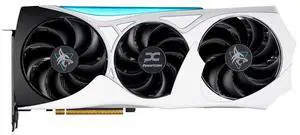
PowerColor Hellhound AMD Radeon RX 9070 XT 16GB GDDR6 RX9070XT 16G-L/OC
PowerColor
Buy — It delivers the recommended RX 9070 XT performance class with 16GB of memory and two eight-pin inputs, but requires 327mm of clearance.
This is the gaming-value choice for high-refresh 1440p and capable 4K, with dual BIOS and two conventional eight-pin power inputs. Its 327mm length and 800W PSU recommendation rule out some compact or lower-power systems.Available at Amazon(paid link) — opens Amazon in a new tab. Price and availability shown there.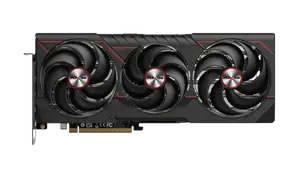
Sapphire Pulse AMD Radeon RX 9070 16GB GDDR6 11349-03-20G
Sapphire Pulse
Consider — It is 12% slower than the XT in a 52-game average, but its 220W rating is 84W lower and the Pulse card is only 280mm long.
Choose this narrower option when lower heat, a 650W PSU recommendation or a 280mm card solves a real constraint. It retains the XT’s 16GB memory capacity but gives up about 12% average gaming performance.Available at Amazon(paid link) — opens Amazon in a new tab. Price and availability shown there.
MSI GeForce RTX 5070 Ti 16G VENTUS 3X OC G507T-16V3C
msi
Consider — It led the RX 9070 XT by only 1.4% at 1440p and 4% at 4K overall, although several path-traced games showed much larger gains.
This is the alternative for heavy ray tracing, CUDA applications and Nvidia-specific software. Overall gaming is only slightly faster than the RX 9070 XT, and it requires a 16-pin power connection.Available at Amazon(paid link) — opens Amazon in a new tab. Price and availability shown there.
MSI GeForce RTX 5070 12G VENTUS 3X OC G5070-12V3C
msi
Skip — A current 52-game test measured the RTX 5070 24% slower at 1440p and 25% slower at 4K, while MSI specifies only 12GB of VRAM.
Skip this when it shares a budget tier with the RX 9070 XT; it is substantially slower and has 4GB less memory. Its lower 250W rating only helps when Nvidia compatibility and reduced power are mandatory.Available at Amazon(paid link) — opens Amazon in a new tab. Price and availability shown there.
Sources
Pages consulted while researching this article. None of these are affiliate links.
- AMD Radeon RX 9070 vs. 9070 XT: Which Should You Buy? — TechSpot — techspot.com
- Nvidia RTX 5070 Ti vs AMD Radeon 9070 XT: Massive 52 Game Benchmark — TechSpot — techspot.com
- GeForce RTX 5070 vs. Radeon RX 9070 XT: 2026 Update — TechSpot — techspot.com
- Radeon RX 9070 XT Specifications — AMD — amd.com
- GeForce RTX 5070 Family Specifications — Nvidia — nvidia.com
- Hellhound AMD Radeon RX 9070 XT 16GB GDDR6 — PowerColor — powercolor.com
- Pulse AMD Radeon RX 9070 16GB GDDR6 — Sapphire — nation.sapphiretech.com
- GeForce RTX 5070 Ti 16G Ventus 3X OC Specifications — MSI — uk.msi.com