Panasonic Leica 25mm f/1.4 for a Bar Video Gig: Right Call?
The questionWhere do these come from?
Gh7 Lens options
Hi, I’m new to videography and still learning as I go. I’ve managed to secure a my first gig next month with a local Italian restaurant/bar in jersey and I’m thinking the 12-60mm F3.
The Panasonic Leica 25mm f/1.4 II covers bartender shots, pours, and food detail on a GH7 without forcing you in too close.
The Panasonic Leica DG Summilux 25mm F1.4 II ASPH is the right lens to bring to a restaurant or bar video shoot on a GH7. At a 50mm full-frame equivalent (Micro Four Thirds carries a 2.0x crop, so a 25mm lens frames like a 50mm on full frame, per apotelyt’s GH7 crop-factor breakdown), it sits at the one focal length that covers a bartender’s hands on a pour, a plated dish on a table, and a wide two-shot of the room without you having to climb over a service station or back into a wall to get the frame. The question worth answering isn’t whether this lens works — it does — it’s where it stops working, and what to carry alongside it so a single lens doesn’t become the reason a shot list falls apart mid-shift.
What the 25mm f/1.4 actually covers on a GH7
The II version, which added dust and splash sealing over the original 2013 optic, weighs 205g and takes a 46mm filter — small and light enough to stay on the camera for an entire service without fatigue (DPReview’s specification listing). Paired with a GH7 body that’s itself rated dust- and splash-resistant with a magnesium-alloy frame, you keep that sealing intact working close to ice, condensation, and spilled pours at a bar top (Panasonic’s GH7 announcement).
Wide open at f/1.4, reviewers describe the lens as “very sharp in the centre already at f/1.4” with “sensational bokeh rendering considering the focal length” — which is the combination this job needs: enough separation to pull a cocktail garnish or a bartender’s face away from a busy backbar, without an aperture so wide that focus becomes unreliable in a moving, low-light room (The Phoblographer’s review). Minimum focus is 0.3m, which is close enough for a plated dish or a glass on the bar without stepping in front of a server.
On the body side, the GH7 pairs phase-detect autofocus with subject recognition for humans, animals, cars, and more, which DPReview singled out as the biggest practical improvement over earlier GH-series bodies for video — it’s what stops focus from hunting or fluttering when a bartender turns their head mid-pour (DPReview’s GH7 review). Combined with 7.5-stop in-body stabilization, that’s what makes handheld coverage of a bar service realistic on one lens rather than a tripod-bound setup.
Where one 25mm stops being enough
A single 50mm-equivalent prime covers detail shots and medium shots well, but it runs out at both ends. In a cramped dining room, you won’t always have four or five feet to back up for a wide establishing shot — that’s a lens problem this article isn’t solving, because a second wide prime is a different purchase for a different symptom. The more common gap on this exact gig is the opposite: getting a genuinely tight, isolated shot of a bartender’s face or a customer’s reaction across a counter without walking into frame yourself. A 50mm-equivalent field of view is a “medium” shot at working bar distances, not a portrait crop.
Just want the recommendation?
Skip to the picksThat’s a job for a second, longer lens — not a reason to second-guess the 25mm.
| Lens | Full-frame equivalent | Weight | Weather sealed | Best use on this gig |
|---|---|---|---|---|
| Panasonic Leica DG Summilux 25mm F1.4 II ASPH | 50mm | 205g | Yes | Primary lens: bartender framing, food/drink detail, shallow depth |
| OM System (Olympus) M.Zuiko 25mm F1.2 PRO | 50mm | 410g | Yes | Same focal length, sharper wide open, for those prioritizing optics over size |
| Panasonic Lumix G 25mm F1.7 ASPH | 50mm | 125g | No | Backup body lens, not primary — slower aperture limits low-light separation |
| Panasonic Leica DG Nocticron 42.5mm F1.2 ASPH Power OIS | 85mm | 425g | Yes | Complement: tight bartender/customer face shots across the counter |
If you’re weighing the Leica against the Olympus 25mm f/1.2
The OM System M.Zuiko 25mm F1.2 PRO is the direct rival at this focal length, and it’s worth knowing what the extra weight and bulk buy. A side-by-side test found the Olympus sharper than the Panasonic at both f/1.2 and f/1.4, with softer, more pleasing bokeh and less chromatic aberration, particularly at the widest apertures (Mirrorless Comparison’s full test). Those differences mostly disappear by f/2.8 and are nearly gone by f/5.6 — apertures you’ll be near for anything but the shallowest detail shots anyway.
What the same test also found matters more for video work specifically: the Olympus autofocus motor produces a “subtle whirring noise,” while the Panasonic is “deadly silent” in continuous autofocus and only faintly audible in single-shot mode. On a gig where you’re often recording with an on-camera or nearby mic rather than isolating audio in post, a whirring lens motor picked up under ambient bar noise is a real cost, not a nitpick. The Olympus also weighs more than double (410g vs. 205g) and takes a 62mm filter against the Panasonic’s 46mm — meaningful if you’re hand-holding through a full shift. Choose the Olympus if optical sharpness wide open outweighs size, weight, and AF noise for you; for a first paid restaurant/bar gig shot handheld, the Panasonic’s size and silent AF are the better trade.
Why the cheaper 25mm f/1.7 isn’t the move here
The Panasonic Lumix G 25mm F1.7 ASPH is a real, well-regarded lens — DXOMark calls it “an attractive option” and it’s frequently recommended as a compact, affordable standard prime (DXOMark’s review). At 125g with a 46mm filter thread, it’s lighter still than the f/1.4 II. But it isn’t weather sealed, and the roughly half-stop-plus difference between f/1.4 and f/1.7 is exactly the margin this job runs on: it’s the difference between a bar interior lit mostly by practicals and neon staying usable at a reasonable ISO, and having to push gain further to compensate. It also produces noticeably less subject separation for the close food and drink detail shots this gig depends on. Keep it as a lightweight backup-body lens if you shoot with two bodies; don’t make it the primary lens for a paid gig where the light won’t cooperate.
The lens most people forget to also bring
The Panasonic Leica DG Nocticron 42.5mm F1.2 ASPH is the complement worth packing alongside the 25mm, not a replacement for it. At an 85mm-equivalent field of view, it’s built for exactly the shot the 25mm can’t get: a tight, compressed portrait of a bartender’s face or a customer’s reaction from several feet back, without crowding the counter. Reviewers describe it as “tack sharp right from f/1.2,” with built-in Power OIS that helps steady handheld footage at the longer focal length (Digital Camera World’s review). It’s heavier at 425g and takes a 67mm filter, so it’s not a lens you leave mounted all shift — but for the handful of tight cutaways every bar video needs, it’s the one lens on this list that isn’t optional if the shot list calls for close portraits across a room.
The practical answer
For a first paid restaurant or bar video gig on a GH7, the Panasonic Leica DG Summilux 25mm F1.4 II ASPH is the lens to build the shoot around: it covers bartender framing, food and drink detail, and shallow-depth cutaways at a focal length that doesn’t force you into the shot. Add the Nocticron 42.5mm F1.2 for the tight face shots the 25mm can’t reach, and skip the 25mm F1.7 for anything beyond backup duty. The Olympus 25mm F1.2 is worth the extra weight and cost only if wide-open sharpness matters more to you than a silent autofocus motor and a lens light enough to carry all night.
The bottom line
Two answers, depending on what you meant:
Top pick
Buy this
Panasonic Leica DG Summilux 25mm F1.4 II ASPH Micro Four Thirds Lens
Panasonic Leica
At 205g with silent continuous autofocus and dust/splash sealing that matches the GH7 body, it's built for exactly this handheld, mixed-lighting shoot.
The 50mm-equivalent focal length covers bartender framing, food and drink detail, and shallow-depth cutaways on a GH7 without forcing you too close to the counter, and the II version’s weather sealing matches a splashy bar environment.Available at Amazon(paid link) — opens Amazon in a new tab. Price and availability shown there.The alternative
Skip this
Panasonic Lumix G 25mm F1.7 ASPH Lens
Panasonic Lumix
The roughly half-stop-plus gap to f/1.4 costs usable low light and close-up background blur, which matters more here than the weight it saves.
A lighter, cheaper alternative at the same focal length, but it isn’t weather sealed and its narrower aperture gives up subject separation the food and drink detail shots on this gig depend on.Available at Amazon(paid link) — opens Amazon in a new tab. Price and availability shown there.
Recommended products
Ordered by how well each one fits the situations above. Each link below is a paid link.
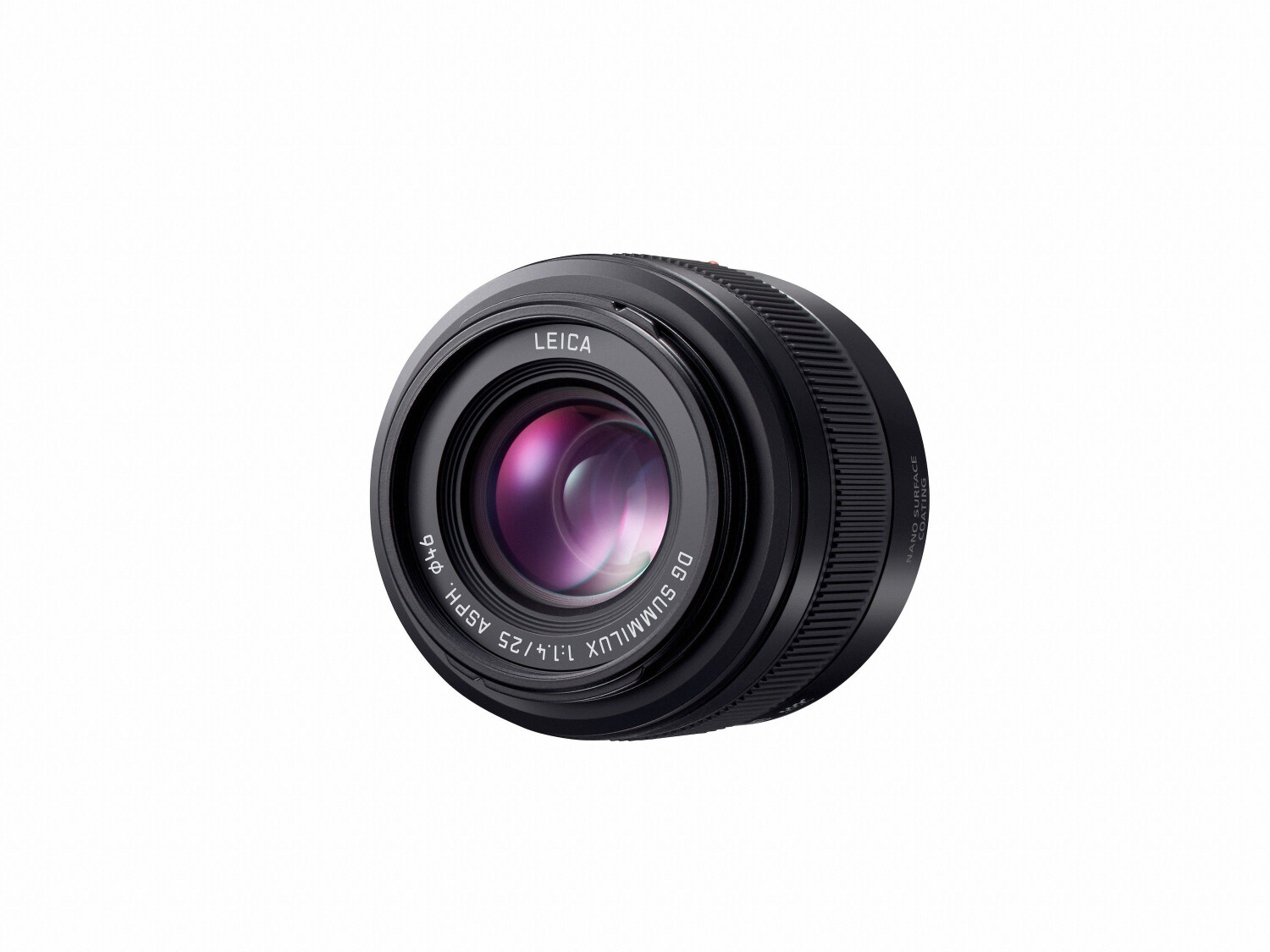
Panasonic Leica DG Summilux 25mm F1.4 II ASPH Micro Four Thirds Lens
Panasonic Leica
Buy — At 205g with silent continuous autofocus and dust/splash sealing that matches the GH7 body, it's built for exactly this handheld, mixed-lighting shoot.
The 50mm-equivalent focal length covers bartender framing, food and drink detail, and shallow-depth cutaways on a GH7 without forcing you too close to the counter, and the II version’s weather sealing matches a splashy bar environment.Available at Amazon(paid link) — opens Amazon in a new tab. Price and availability shown there.
Panasonic Lumix G 25mm F1.7 ASPH Lens
Panasonic Lumix
Skip — The roughly half-stop-plus gap to f/1.4 costs usable low light and close-up background blur, which matters more here than the weight it saves.
A lighter, cheaper alternative at the same focal length, but it isn’t weather sealed and its narrower aperture gives up subject separation the food and drink detail shots on this gig depend on.Available at Amazon(paid link) — opens Amazon in a new tab. Price and availability shown there.
Panasonic Leica DG Nocticron 42.5mm F1.2 ASPH Power OIS Lens
Panasonic Leica
It depends — Reviewers found it tack sharp from f/1.2 with built-in stabilization for handheld work, but at 425g it's a second lens to swap to, not one to leave mounted all shift.
A complement, not a substitute: its 85mm-equivalent reach gets the tight bartender or customer portrait shots the 25mm’s wider field of view can’t isolate from across a counter.Available at Amazon(paid link) — opens Amazon in a new tab. Price and availability shown there.
Sources
Pages consulted while researching this article. None of these are affiliate links.
- Panasonic Leica DG Summilux 25mm F1.4 II ASPH Specifications — DPReview — dpreview.com
- Panasonic Leica DG Summilux 25mm F1.4 II ASPH adds weather-sealing, new finish — DPReview — dpreview.com
- Panasonic Leica 25mm f/1.4 II Review — The Phoblographer — thephoblographer.com
- Panasonic Lumix DC-GH7 Review — DPReview — dpreview.com
- Panasonic Announces New LUMIX GH7 Micro Four-Thirds Mirrorless Camera — na.panasonic.com
- What is the crop factor of the Panasonic GH7? — Apotelyt — apotelyt.com
- Olympus M.Zuiko 25mm f/1.2 PRO vs. Panasonic Leica 25mm f/1.4 — Mirrorless Comparison — mirrorlesscomparison.com
- Panasonic LUMIX G 25mm F1.7 ASPH Lens Review — DXOMARK — dxomark.com