Olympus E-M10 IV for Travel: Small Kit, Clear Limits
The questionWhere do these come from?
Travel & Street Camera Dilemma: New Sony A6400 / Olympus E-M10 IV vs. Used Fujifilm (X-E or X-T lines)?
Budget: Around €600 ideally, but willing to stretch up to €780 if the value of buying brand new justifies it. Country: Portugal Condition: Open to both Brand New or Used.
The Olympus E-M10 IV suits travel stills with its compact EZ zoom, viewfinder and stabilization, but rain and moving subjects expose its limits.
The Olympus OM-D E-M10 Mark IV is a good travel camera for sightseeing, street photography and posed portraits, especially with the compact 14–42mm EZ zoom. Choose it for a light camera you can carry all day; skip it when dependable subject tracking, exposed wet-weather shooting or recording yourself is the main priority.
For sightseeing, choose the 476 g EZ kit
The useful weight is the camera with its lens attached. Olympus specifies approximately 476 g for the E-M10 IV with the M.Zuiko Digital ED 14–42mm F3.5–5.6 EZ, including the battery and memory card but excluding the eyecup. That makes a small shoulder bag a realistic starting point, although pocket fit still needs checking against your clothing. Olympus launch documentation
Check the complete lens name before choosing a bundle. The 14–42mm EZ and 14–42mm II R cover the same view, but their packed dimensions differ substantially. The original 17mm F1.8 is an optional alternative for evening walks.
| Lens | Full-frame equivalent view | Lens weight | Lens length |
|---|---|---|---|
| M.Zuiko Digital ED 14–42mm F3.5–5.6 EZ | 28–84mm | 93 g | 22.5 mm, collapsed |
| M.Zuiko Digital 14–42mm F3.5–5.6 II R | 28–84mm | 115 g | 50 mm, collapsed |
| M.Zuiko Digital 17mm F1.8, original version | 34mm | 120 g | 35.5 mm |
These are manufacturer specifications; lens weights exclude caps and hoods. OM System zoom comparison, 17mm F1.8 specifications
The EZ saves only 22 g over the II R, but it is less than half as long when collapsed. That difference matters when sliding the camera into a small bag between stops. If you already own the II R and it fits comfortably, replacing it solely to save weight achieves little.
The zoom range covers streets, food, scenery and portraits. Its limitation is the wide end: a 28mm equivalent view can feel tight inside buildings or in narrow lanes. Its long end also leaves distant wildlife small in the frame. Choose additional lenses for those specific needs rather than filling a bag before discovering what the kit cannot capture.
The built-in electronic viewfinder has 2.36 million dots. You can frame through it when reflections make the rear screen awkward outdoors. E-M10 IV official Q&A
Evening streets reward stabilization—and a brighter lens
The E-M10 IV’s stabilization is a substantial reason to choose it for travel stills. Olympus rates its five-axis system for up to 4.5 stops of compensation, measured with the kit zoom at 42mm under specified CIPA conditions. That rating describes camera-shake correction, rather than a promise that every night photograph will be sharp. Olympus stabilization specification
RTINGS achieved a minimum shutter speed of 1/8 second in its stabilization test. Treat that as a measured result under its test conditions, not a universal handheld setting. Your focal length, stance and subject movement change the outcome. RTINGS E-M10 IV measurements
This makes a useful distinction for travel: an illuminated building can remain sharp during a long exposure, while someone walking past it can blur. Stabilization cannot freeze that person. For evening portraits or moving people, open the aperture and allow ISO to rise enough to preserve a suitable shutter speed.
Just want the recommendation?
Skip to the picksThe original M.Zuiko Digital 17mm F1.8 provides a 34mm equivalent view at 120 g. Its wider maximum aperture makes it a sensible second lens for restaurants and evening streets. The drawback is its fixed view: you lose the kit zoom’s framing flexibility. The figures here apply to the original Olympus lens, not the later F1.8 II. Olympus 17mm specifications
For JPEGs, start with Natural picture mode. Press OK, highlight Picture Mode, select Natural, and confirm with OK. The camera allows separate contrast, sharpness and other adjustments for its picture modes. Natural is a suggested starting point; preferred color is subjective, so photograph familiar faces before committing to stronger processing for an entire trip. E-M10 IV instruction manual
You do not need to edit every photograph to justify this camera. You do need to watch exposure and focus: attractive JPEG processing cannot recover a missed face or motion blur.
Family action and travel video reveal the compromises
The E-M10 IV can photograph moving subjects, but the autofocus mode matters. In RTINGS’ testing, continuous subject tracking produced 20% perfectly focused frames, while its separate continuous center-point test achieved 100%. Those are results from specific test sequences, not predicted success rates for your holiday. They nevertheless support keeping the subject under a selected focus point instead of expecting tracking to handle every movement. RTINGS autofocus tests
For buildings, details and cooperative portraits, use single autofocus and place the focus target deliberately. For someone approaching, try continuous autofocus while keeping the target over the subject. A suggested starting shutter speed for walking people is 1/250 second; faster movement may need a shorter exposure. Review a short sequence before relying on that setup for an unrepeatable moment.
If your trip revolves around running children, birds in flight or sporting events, choose a camera with stronger independently tested tracking performance. The E-M10 IV’s appeal is greater when you have time to compose.
For occasional travel clips, its video capability is useful. For regular self-recording, the compromises accumulate: there is no microphone input, the selfie screen flips below the body where a tripod can obstruct it, and RTINGS found video autofocus struggled with moving subjects. RTINGS video assessment
Plan charging breaks and keep it out of rain
The E-M10 IV is not dustproof or splashproof. A weather-sealed lens does not seal this body. Carry it protected during rain and spray; if you need to keep shooting in those conditions, choose a weather-sealed camera-and-lens combination. Official E-M10 IV specifications
Charging has a less obvious travel limitation. The camera uses Micro-B USB, takes approximately four hours to charge with the supplied adapter, and charges only with the camera switched off. Background Wi-Fi photo uploads can prevent charging even when the power switch is off. Finish transfers before plugging it in and check that the charge lamp lights. OM System charging instructions
The advertised battery figure is approximately 360 photographs. A spare BLS-50 is useful for long days because you can resume shooting immediately rather than waiting for an in-camera recharge. It adds another battery to manage, but solves a practical limitation of this particular travel kit. Official battery guidance
Start with the E-M10 IV, the 14–42mm EZ and a spare battery. Add the 17mm F1.8 when evening photography becomes a regular need. That keeps the camera’s strongest travel advantage intact: a small kit with a viewfinder, useful stabilization and room to grow.
The bottom line
Worth it either way — the difference is your budget:
Top pick
Buy this
Olympus OM-D E-M10 Mark IV Black M.Zuiko Digital ED 14-42mm F3.5-5.6 EZ Lens Kit
Olympus
The article calls the EZ kit 'the sensible starting kit for sightseeing and street photography' and closes by telling readers to 'start with the E-M10 IV, the 14–42mm EZ and a spare battery.'
The compact EZ zoom makes this the sensible starting kit for sightseeing and street photography. The body lacks weather sealing, and subject tracking is a limitation for action.Available at Amazon(paid link) — opens Amazon in a new tab. Price and availability shown there.The alternative
It depends
Olympus M.Zuiko Digital 17mm F1.8 Black
Olympus
The article recommends it only as an addition 'when evening photography becomes a regular need,' and states the real caveat that its fixed 34mm-equivalent view gives up the kit zoom's framing flexibility.
The original 120 g prime adds a brighter aperture for evening streets and restaurants. Its fixed 34mm equivalent view gives up the kit zoom’s framing flexibility.Available at Amazon(paid link) — opens Amazon in a new tab. Price and availability shown there.
Recommended products
Ordered by how well each one fits the situations above. Each link below is a paid link.

Olympus OM-D E-M10 Mark IV Black M.Zuiko Digital ED 14-42mm F3.5-5.6 EZ Lens Kit
Olympus
Buy — The article calls the EZ kit 'the sensible starting kit for sightseeing and street photography' and closes by telling readers to 'start with the E-M10 IV, the 14–42mm EZ and a spare battery.'
The compact EZ zoom makes this the sensible starting kit for sightseeing and street photography. The body lacks weather sealing, and subject tracking is a limitation for action.Available at Amazon(paid link) — opens Amazon in a new tab. Price and availability shown there.
Olympus M.Zuiko Digital 17mm F1.8 Black
Olympus
It depends — The article recommends it only as an addition 'when evening photography becomes a regular need,' and states the real caveat that its fixed 34mm-equivalent view gives up the kit zoom's framing flexibility.
The original 120 g prime adds a brighter aperture for evening streets and restaurants. Its fixed 34mm equivalent view gives up the kit zoom’s framing flexibility.Available at Amazon(paid link) — opens Amazon in a new tab. Price and availability shown there.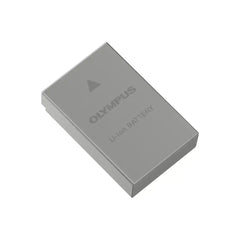
OM SYSTEM Olympus BLS-50 Lithium-Ion Rechargeable Battery
OM System
Buy — The article recommends a spare as part of the starting kit because it 'solves a practical limitation of this particular travel kit'—the four-hour, power-off-only charging time.
A spare lets you continue shooting while the depleted battery waits for charging. It adds another item to manage and needs a separate compatible charger to charge outside the camera.Available at Amazon(paid link) — opens Amazon in a new tab. Price and availability shown there.
Sources
Pages consulted while researching this article. None of these are affiliate links.
- Olympus OM-D E-M10 Mark IV launch documentation — olympus-global.com
- OM System: differences between M.Zuiko 14–42mm kit lenses — digital-faq.jp.omsystem.com
- M.Zuiko Digital 17mm F1.8 official specifications — jp.omsystem.com
- OM System E-M10 Mark IV specifications and charging Q&A — support.jp.omsystem.com
- RTINGS Olympus OM-D E-M10 Mark IV review and measurements — rtings.com
- Olympus E-M10 Mark IV instruction manual — download.omsystem.com