LG G5 77 vs Sony Bravia 9 75: The Better Buy
The question this answersWhere do these come from?
Should I buy the 77-inch LG G5 or the 75-inch Sony Bravia 9?
The LG G5 77 is the better all-rounder for movies and gaming; choose the Bravia 9 75 for broad bright scenes or heavy static-image use.
Choose the 77-inch LG G5 for the better all-round TV: it delivers perfect blacks, wider viewing angles, stronger gaming support and two extra inches of screen. Choose the 75-inch Sony BRAVIA 9 instead when the TV will spend much of its life showing bright daytime programs or repeated static graphics.
This comparison covers the 2025 LG OLED77G5WUA and the original 2024 Sony K-75XR90. It does not cover the newer BRAVIA 9 II.
The numbers that actually separate them
| Decision point | LG G5 77 | Sony BRAVIA 9 75 |
|---|---|---|
| Display system | Self-emissive Primary RGB Tandem OLED | VA LCD with Mini LED local dimming |
| Cabinet without stand | 1,712 × 982 × 24.8 mm; 33.6 kg | 1,667 × 960 × 48 mm; 42.3 kg |
| Maximum high-refresh input | 4K/165Hz on four HDMI 2.1 ports | 4K/120Hz on HDMI 3 and 4 |
| TechRadar 10% HDR measurement | 2,268 nits in Filmmaker Mode | 1,871 nits in Movie Mode |
| TechRadar full-screen HDR measurement | 331 nits in Filmmaker Mode | 495 nits in Movie Mode |
The dimensions and connection figures come from the official LG 77-inch specifications and Sony’s K-75XR90 specifications. The brightness figures require an important qualification: TechRadar measured 65-inch review samples, not these exact 77- and 75-inch units. Its tests nevertheless expose the central difference clearly—the G5 can make small HDR highlights extraordinarily bright, while the BRAVIA 9 sustains substantially more light across an almost completely bright picture. TechRadar measured the G5 and BRAVIA 9 using the same window sizes.
No cited laboratory measured both exact sizes on the same bench. RTINGS tested the 77-inch G5 but a 65-inch BRAVIA 9, and warns that the Sony’s dimming-zone count changes with screen size. Treat the measurements as evidence of each technology’s behavior, not guaranteed output from every 75- or 77-inch unit.
Why the G5 is the default choice
OLED’s pixel-level light control remains decisive in a dark room. Each G5 pixel can turn completely off, so black letterbox bars stay black and bright stars or subtitles do not create halos around themselves. The BRAVIA 9 has exceptionally effective local dimming for an LCD, but its Mini LED zones still illuminate groups of pixels rather than individual pixels.
RTINGS found the G5 produced perfect black uniformity without blooming. It described the BRAVIA 9’s black levels as approaching OLED, with barely visible blooming, but that is still not the same as none. Its direct comparison also says the LG matches or exceeds Sony’s HDR highlight brightness in real scenes while preserving the OLED contrast advantage.
The G5 is also safer for a wide seating arrangement. RTINGS found that its picture largely holds together off-axis, whereas the Sony develops raised blacks, gamma shifts and color washout as viewers move farther from the center. For a sectional sofa or a sports gathering with seats spread across the room, the LG’s viewing-angle advantage matters more than its extra two inches.
Broad daylight is Sony’s real victory
The BRAVIA 9 is the stronger choice for bright, high-average-picture-level material: daytime sports, news studios, animation and snowy or sunlit landscapes. In TechRadar’s accurate picture modes, its 495-nit full-screen HDR result was approximately 50% higher than the G5’s 331-nit result. That extra sustained output helps an entire bright scene resist ambient light instead of merely making small highlights sparkle.
Do not reduce this decision to “bright room equals Sony,” however. The direction of the light matters. RTINGS found that the G5 substantially reduces direct reflections, while the BRAVIA 9 made a directly facing window or lamp more visible and produced reflected-light echoes. Therefore:
- Choose the Sony when daylight fills the room indirectly and most viewing is bright television or sports.
- Choose the LG when a window or lamp sits directly opposite the screen, or when preserving black depth remains important during daytime viewing.
- Add blinds or reposition the TV if direct sunlight strikes either panel; neither premium display can correct a bad physical placement.
The popular assumption that Mini LED always wins in daylight misses this distinction between generating more full-screen light and controlling a visible reflection.
Gaming makes the decision lopsided
The G5 is the clear gaming choice. All four HDMI inputs accept the full 48Gbps HDMI 2.1 bandwidth, with VRR, Nvidia G-SYNC compatibility and AMD FreeSync Premium. A capable PC can run at 4K/165Hz; consoles can use 4K/120Hz without forcing you to reorganize the other inputs.
Just want the recommendation?
Skip to the picksThe BRAVIA 9 supports 4K/120Hz and VRR only through HDMI 3 and HDMI 4. HDMI 3 is also the eARC connection, so attaching a soundbar there leaves only one high-bandwidth port free. That is restrictive if you have both a PlayStation 5 and Xbox Series console, let alone a gaming PC. Sony also omits FreeSync support.
Independent latency measurements reinforce the difference. TechRadar recorded 9.2ms from the G5 in Game Optimizer Boost mode and 17ms from the Sony with a Leo Bodnar meter. Both are responsive enough for ordinary console play, but the LG is better suited to competitive games.
Early G5 reviews reported unexpectedly high delay at 165Hz. That information is now obsolete: RTINGS says firmware 33.11.35 corrected the problem and brought maximum-refresh input lag down to about 4ms. Update a newly purchased or factory-reset G5 before judging its PC-gaming performance.
Static content is the reason to choose LCD
The Sony is the lower-risk display for a television used like signage: the same news channel, scoreboard, desktop taskbar or game interface remaining visible for many hours every day. Its LCD pixels are not organic light emitters and therefore do not carry OLED’s cumulative uneven-wear concern.
Normal mixed viewing is not a reason to reject the G5. It includes pixel cleaning, screen shifting and logo-dimming protections. Nevertheless, LG’s own burn-in guidance acknowledges that prolonged static logos, paused games and high brightness can cause persistent image retention. Protection features reduce the risk; they cannot make an OLED the more sensible digital-signage panel.
Size, installation and audio may break the tie
Using the advertised diagonals, 77 inches supplies about 5% more screen area than 75 inches. The difference is noticeable side by side but not large enough to override the panel decision. Physically, the LG is 42 mm wider and 22 mm taller, so measure the wall rather than relying on the class size.
The thinner, lighter G5 is designed for flush wall mounting. In the United States, the OLED77G5WUA includes LG’s flush mount but usually not a tabletop stand; packaging differs by region, so verify the suffix and included hardware before ordering. The BRAVIA 9 includes adjustable feet that can use a 543 mm narrow stance or a wide stance, with alternative heights for accommodating a soundbar.
Sony also has the better case for running without external audio. Its 2.2.2-channel, 70-watt system includes top-mounted beam tweeters, and TechRadar judged its built-in sound above average. It supports DTS:X and DTS-HD formats as well. The G5 supports Dolby formats but RTINGS confirmed that LG dropped DTS passthrough from its 2025 lineup. That limitation is irrelevant when a disc player connects directly to a compatible receiver, but it matters when the TV is the system’s HDMI hub.
The final pick by viewing pattern
Buy the LG G5 77 for films in a dim room, subtitles against black backgrounds, wide seating, reflection control, fast gaming or a system containing several HDMI 2.1 sources. It is the stronger choice for most mixed-use rooms.
Buy the Sony BRAVIA 9 75 for hours of daytime sports or news, a room dominated by indirect ambient light, repeated static graphics, built-in audio, DTS playback or a strong preference for Google TV. Its advantage is sustained brightness and LCD durability—not superior black level or gaming performance.
When those conditions are evenly split, take the G5. The BRAVIA 9 needs one of its specific strengths to outweigh OLED’s cleaner blacks, wider viewing and substantially better connectivity.
The bottom line
Both are defensible — the split is what you do with it:
Top pick
Buy this
LG 77-Inch Class OLED evo AI G5 4K Smart TV OLED77G5WUA
LG
The G5 is the article’s default choice for mixed use, with perfect blacks, wider viewing angles and four HDMI 2.1 ports supporting 4K/165Hz.
This is the better choice for dark-room movies, wide seating and serious gaming. Its drawbacks are OLED’s static-image risk, missing DTS passthrough and the lack of an included tabletop stand in many regions.Available at Amazon(paid link) — opens Amazon in a new tab. Price and availability shown there.The alternative
It depends
Sony BRAVIA 9 75-Inch Mini LED QLED 4K HDR Google TV K-75XR90
Sony
The BRAVIA 9 wins for bright daytime viewing under indirect ambient light or prolonged static graphics because it sustains more full-screen brightness and avoids OLED’s cumulative uneven-wear concern.
Choose this model for sustained daytime brightness, repeated static content or stronger built-in audio. Its drawbacks are two 4K/120Hz inputs, higher gaming latency and less consistent off-angle blacks.Available at Amazon(paid link) — opens Amazon in a new tab. Price and availability shown there.
Recommended products
Ordered by how well each one fits the situations above. Each link below is a paid link.
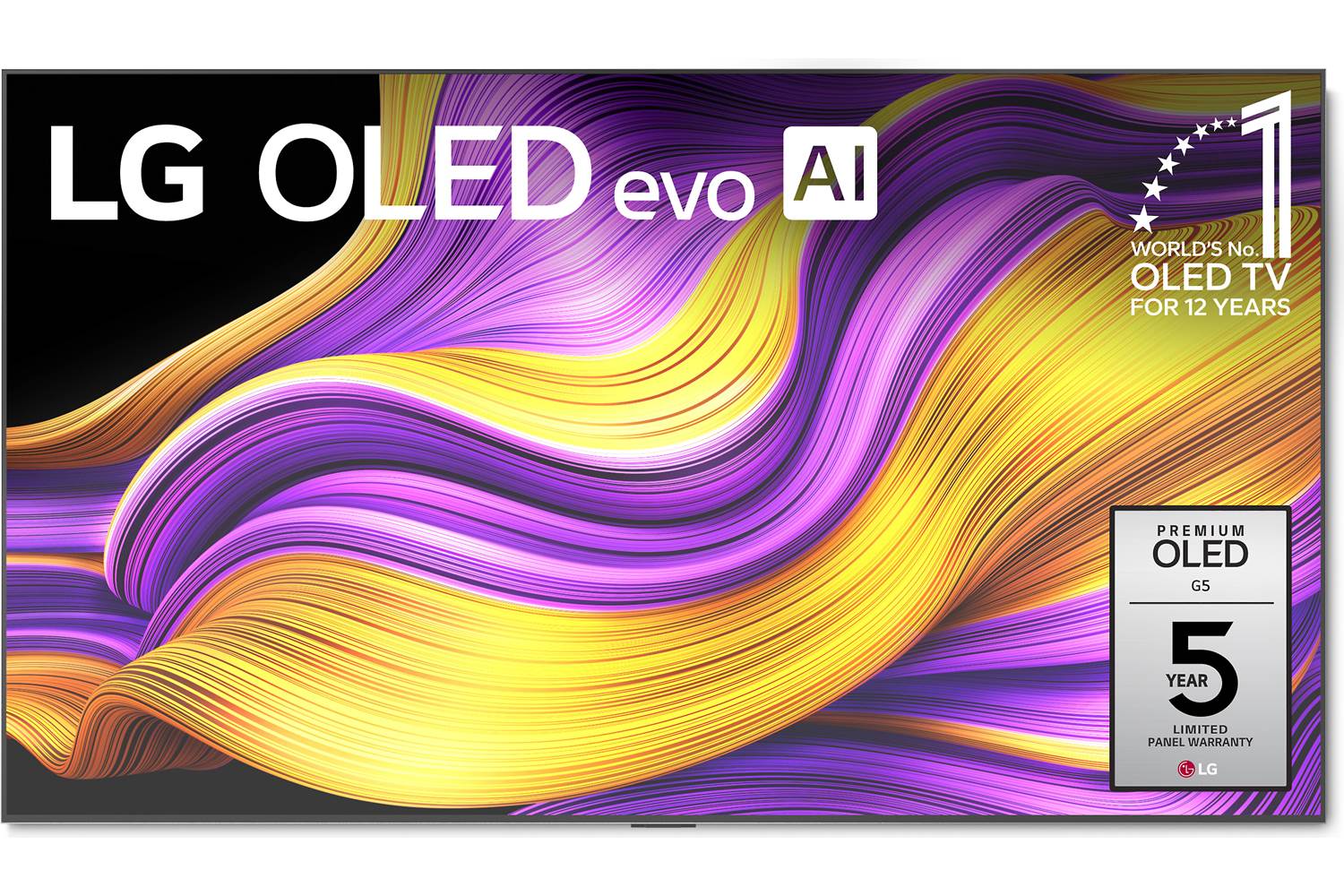
LG 77-Inch Class OLED evo AI G5 4K Smart TV OLED77G5WUA
LG
Buy — The G5 is the article’s default choice for mixed use, with perfect blacks, wider viewing angles and four HDMI 2.1 ports supporting 4K/165Hz.
This is the better choice for dark-room movies, wide seating and serious gaming. Its drawbacks are OLED’s static-image risk, missing DTS passthrough and the lack of an included tabletop stand in many regions.Available at Amazon(paid link) — opens Amazon in a new tab. Price and availability shown there.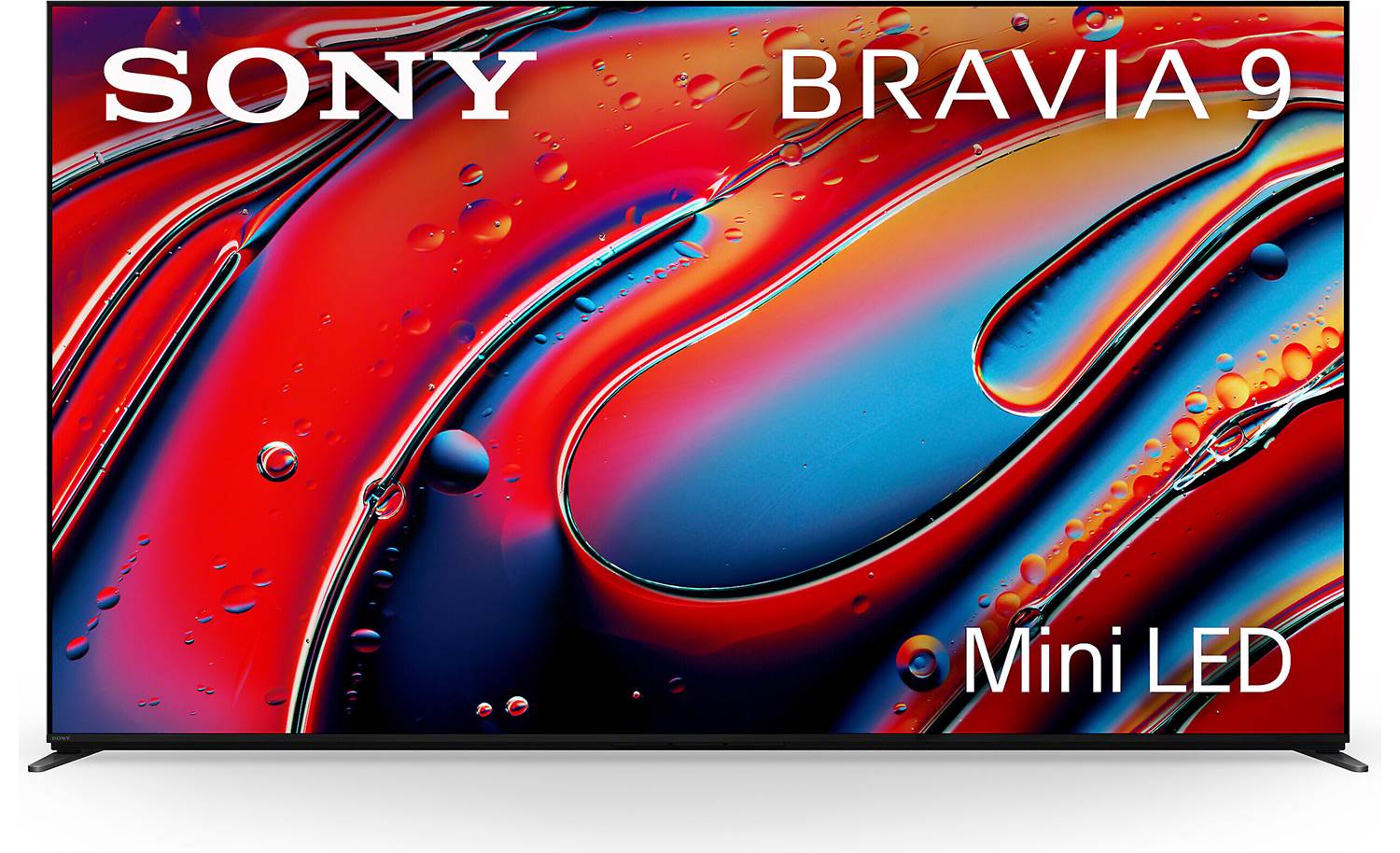
Sony BRAVIA 9 75-Inch Mini LED QLED 4K HDR Google TV K-75XR90
Sony
It depends — The BRAVIA 9 wins for bright daytime viewing under indirect ambient light or prolonged static graphics because it sustains more full-screen brightness and avoids OLED’s cumulative uneven-wear concern.
Choose this model for sustained daytime brightness, repeated static content or stronger built-in audio. Its drawbacks are two 4K/120Hz inputs, higher gaming latency and less consistent off-angle blacks.Available at Amazon(paid link) — opens Amazon in a new tab. Price and availability shown there.
Sources
Pages consulted while researching this article. None of these are affiliate links.
- LG G5 OLED Review — RTINGS — rtings.com
- Sony BRAVIA 9 Review — RTINGS — rtings.com
- LG OLED evo G5 77-inch OLED77G5WUA — lg.com
- LG OLED77G5WUA Specifications — lg.com
- Sony K-75XR90 Specifications — sony.com
- LG G5 Review — TechRadar — techradar.com
- Sony BRAVIA 9 Review — TechRadar — techradar.com
- LG TV — Troubleshooting Image Burn-In — lg.com