DC41 No Wand Suction After a Hose Fix: What's Missing
The questionWhere do these come from?
DC41 missing parts?
Recently got this bad boy for $50 through marketplace. Replaced the internal hose since the original was snapped. Not a big deal, $13 more dollars from Amazon and we’re cruising along.
If a DC41 wand has no suction after a hose repair, the changeover valve's duct or its separate mechanical link is the next suspect, not the hose already fixed.
If you’ve already pulled the ball apart once to fix a split internal hose and the wand attachment still won’t pull air, the internal hose was never the only hose back there. The DC41’s ball houses two separate ducts: the flexible internal ball hose that carries air up from the cyclone, and a shorter duct with a valve flap in it — the changeover valve assembly — that decides whether that air goes to the floor head or up to the wand. Fixing the first does nothing for the second, and the changeover valve has its own failure points: a duct that splits just like the one you already replaced, and a separate mechanical link that has to physically move the flap or nothing changes over at all.
This covers the DC41, DC41 Animal, DC41 Animal Complete, DC41 Animal Total Clean, DC41 Exclusive and DC41 Multi Floor — iFixit lists all six as the same platform, and the ball mechanism is identical across them, so everything below applies regardless of which badge is on yours.
Two different hoses, two different jobs
The internal ball hose (Dyson part 920682-01) is the long corrugated duct that flexes as the ball rotates, carrying air from the clear bin up toward the neck of the machine. It splits from years of flexing and heat, and when it does, you lose suction everywhere — floor head and wand both. That’s the repair most people do first, because it’s the more commonly documented one.
The changeover valve sits downstream of that, right where the airflow forks. It’s a shorter duct with a hinged flap molded or fitted into it, and its OEM part number (922009-01, previously listed as 966428-01) is different from the internal ball hose’s. dfixing.com’s DC41 troubleshooting guide treats these as two separate fault categories for exactly this reason: “changeover mechanism issues” — suction working in one mode but not the other, or switching inconsistently between floor and above-floor cleaning — are listed apart from internal hose splits, which cause suction loss across the whole machine. If your floor head still picks up fine and only the wand is dead, that pattern points at the changeover path specifically, not at the hose you already fixed.
What the changeover valve actually does
The valve’s flap pivots on a linkage tied to the recline angle of the machine. Stand the DC41 upright and dock the wand, and the flap should swing to seal off the floor-head path and open the one leading to the wand. Recline the machine to floor-cleaning position and it should swing back. Vacuums R-Us’s Dyson Ball troubleshooting guide describes the correct behavior directly: when you recline or stand the machine, “the valve should visibly move and the internal hose should switch positions.” That visibility is the whole diagnostic — you can watch this happen with the ball cover off, and it tells you immediately which of the two remaining suspects you’re dealing with.
Test it before buying anything
With the clear bin and ball cover removed, you can see the changeover valve and its duct sitting at the top of the ball assembly. Stand the machine up, then recline it, and watch the flap:
If the flap doesn’t move at all when you change the machine’s angle, the fault is mechanical, not a leak or a split. Something in the linkage that’s supposed to move it isn’t connected.
Just want the recommendation?
Skip to the picksIf the flap does move correctly but the wand still has no suction, the fault is in the duct itself — a split you can’t see from outside, a connection that didn’t get pushed fully home when the ball was reassembled, or debris sitting in the curved inlet section right before the valve. Vacuums R-Us specifically flags that popsicle-stick-sized objects commonly wedge in that curved inlet tube and jam the valve’s air path even when the flap itself still moves.
If the flap doesn’t move: the link, not the hose
The part that moves the flap is a separate component from the duct — Dyson lists it as the Change-Over Valve Link Service Assembly (965201-01), a small gray bracket-and-spring mechanism that engages with the recline pivot and pushes the flap over. It’s a different part number from both hoses, it’s easy to miss during a ball teardown because it’s small and sits behind the duct rather than on it, and it’s exactly the kind of thing that gets left disconnected — or drops out and doesn’t get noticed — when someone’s already got the ball open to reach the internal hose. If you were in there once already for the internal hose repair, this link is the first place to look before assuming the duct itself has failed again.
If the flap moves fine: the duct or a blockage
When the valve visibly cycles but the wand is still silent, don’t reorder the link — the duct is the more likely culprit. Check it for a split you missed the first time around (the changeover valve hose fails the same way the internal hose does, from flexing and heat, just on a smaller, shorter piece), confirm both ends are pushed fully onto their push-fit spigots rather than resting against them, and check the curved inlet just ahead of the valve for lodged debris. None of this requires new parts if the existing duct is intact and just wasn’t reseated.
Comparing the two changeover parts
| Part | OEM number | What it does | Symptom that points to it |
|---|---|---|---|
| Changeover Valve Hose/Duct Assembly | 922009-01 (formerly 966428-01) | Short flexible duct with the valve flap; carries air to whichever outlet the flap is open to | Flap visibly pivots when you recline the machine, but the wand still has no suction |
| Change-Over Valve Link Service Assembly | 965201-01 | Mechanical bracket and spring that physically moves the flap in sync with the recline angle | Flap does not move at all, in either direction, when you recline or stand the machine |
Buy the duct assembly first if your own test shows the flap moving — it’s the more common failure and the one that matches “I already fixed a hose and it’s still dead.” Only add the link assembly if the flap test shows no movement at all; buying it when the flap already moves correctly won’t fix anything, since the linkage isn’t what’s broken in that case.
Fitting notes
Dyson doesn’t publish consumer disassembly instructions for this depth of repair, though the parts themselves are inexpensive and sold as genuine spares. iFixit’s community guide for the equivalent Cinetic Big Ball changeover valve hose — the same mechanism family — notes the job needs a T8 and a T15 driver bit plus needle-nose pliers, involves roughly six screws, and that soft plastic screws should be turned by hand rather than with a power driver to avoid stripping them. One practical shortcut from that same guide: when removing the valve’s spring-loaded bracket, take the bracket out as a unit with the spring still attached to it rather than trying to handle the spring separately — it’s significantly easier to reinstall that way.
When it isn’t the valve at all
Before you order either part, rule out a plain blockage in the wand or handle itself — it produces the identical symptom (suction everywhere except the wand) and costs nothing to check. iFixit’s “wand has no suction” troubleshooting thread for the same DC platform documents owners finding a plastic bottle cap and compacted debris lodged inside the extension tube itself, invisible from either end without looking straight down the tube against a light source. Detach the wand from the machine and check it in isolation before assuming the fault is back in the ball.
If you’ve confirmed the wand is clear, watched the valve during the recline test, and swapped whichever of the two changeover parts your test pointed to, and the wand is still dead, the remaining possibility is a crack in the valve housing molded into the ball itself — not a serviceable part on its own — which is a case for contacting Dyson support rather than continuing to replace ducts. For anyone deciding whether the DC41’s changeover path is even worth chasing a second time, the same ball-and-valve layout carries through to later Dyson uprights, so if you’re also checking whether a Dyson Big Ball Animal turbine head will fit or comparing bin compatibility across the DC40 platform, the same parts family applies.
The bottom line
Which part you need depends on what broke:
Top pick
Buy this
Dyson DC41 Changeover Valve Hose Assembly 922009-01
Dyson
It carries a different OEM part number (922009-01) from the internal ball hose already repaired, and fails the same way — a split duct — independently of that repair.
This is the changeover valve assembly itself — a separate duct from the internal ball hose, with the flap that routes air to the wand. It’s the more likely fix if your own recline test shows the flap moving but the wand still has no suction.Available at Amazon(paid link) — opens Amazon in a new tab. Price and availability shown there.The alternative
It depends
Dyson DC41 Change-Over Valve Link Service Assembly 965201-01
Dyson
It only fixes the fault if the flap fails to move in either direction; replacing it when the flap already cycles correctly leaves the actual problem untouched.
The small bracket-and-spring linkage that physically pivots the changeover valve’s flap. It’s a complement to the duct assembly, not a substitute for it — needed only when the flap doesn’t move at all during a recline test.Available at Amazon(paid link) — opens Amazon in a new tab. Price and availability shown there.
Recommended products
Ordered by how well each one fits the situations above. Each link below is a paid link.
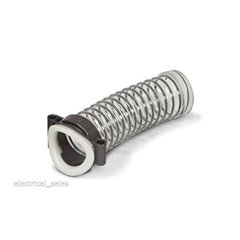
Dyson DC41 Changeover Valve Hose Assembly 922009-01
Dyson
Buy — It carries a different OEM part number (922009-01) from the internal ball hose already repaired, and fails the same way — a split duct — independently of that repair.
This is the changeover valve assembly itself — a separate duct from the internal ball hose, with the flap that routes air to the wand. It’s the more likely fix if your own recline test shows the flap moving but the wand still has no suction.Available at Amazon(paid link) — opens Amazon in a new tab. Price and availability shown there.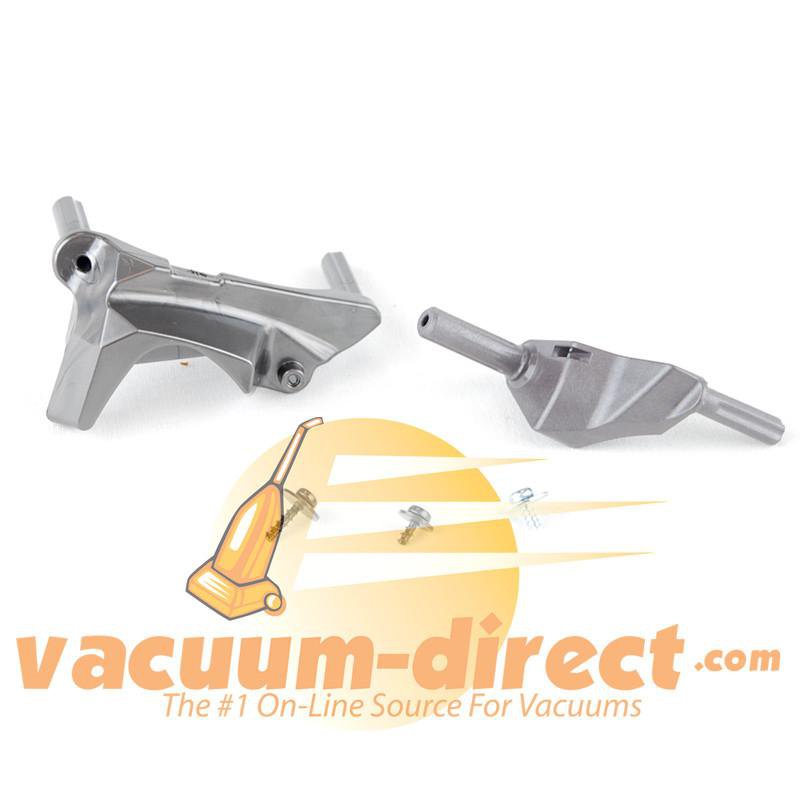
Dyson DC41 Change-Over Valve Link Service Assembly 965201-01
Dyson
It depends — It only fixes the fault if the flap fails to move in either direction; replacing it when the flap already cycles correctly leaves the actual problem untouched.
The small bracket-and-spring linkage that physically pivots the changeover valve’s flap. It’s a complement to the duct assembly, not a substitute for it — needed only when the flap doesn’t move at all during a recline test.Available at Amazon(paid link) — opens Amazon in a new tab. Price and availability shown there.
Sources
Pages consulted while researching this article. None of these are affiliate links.
- Wand has no suction - Dyson Ball Multi Floor Upright — ifixit.com
- How to replace COV hose assembly - Dyson Cinetic Big Ball Animal Upright — ifixit.com
- Dyson DC Series Repair Help — ifixit.com
- Dyson Ball Vacuum - No Suction Troubleshooting — vacuumsrus.com
- Dyson DC41 Not Picking Up: Powerful Solution — dfixing.com