CRP2 or P1000? The Braking Choice
The questionWhere do these come from?
What pedals should I upgrade to
I.
For ACC braking consistency, MOZA CRP2 is the simpler pick; Simagic P1000 wins if modular hydraulics and haptics matter more.
Choose the MOZA CRP2 if the main problem is inconsistent braking in ACC and you want a direct load-cell pedal set with a wide adjustment range out of the box. Choose the Simagic P1000 if you are buying into a modular pedal platform and specifically want to add, or buy a variant that includes, hydraulic brake feel or haptic feedback.
The important catch: the plain Simagic P1000 is not automatically “the hydraulic option.” Simagic lists the hydraulic cylinder as optional on P1000/P1000i, optional or included on P1000-F/P1000-FRS, and included on P1000-RS/P1000i-RS. So the real comparison is not just CRP2 vs P1000. It is CRP2 vs the exact P1000 configuration you plan to run.
MOZA CRP2 is the safer consistency choice
The safer answer is the MOZA CRP2. Its published brake hardware is aimed directly at pressure-based braking: MOZA lists a 0-200 kg load-cell sensor range, a brake sensor that combines load cell and angle sensor, and a 15-bit angle sensor rated at 32768 PPR on the CRP2 product/spec page. MOZA also lists brake travel adjustment from 15-20 degrees, pedal angle adjustment from 0-15 degrees, and pedal face height adjustment up to 30 mm. Those numbers matter because consistency usually comes from making the brake pedal repeatable, not from making it feel dramatic.
Simagic P1000 is also a serious load-cell set. Simagic lists the P1000 brake as Hall angle sensor/load-cell capable, with a 100 kg load cell and 12-bit 4096 resolution. Simagic also says adjustable travel, adjustable linearity, adjustable brake force, and adjustable deadzones are supported. That is enough for competitive braking. The reason CRP2 gets the nod for this specific search is that the CRP2 package is more directly centered on brake pressure adjustment without needing the buyer to sort through the P1000 accessory tree.
| Attribute | MOZA CRP2 | Simagic P1000 |
|---|---|---|
| Brake load cell | 0-200 kg range | 100 kg load cell |
| Sensor/resolution detail | Brake combines load cell and angle sensor; 15-bit angle sensor rated at 32768 PPR | Hall angle sensor/load-cell capable; 12-bit 4096 resolution |
| Adjustment called out | Brake travel 15-20 degrees, pedal angle 0-15 degrees, pedal face height up to 30 mm | Adjustable travel, linearity, brake force, and deadzones |
| Upgrade emphasis | Optional inverted mounting kit and brake performance kit | Optional haptics, hydraulic systems, RGB telemetry modules, hydraulic throttle, inversion kits |
ACC rewards repeatable trail braking. If the issue is “sometimes 80 percent brake, sometimes 100 percent brake,” the first priority is a firm load-cell brake with enough mechanical adjustment to make full pressure achievable without locking your leg or flexing the rig. CRP2 gives you a high load-cell ceiling and a lot of brake-feel combinations, including MOZA’s listed 115 standard adjustments and 1764 optional configurations with the performance kit.
P1000 hydraulics depend on the exact package
Buy the P1000 only if the exact version or accessory bundle includes the hydraulic system you want. Simagic’s own P1000 page separates the P-HYS hydraulic system from the base pedal concept and describes it as reproducing damping and rebound of real brakes. The same page lists P-HYS as an upgrade accessory and shows hydraulic-cylinder availability changing by model variant.
That makes the decision simple:
- If you want consistency first, CRP2 is the cleaner buy.
- If you want hydraulic damping and rebound feel specifically, choose a P1000 configuration with P-HYS or a P1000-RS/P1000i-RS style variant where the hydraulic cylinder is included.
- If you are comparing CRP2 against the non-hydraulic base P1000, do not treat P1000 as the hydraulic choice.
Hydraulic feel is not automatically faster. It can make the brake feel more natural, especially if you dislike a purely elastomer-based pedal, but lap-time consistency still depends on whether the pedal is mounted solidly, calibrated correctly, and set up with a pressure range your leg can repeat over a race stint. A hydraulic module can improve feel; it does not replace calibration discipline.
P1000 leads on haptics and upgrade potential
Simagic P1000 is stronger as an ecosystem platform. Simagic lists the P-HPR Haptic Pedal Reactor as optional across P1000 variants and says it is tunable through SimPro Manager. The same page mentions optional RGB telemetry modules, hydraulic throttle, hydraulic brake, inversion kits, and accessory power requirements for some modules.
That makes P1000 better for a rig that is meant to grow. If the plan is to add ABS vibration cues later, experiment with SimHub-supported effects, invert the pedals, or build a more elaborate pedal stack over time, P1000 is the more modular answer.
CRP2 is not barebones. MOZA lists an optional inverted mounting kit and a brake performance kit, and its support page points users to MOZA Pit House and the CRP2 manual/tutorial flow. But the Simagic platform has the clearer accessory ecosystem around haptics and hydraulics.
Choose P1000 for upgrade path. Choose CRP2 for a more straightforward braking upgrade.
Just want the recommendation?
Skip to the picksCross-brand use depends on the connection path
Both pedal sets can work outside their own wheelbase brand, but check the connection path before buying.
MOZA’s CRP2 support page says MOZA pedals and bases are independent devices and that CRP/SRP pedals rely on USB for data transmission, so the function works as long as the interface matches. The CRP2 product page also says the pedals connect directly to PC via USB and can be used with major sim racing platforms and gear regardless of wheelbase brand.
Simagic lists P1000 USB connection as PC or Simagic wheelbase via Bus Port. That is also straightforward for PC sim racing, but console use and mixed-brand base routing should not be assumed from the spec table. If the rig depends on console compatibility or a specific wheelbase pass-through, verify the exact base and platform combination before buying; the same kind of fit check applies to cockpit questions like GT DD Pro on a Playseat.
Calibrate before returning either pedal set
Do not return either pedal set before calibrating it. This is especially relevant when upgrading from entry pedals, because the old in-game brake curve or Windows controller calibration can make a good pedal feel broken.
For MOZA CRP2, MOZA’s support article gives three specific checks when the pedal does not reach 100 percent or does not return to 0 percent: adjust the pedal signal stroke in the game, use Set Min and Set Max on the MOZA Pit House main page, or recalibrate/adjust stroke on the MOZA Pit House pedal function page. The same support page says that if MOZA Pit House shows normal pedal travel but Windows/game binding jumps to full early, open Windows USB game controller settings, select the pedal, go to Properties, and reset calibration to default.
For Simagic P1000, use SimPro Manager for deadzones, output curves, brake force, and linearity. Simagic lists those controls as supported. Also check whether the P1000 brake is configured to use the load cell or Hall angle sensor. Simagic’s own page suggests load-cell mode for short-travel motorsport/formula-style braking and Hall angle mode for longer travel, softer production-car style feel.
In ACC, start with a linear brake input after hardware calibration. If you previously used a soft potentiometer pedal, remove old compensation first. A new load-cell pedal should not need a huge in-game curve to be controllable.
Fix cockpit flex before replacing the pedals
Neither pedal set can fix a flexible cockpit. A load-cell brake only works well when the seat, pedal tray, and wheel stand do not move under pressure. If full braking pushes the chair back, lifts the pedal plate, or twists a wheel stand, the upgrade will feel inconsistent even if the sensor is accurate.
CRP2’s higher published load-cell range does not mean you should set it absurdly stiff. The useful setup is the highest braking force you can repeat at the end of a stint without changing posture. P1000’s hydraulic and haptic options also need a solid mount, especially when feedback modules are installed. Simagic’s P1000 manual states the pedals are intended to be used only when securely mounted to a sim racing rig.
MOZA CRP2 is the default ACC choice
For most ACC drivers choosing between these two because braking consistency is the problem, choose MOZA CRP2. It is the more direct answer: strong published load-cell spec, high adjustment range, Pit House calibration support, and fewer accessory decisions.
Choose Simagic P1000 when the real requirement is modularity: P-HPR haptics, P-HYS hydraulic brake feel, inverted layouts, or a Simagic wheelbase ecosystem. Just make sure the exact P1000 version includes the hydraulic parts you are counting on.
The limit of this answer is feel. No published spec can tell you whether your ankle prefers MOZA’s brake stack or Simagic’s hydraulic damping. But for the search question as written, and for a driver trying to become more consistent in ACC, the CRP2 is the cleaner default unless the P1000’s upgrade ecosystem is the reason for buying it.
The bottom line
The choice turns on one thing:
Top pick
Buy this
MOZA CRP2 Load Cell Pedals (Throttle+Brake) Driving Sim Racing Pedal, Black
MOZA
The article recommends CRP2 for consistent ACC braking, citing its 0–200 kg load-cell range and 115 standard adjustments.
Best fit for the reader whose main problem is repeatable braking in ACC. The drawback is that it is less modular than the Simagic P1000 ecosystem.Available at Amazon(paid link) — opens Amazon in a new tab. Price and availability shown there.The alternative
It depends
MOZA SRP2 Sim Racing Pedals Set (100KG Load Cell Brake and Throttle)
MOZA
The article supports optional CRP2 performance-kit upgrades for additional adjustment, but does not evaluate the listed SRP2 pedal set.
Useful if the CRP2 brake feel needs finer spring/elastomer tuning after setup. The drawback is that it only helps once the basic pedal position and calibration are already right.Available at Amazon(paid link) — opens Amazon in a new tab. Price and availability shown there.
Recommended products
Ordered by how well each one fits the situations above. Each link below is a paid link.
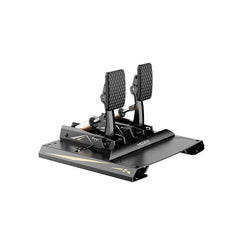
MOZA CRP2 Load Cell Pedals (Throttle+Brake) Driving Sim Racing Pedal, Black
MOZA
Buy — The article recommends CRP2 for consistent ACC braking, citing its 0–200 kg load-cell range and 115 standard adjustments.
Best fit for the reader whose main problem is repeatable braking in ACC. The drawback is that it is less modular than the Simagic P1000 ecosystem.Available at Amazon(paid link) — opens Amazon in a new tab. Price and availability shown there.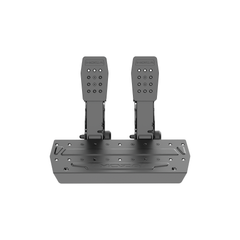
MOZA SRP2 Sim Racing Pedals Set (100KG Load Cell Brake and Throttle)
MOZA
It depends — The article supports optional CRP2 performance-kit upgrades for additional adjustment, but does not evaluate the listed SRP2 pedal set.
Useful if the CRP2 brake feel needs finer spring/elastomer tuning after setup. The drawback is that it only helps once the basic pedal position and calibration are already right.Available at Amazon(paid link) — opens Amazon in a new tab. Price and availability shown there.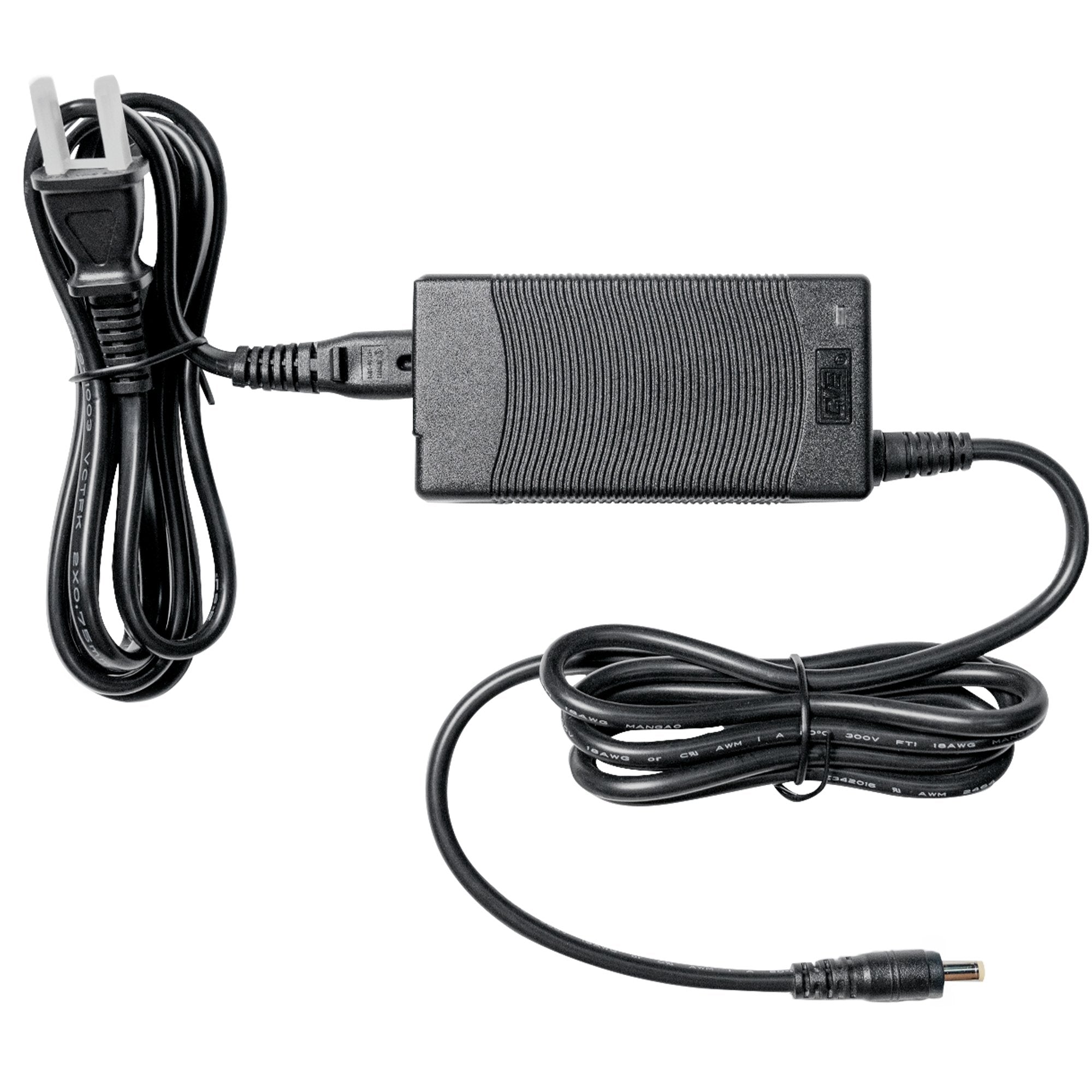
PowerHOOD 24V AC/DC Adapter Compatible with SiMagic P1000 P2000 P1000i P500 P1000-F P1000-FRS P1000-RS P1000i-RS Modular Pedal 2-Pedal 3-Pedals Replacement for GM53-240220-D Power Supply Cord Charger
PowerHOOD
It depends — The article mentions accessory power requirements for some P1000 modules, but does not verify this adapter or identify it as the P-HYS hydraulic upgrade.
The better Simagic choice when hydraulic brake feel is a requirement rather than a vague preference. The drawback is that it adds complexity compared with a simpler load-cell setup.Available at Amazon(paid link) — opens Amazon in a new tab. Price and availability shown there.
Compatible with Simagic P-HPR Haptic Pedal Reactor Mount for Logitech G Pro Pedals – Mounts Through Top Hole, Supports Haptic Controller (For G Pro, Not G29/G923)
Simagic
It depends — The article recommends optional P-HPR haptics for drivers wanting pedal feedback, but does not establish compatibility for this Logitech G Pro mount.
Useful for drivers who want ABS or traction feedback through the pedal rather than only through force feedback. The drawback is that it makes most sense inside the Simagic ecosystem.Available at Amazon(paid link) — opens Amazon in a new tab. Price and availability shown there.
Sources
Pages consulted while researching this article. None of these are affiliate links.
- MOZA CRP2 Load Cell Pedals — mozaracing.com
- MOZA CRP2 Pedals Support — support.mozaracing.com
- SIMAGIC P1000 Modular Pedals — simagic.com
- SIMAGIC P1000 User Manual — cdn.shopify.com