Canon A1300 to G9 X: What a Real Upgrade Fixes
The question
Canon PowerShot G9 X — User loves an older Canon Powershot A1300 but wants a better-performing portable camera around 250 dollars with faster flash and more control. They need realistic used upgrade paths.
The Canon PowerShot G9 X answers an A1300 owner's real complaints: a 1-inch sensor, full manual control, and double the built-in flash range.
Coming from a Canon PowerShot A1300, the realistic used upgrade is the Canon PowerShot G9 X: it swaps the A1300’s 1/2.3-inch sensor for one four times the surface area, adds full manual, aperture-priority, and shutter-priority modes the A1300 never had, and doubles the built-in flash’s rated range from 3.0 m to 6.0 m. That covers the three specific complaints — slow performance, a weak flash, and no control — but it isn’t the only used option worth knowing about, and one popular-looking alternative keeps the A1300’s small sensor class despite looking like a bigger upgrade on paper.
What the A1300 was never built to do
The A1300 is a 2012-era point-and-shoot, and its spec sheet explains exactly where it runs out of road. Canon’s own listing for the camera confirms a 1/2.3-inch CCD sensor at 16 megapixels, a 28-140mm-equivalent f/2.8-6.9 lens, and image stabilization that’s digital rather than optical. DPReview’s specification page for the A1300 lists aperture priority, shutter priority, and manual exposure mode all as unavailable — the camera only offers Smart Auto and scene selection, so “more control” isn’t hidden in a menu somewhere; it doesn’t exist on this body. The same spec page puts continuous shooting at 0.8 fps and the built-in flash’s range at 3.0 m, and the camera runs on two AA batteries rather than a rechargeable pack.
None of that made the A1300 bad at what it was designed for. It made it a camera with no path to faster performance, longer flash reach, or manual control through firmware or settings — those are hardware limits, which is why an upgrade means a different body rather than a different setting.
Where the G9 X closes each gap
The Canon PowerShot G9 X uses a 1-inch, 20.2-megapixel BSI-CMOS sensor — DPReview’s specification page lists the sensor at 13.2 x 8.8 mm, close to four times the imaging area of the A1300’s 6.17 x 4.55 mm chip. DxOMark’s lab measurements of that sensor recorded a 12.3 EV dynamic range at base ISO and a low-light ISO score of 495, well above what a compact CCD sensor of the A1300’s generation can produce, though DxOMark’s own comparison notes the Sony sensor used in later RX100 models scores higher still in raw sensor performance.
The lens is a 28-84mm-equivalent f/2.0-4.9, and the camera offers full manual, aperture-priority, and shutter-priority modes alongside a 3-inch touchscreen for dialing them in — the exact control layer the A1300 is missing. Continuous shooting runs at 6.0 fps, and the built-in flash’s rated range doubles the A1300’s to 6.0 m according to DPReview’s spec listing. The G9 X also switches from AA cells to Canon’s NB-13L rechargeable lithium-ion pack, which is worth knowing because that same battery is shared across the G7 X line, the G9 X Mark II, and the SX730 HS below — a spare bought for one works in the others.
The trade-off independent reviewers flag is the lens, not the sensor. Trusted Reviews’ image quality assessment of the G9 X found the lens too soft at the pixel level to fully resolve what the sensor captures, even shooting raw — a real limitation, but one that still leaves the G9 X well ahead of a 1/2.3-inch compact on noise, dynamic range, and low-light detail.
Just want the recommendation?
Skip to the picksTwo products that only look like the same upgrade
| Camera | Sensor | Lens | Flash range | Manual exposure | Verdict |
|---|---|---|---|---|---|
| Canon PowerShot G9 X | 1", 20.2MP BSI-CMOS | 28-84mm f/2.0-4.9 | 6.0 m (Canon-rated) | Full PASM + manual | Buy |
| Canon PowerShot G9 X Mark II | 1", 20.2MP BSI-CMOS | 28-84mm f/2.0-4.9 | 6.0 m (same optics) | Full PASM + manual | Consider |
| Sony Cyber-shot DSC-RX100 (original) | 1", 20.2MP CMOS | 28-100mm f/1.8-4.9 | GN 5.4m at ISO 100 (DPReview-measured) | Full PASM, no touchscreen | Consider |
| Canon PowerShot SX730 HS | 1/2.3", 20.3MP CMOS | 24-960mm f/3.3-6.9 | 4.0 m (DPReview-listed) | P, Tv, Av, and M modes | Skip |
If you’d rather have a faster lens than a touchscreen
The original Sony Cyber-shot DSC-RX100 shares the G9 X’s 1-inch, 20.2-megapixel sensor class but pairs it with a brighter 28-100mm f/1.8-4.9 Zeiss lens — a full stop faster than the G9 X at the wide end, and with more reach at the telephoto end. DPReview’s in-depth review measured the built-in flash at a guide number of roughly 5.4 m at ISO 100, working out to about 3.39 m at the wide end at ISO 125, extending to 17.1 m if you let Auto ISO climb to 3200 — a genuinely capable flash, though the review also noted it runs “over-enthusiastic” at default settings and is worth dialing back with flash exposure compensation.
The catch is control feel, not capability. DPReview’s testers found the RX100’s front control ring “free-rotating” with no click detents, and reported that changing discrete settings like aperture or exposure compensation gave only visual feedback with nothing to feel — workable, but less immediate than the G9 X’s touchscreen for someone used to the A1300’s simplicity. The RX100 also has no touchscreen at all, confirmed on DPReview’s specification page, so every adjustment goes through buttons and dials. If a faster lens at the wide end matters more to you than an intuitive touch interface, this is the one to look for instead of the G9 X. If ease of changing settings matters more, stick with the G9 X.
The 40x zoom that doesn’t fix what you’re chasing
The Canon PowerShot SX730 HS is the obvious camera to default to if you’re comparing on paper against an old A-series Canon: same brand, a 40x zoom that dwarfs the A1300’s 5x, and a flash rated to 4.0 m against DPReview’s own specification page. It looks like a bigger jump than the G9 X.
It solves less than it appears to. The SX730 HS provides P, Tv, Av, and M exposure modes, so unlike the A1300 it does add manual control. Its sensor is a 1/2.3-inch, 20.3-megapixel CMOS chip, per Wikipedia’s specifications for the model — the same physical sensor size class as the A1300, not the 1-inch class the G9 X and RX100 use. A 40x zoom is real reach, but it doesn’t change how much light hits the sensor in a dim room, which is where a small-sensor compact and an old A-series point-and-shoot behave almost identically. Skip the SX730 HS if the actual goal is the G9 X’s larger-sensor gain in better low-light and flash-lit image quality — buy it only if reach is what you’re missing and you don’t mind staying in the same small-sensor class.
The Mark II, if you can find one at the same reach
The Canon PowerShot G9 X Mark II uses the same 1-inch sensor and 28-84mm f/2.0-4.9 lens as the original G9 X, so the sensor and flash-range gains over the A1300 carry over unchanged. What the Mark II adds is speed: it moved to a DIGIC 7 processor, and Canon’s own figures — reflected in the model’s Wikipedia specification summary — put autofocus at roughly 0.14 seconds and continuous shooting at up to 8.1 fps in JPEG, against the original G9 X’s 6.0 fps (4.3 fps with continuous autofocus). Image stabilization also improved from 3 stops of correction to 3.5. None of that changes the sensor or the flash, so it doesn’t widen the gap over the original G9 X the way the G9 X itself widens the gap over the A1300 — treat the Mark II as worth grabbing over the original only if one turns up in similar used condition, not as something to wait or pay extra for.
What to check before buying any of these used
All four of these use a retracting zoom lens, which is the part most likely to have failed on a used compact camera. Power the camera on in the shop or before the return window closes and cycle the zoom through its full range a few times, listening for grinding or watching for the lens failing to fully retract on power-off — both are common symptoms of a knocked or dropped compact lens assembly and are expensive to repair relative to what any of these bodies cost used.
Check battery health specifically on the G9 X, G9 X Mark II, or SX730 HS, since all three share the Canon NB-13L pack: a worn cell will show up as a much shorter shot count than the body’s rated capacity, and a replacement is inexpensive precisely because the battery is common across so many Canon compacts. The RX100 uses Sony’s NP-BX1 pack instead, which is not interchangeable with the Canon models, so factor that in separately if battery life on arrival matters to you.
The bottom line
Two good answers to different versions of the question:
Top pick
Buy this
Canon PowerShot G9 X digital camera
Canon PowerShot
DPReview's spec listing puts its flash at 6.0 m against the A1300's 3.0 m, and it combines a 1-inch sensor with full manual exposure modes.
A 1-inch sensor roughly four times the A1300’s area, full PASM manual controls via touchscreen, and a flash rated to double the A1300’s range solve all three complaints at once.Available at Amazon(paid link) — opens Amazon in a new tab. Price and availability shown there.The alternative
It depends
Canon PowerShot G9 X Mark II digital camera
Canon PowerShot
Worth choosing over the original G9 X only if one turns up used at similar cost, since the sensor and flash range are unchanged from the original.
Same sensor and lens as the original G9 X, but a DIGIC 7 processor brings roughly 0.14-second autofocus and 8.1 fps continuous shooting instead of 6.0 fps.Available at Amazon(paid link) — opens Amazon in a new tab. Price and availability shown there.
Recommended products
Ordered by how well each one fits the situations above. Each link below is a paid link.

Canon PowerShot G9 X digital camera
Canon PowerShot
Buy — DPReview's spec listing puts its flash at 6.0 m against the A1300's 3.0 m, and it combines a 1-inch sensor with full manual exposure modes.
A 1-inch sensor roughly four times the A1300’s area, full PASM manual controls via touchscreen, and a flash rated to double the A1300’s range solve all three complaints at once.Available at Amazon(paid link) — opens Amazon in a new tab. Price and availability shown there.
Canon PowerShot G9 X Mark II digital camera
Canon PowerShot
Consider — Worth choosing over the original G9 X only if one turns up used at similar cost, since the sensor and flash range are unchanged from the original.
Same sensor and lens as the original G9 X, but a DIGIC 7 processor brings roughly 0.14-second autofocus and 8.1 fps continuous shooting instead of 6.0 fps.Available at Amazon(paid link) — opens Amazon in a new tab. Price and availability shown there.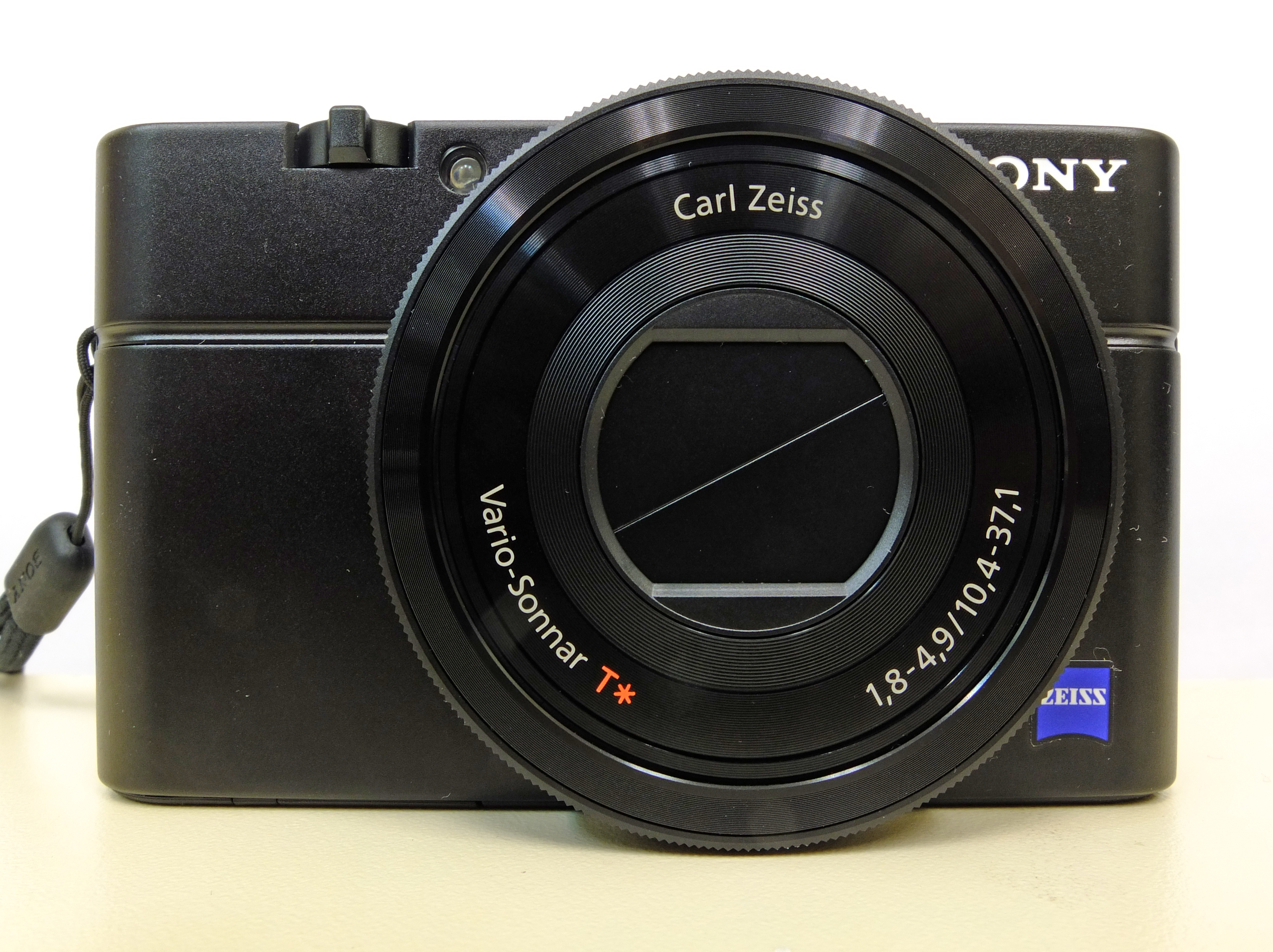
Sony Cyber-shot DSC-RX100 original digital camera
Sony Cyber-shot
Consider — Right for readers who value lens speed over touch controls; DPReview's own testers found the ring's lack of tactile feedback made discrete adjustments like aperture disorienting.
A full stop faster at the wide end (f/1.8 vs f/2.0) with more telephoto reach, but DPReview found its control ring lacks click-stops and it has no touchscreen at all.Available at Amazon(paid link) — opens Amazon in a new tab. Price and availability shown there.
Canon PowerShot SX730 HS digital camera
Canon PowerShot
Skip — It adds the requested exposure control, but its flash reaches 4.0 m rather than the G9 X's 6.0 m and it remains in the A1300's 1/2.3-inch sensor class.
A 40x zoom that looks like the bigger upgrade next to an A1300, and it does add P, Tv, Av, and M exposure modes, but it keeps the same 1/2.3-inch sensor size and, per DPReview’s spec page, only bumps flash range to 4.0 m.Available at Amazon(paid link) — opens Amazon in a new tab. Price and availability shown there.
Sources
Pages consulted while researching this article. None of these are affiliate links.
- Canon PowerShot A1300 full specifications - DPReview — dpreview.com
- PowerShot A1300 - Canon Camera Museum — global.canon
- Canon PowerShot G9 X specifications - DPReview — dpreview.com
- Canon PowerShot G9 X sensor review: Attractive all-rounder - DxOMark — dxomark.com
- Canon G9 X - Image Quality and Verdict - Trusted Reviews — trustedreviews.com
- Canon PowerShot G9 X Mark II Review - DPReview — dpreview.com
- Canon PowerShot G9 X Mark II - Wikipedia — en.wikipedia.org
- Sony Cyber-shot DSC-RX100 specifications - DPReview — dpreview.com