Xiaomi Sound Outdoor: What 60Hz–20kHz Really Means
The question
xiaomi sound outdoor frequency range
The Xiaomi Sound Outdoor’s official frequency range is 60Hz–20kHz, but Xiaomi does not specify how much output drops at either end.
The Xiaomi Sound Outdoor has an official audio frequency range of 60 Hz to 20 kHz, for model MDZ-38-DB. Xiaomi does not publish a decibel tolerance alongside that range, so it does not establish equally strong output throughout the band or a measured bass cutoff at 60 Hz. Xiaomi specifications
That distinction matters if you are checking the specification before buying: the range answers which frequencies Xiaomi claims the speaker covers, but leaves the strength and balance of that output unresolved. There is no evidence here that warrants a blanket warning against buying the Sound Outdoor; the limitation is using its frequency endpoints as proof of deep bass or accurate sound.
What the 60 Hz lower limit tells you about bass
Xiaomi’s published range begins at 60 Hz and ends at 20,000 Hz. Its user manual repeats those endpoints for the MDZ-38-DB, confirming that the figure belongs to this specific speaker. Xiaomi Sound Outdoor user manual
The missing detail is how quietly the speaker may reproduce frequencies near those limits. A specification with a stated tolerance or roll-off threshold lets you interpret its endpoints against a reference level. Xiaomi’s specification supplies neither. You therefore cannot label 60 Hz as its −3 dB point, −6 dB point, or the frequency below which it becomes completely silent.
For comparison of measurement methods, RTINGS defines low-frequency extension as the lowest frequency where output reaches six decibels below its target response. That definition makes the reported number interpretable. Xiaomi’s bare 60 Hz endpoint cannot be compared directly with a laboratory result using that threshold. RTINGS frequency-response methodology
If your priority is bass below 60 Hz, the published specification provides no assurance of useful output there. That does not prove the speaker produces absolutely nothing below 60 Hz. It means the available manufacturer figure cannot tell you how much you will hear.
Xiaomi advertises dual passive woofer radiators, automatic equalisation and dynamic woofer extension. These describe the speaker’s construction and processing, but Xiaomi supplies no accompanying response curve showing their effect. The word “subwoofer” in its promotional description should therefore not be read as a quantified promise of deep sub-bass. Xiaomi product overview
The same caution applies at the treble end. A 20 kHz endpoint does not establish that vocals, cymbals or other sounds below it are reproduced evenly. Frequency coverage and tonal balance are separate questions; an endpoint cannot reveal peaks or dips inside the stated range.
Just want the recommendation?
Skip to the picksWhen you want measured response rather than a specification
No publicly accessible independent laboratory frequency-response curve with documented measurement conditions was located for this article. The 60 Hz–20 kHz figure remains Xiaomi’s specification, not an independently verified acoustic measurement.
There is independent hands-on coverage, but its findings need to be described accurately. CGMagazine reviewer Matt Keith reported no notable trouble areas during frequency testing and described the bass as punchy. The review does not publish a response graph, a decibel tolerance or a measured low-frequency extension figure. Those listening observations cannot establish that the Sound Outdoor is flat down to 60 Hz. CGMagazine’s Sound Outdoor review
Keith also reported approximately 8–10 hours of playback at 75–85% volume in runtime testing. That is an independent numerical result, but it measures endurance; it does not validate the advertised frequency range. Keeping those findings separate avoids turning a tested battery figure into an unsupported claim about sound.
For a meaningful acoustic comparison, look for three things together: a response graph, the playback level used during testing, and the threshold used to define bass extension. RTINGS’ methodology illustrates why this matters: its response testing specifies microphone placement and level calibration, rather than reporting frequency endpoints alone. RTINGS measurement procedure
This also sets a practical buying boundary. Consider the Xiaomi Sound Outdoor if you want a compact portable Bluetooth speaker and accept that its published acoustic specification is incomplete. If your purchase depends on verified deep-bass extension or a tightly controlled tonal balance, the available evidence is insufficient to recommend it for that requirement. A listening review can help describe its character, but cannot supply the missing measurements.
When “frequency range” means the Bluetooth connection
A different frequency range appears in the Sound Outdoor’s regulatory paperwork: 2402–2480 MHz, equivalent to 2.402–2.480 GHz. The FCC test report prepared for Beijing Xiaomi Electronics identifies model MDZ-38-DB and lists those operating frequencies for Bluetooth. They describe the wireless radio connection, not the sound produced by the speaker. Sound Outdoor FCC test report, device information
The units help you distinguish the figures:
- 60 Hz–20 kHz: Xiaomi’s stated audio frequency range.
- 2402–2480 MHz: the Bluetooth radio operating frequencies.
- 25 metres: Xiaomi’s stated transmission distance, a separate meaning of “range.”
Xiaomi also lists Bluetooth version 5.4. Neither that version number nor the transmission distance changes the meaning of its audio specification. If you are checking bass performance, use the Hz–kHz figure; if you are investigating wireless operation, the MHz figure is the relevant one. Xiaomi specifications
Buying a second Sound Outdoor addresses another separate question: stereo playback. Xiaomi documents pairing two identical speakers as left and right channels, but publishes no expanded frequency range for that arrangement. Choose a pair for stereo separation; the documentation gives no basis for treating it as a guaranteed extension below 60 Hz. Xiaomi stereo-pair instructions
The bottom line
Plainly:
Top pick
It depends
Xiaomi Sound Outdoor 30W Bluetooth Speaker MDZ-38-DB
The MDZ-38-DB is specified at 60 Hz–20 kHz, but Xiaomi provides no decibel tolerance to establish output strength at the frequency limits.
Consider it for portable Bluetooth listening with a stated 60 Hz–20 kHz range. Xiaomi supplies no response tolerance or acoustic graph, so it is not a verified choice for deep-bass extension.Available at Amazon(paid link) — opens Amazon in a new tab. Price and availability shown there.
Recommended products
Ordered by how well each one fits the situations above. Each link below is a paid link.
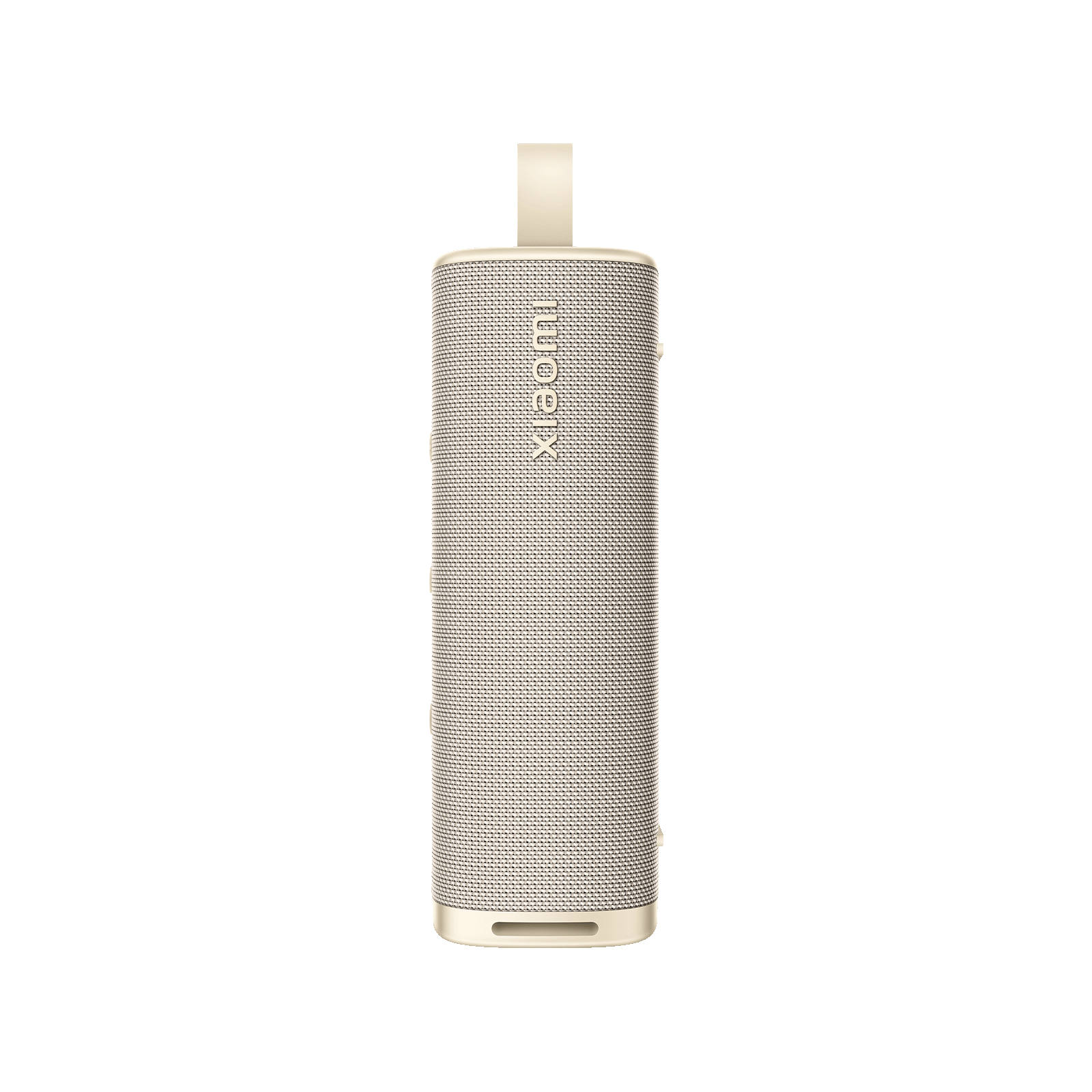
Xiaomi Sound Outdoor 30W Bluetooth Speaker MDZ-38-DB
Consider — The MDZ-38-DB is specified at 60 Hz–20 kHz, but Xiaomi provides no decibel tolerance to establish output strength at the frequency limits.
Consider it for portable Bluetooth listening with a stated 60 Hz–20 kHz range. Xiaomi supplies no response tolerance or acoustic graph, so it is not a verified choice for deep-bass extension.Available at Amazon(paid link) — opens Amazon in a new tab. Price and availability shown there.
Sources
Pages consulted while researching this article. None of these are affiliate links.
- Xiaomi Sound Outdoor specifications — mi.com
- Xiaomi Sound Outdoor user manual — i02.appmifile.com
- Xiaomi Sound Outdoor product overview — mi.com
- RTINGS: Frequency Response Accuracy testing methodology — rtings.com
- CGMagazine: Xiaomi Sound Outdoor Speaker Review — cgmagonline.com
- Xiaomi Sound Outdoor FCC test report EED32Q817463 — fcc.report