Cambridge Audio MXN10: Use Line/Aux, Not Phono, on Your Amp
The questionWhere do these come from?
Streamer and Turntable with Integrated Amp
Sorry if this is a dumb question. I currently have a turntable (no preamp) connected to a Kenwood KA3700 integrated amplifier via the phono preamp stage, per image below.
Plug the MXN10's RCA line output into your amp's AUX or Line input — never Phono, which expects a far weaker signal and applies RIAA equalization.
Connect the Cambridge Audio MXN10’s RCA line output to an unused line-level input on the integrated amp — the one labelled AUX, CD, Tuner, Line, or a numbered Line 1/2/3. Never connect it to the input labelled Phono, MM, MC, or Turntable. Those two families of input are not interchangeable, and using the wrong one is the single most common wiring mistake with a streamer like this.
Why phono is the wrong input
A phono input on an integrated amp is not a generic RCA jack — it is a dedicated preamp stage built for one specific job: taking the tiny signal a turntable cartridge produces (typically a few millivolts) and boosting it by 40dB or more while also applying RIAA equalization, a frequency curve that undoes the bass-cut/treble-boost baked into vinyl mastering.
The MXN10 doesn’t output anything like that. According to Cambridge Audio’s own MXN10 user manual, its rear-panel line output is “analogue output used to provide a signal to an integrated amplifier, pre-amp or recording device,” and the manual’s technical specifications list that output at a fixed 2V RMS through unbalanced RCA jacks with 500-ohm output impedance — a standard consumer line-level signal, roughly 100 to 1,000 times stronger than a phono cartridge’s output.
Feed that into a phono stage and two things go wrong at once: the extra 40dB-plus of gain will clip and distort the signal well before it reaches a usable volume, and the RIAA equalization curve will tilt the frequency response in a way that was never meant to apply to a line-level source. The result is loud, harsh, bass-light sound — not a subtle difference, an obviously broken one.
Confirming the MXN10 can use Aux
Yes. Any input on an integrated amp that is not labelled Phono is a line-level input, and the MXN10’s fixed 2V RMS output is designed to match it. AUX, CD, Tuner, Line, Line 1/2/3, or a Tape/Rec input if the amp has one and it isn’t already used for a monitor loop — all of these work identically for this purpose. The label is just a name; electrically they’re the same kind of input.
Wiring it in
- Run a stereo RCA interconnect from the MXN10’s Line Output pair to any free line-level input on the amp (AUX, CD, Tuner, Line, etc.).
- Connect Ethernet or Wi-Fi to the MXN10 so it can join the home network — Cambridge Audio’s manual notes the MXN10 needs to stay connected to receive firmware and security updates and doesn’t work with captive-portal networks (hotel-style login pages).
- Power on the MXN10, then select the matching input on the amp (e.g. “AUX” if that’s where you plugged in).
- Set up the unit through the free StreamMagic app — the MXN10 has no remote control of its own; every setting, including source selection and standby behaviour, is handled through the app.
Should Pre-Amp mode be switched on?
The MXN10’s settings include a “Pre-Amp” toggle that, once enabled, lets the StreamMagic app control the volume of the analogue line output directly, turning the fixed 2V RMS signal into a variable one. That feature exists for people running the MXN10 straight into a power amp or active speakers that have no volume control of their own.
Just want the recommendation?
Skip to the picksGoing into an integrated amp, leave Pre-Amp mode off. The integrated amp already has its own volume stage — that’s what “integrated” means — so it should be the only thing adjusting level. Turning on Pre-Amp mode adds a second volume control in the signal path with no benefit, and if it’s accidentally left partway down, it will quietly cap how loud the amp can go regardless of where its own volume knob sits.
If every line input is already full
Two options, in order of preference. First, check whether an existing line input is actually needed for what’s plugged into it — a Tape/Rec input, for example, is line-level and frequently unused once cassette decks are retired, even though it isn’t labelled AUX. Second, if the amp itself has a digital input with a built-in DAC, run the MXN10’s S/PDIF coaxial or TOSLINK optical output into that instead of the analogue line output; the amp’s own DAC then does the conversion. This works, but it comes with a real trade-off worth knowing before choosing it: Cambridge Audio’s manual specifies the MXN10’s digital outputs top out at 192kHz/32-bit PCM and DSD64, while its analogue line output (fed by the onboard ESS Sabre ES9033Q DAC) supports the MXN10’s full 768kHz/32-bit PCM and DSD512 capability. Going digital-out caps the resolution the MXN10 can actually deliver.
If a turntable is also in the system
The MXN10 has no analogue or digital inputs of any kind — it is strictly a network source, and the streaming and analogue sections of the unit are entirely separate concerns. A turntable connected to the amp’s phono input keeps using that input exactly as before; the MXN10 simply takes over whichever line input is free. Nothing about adding the streamer changes how the phono stage or turntable is wired.
How the MXN10 compares to other streamer-DACs for this job
| Verdict | Output for an integrated amp | DAC | The catch | |
|---|---|---|---|---|
| Cambridge Audio MXN10 | Buy | Fixed 2V RMS unbalanced RCA (variable only if Pre-Amp mode is manually enabled) | ESS Sabre ES9033Q, up to 32-bit/768kHz PCM, DSD512 | No inputs of any kind, analogue or digital — it can only ever be a source |
| WiiM Pro Plus | Consider | RCA line out, switchable fixed or adjustable in the app | AKM AK4493SEQ, up to 32-bit/768kHz PCM, DSD512 | Adds an analogue RCA input with its own PCM1861 ADC, so it can also digitize a turntable’s phono-stage output — a job the MXN10 cannot do at all |
| Bluesound Node (2021) | Consider | RCA out switchable between fixed and variable, plus a dedicated subwoofer output | Texas Instruments PCM5242, up to 24-bit/192kHz | Multi-room only works inside Bluesound’s own BluOS ecosystem, separate from Cambridge’s StreamMagic |
The MXN10 is the right pick specifically for the wiring problem this question is about: its line output is fixed at a sensible level by default, unbalanced RCA matches what nearly every integrated amp expects, and Cambridge’s own documentation states plainly that the output exists to feed “an integrated amplifier, pre-amp or recording device.” Reviewers at What Hi-Fi? and Trusted Reviews both single out the MXN10’s StreamMagic app as more responsive than rival control apps, which matters here because every setting — including whether Pre-Amp mode is on — is managed there rather than through physical controls.
The WiiM Pro Plus is worth considering instead if there’s also a turntable with its own phono preamp already feeding line level, or another analogue source, that needs to join the same network-streaming setup: its built-in ADC and analogue input handle that job, which the MXN10 simply cannot do. The Bluesound Node (2021) is worth considering over the MXN10 only where a subwoofer output or BluOS-specific multi-room with other Bluesound gear is already part of the plan; on its own, its digital output tops out at a lower resolution (192kHz/24-bit versus the MXN10’s 768kHz/32-bit path) and it doesn’t offer anything the MXN10’s fixed line output doesn’t already cover for a simple amp connection.
For the exact question this page answers — a streamer with a DAC feeding an integrated amp — the wiring is the same regardless of which of these three is chosen: line output to a line-level input, never to phono, and app-based Pre-Amp mode left off unless the amp lacks its own volume control.
The bottom line
Two options, and the revision you own picks one:
Top pick
Buy this
Cambridge Audio MXN10 Network Streamer
Cambridge Audio
Its line output is a fixed 2V RMS unbalanced RCA signal, exactly the level an integrated amp's AUX or Line input expects, and Cambridge's own manual specifies it for connection to "an integrated amplifier, pre-amp or recording device."
The subject of this question: a compact StreamMagic streamer whose RCA line output is built specifically to feed an integrated amp’s line-level input at a fixed 2V RMS. It has no inputs of its own, analogue or digital, so it can only ever be a source, never a hub for other gear.Available at Amazon(paid link) — opens Amazon in a new tab. Price and availability shown there.The alternative
It depends
WiiM Pro Plus Streamer
WiiM
It adds an analogue RCA input with its own PCM1861 ADC, letting it double as a way to network a turntable's phono-stage output, a job the MXN10 cannot do at all since it has no inputs of any kind.
A cheaper streamer-DAC alternative that also outputs line-level RCA suited to an AUX input, and uniquely adds an analogue RCA input with a built-in ADC so a turntable’s phono-preamp output can join the same network setup. Its output level defaults to adjustable rather than fixed unless set manually in the app.Available at Amazon(paid link) — opens Amazon in a new tab. Price and availability shown there.
Recommended products
Ordered by how well each one fits the situations above. Each link below is a paid link.

Cambridge Audio MXN10 Network Streamer
Cambridge Audio
Buy — Its line output is a fixed 2V RMS unbalanced RCA signal, exactly the level an integrated amp's AUX or Line input expects, and Cambridge's own manual specifies it for connection to "an integrated amplifier, pre-amp or recording device."
The subject of this question: a compact StreamMagic streamer whose RCA line output is built specifically to feed an integrated amp’s line-level input at a fixed 2V RMS. It has no inputs of its own, analogue or digital, so it can only ever be a source, never a hub for other gear.Available at Amazon(paid link) — opens Amazon in a new tab. Price and availability shown there.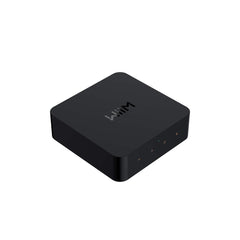
WiiM Pro Plus Streamer
WiiM
It depends — It adds an analogue RCA input with its own PCM1861 ADC, letting it double as a way to network a turntable's phono-stage output, a job the MXN10 cannot do at all since it has no inputs of any kind.
A cheaper streamer-DAC alternative that also outputs line-level RCA suited to an AUX input, and uniquely adds an analogue RCA input with a built-in ADC so a turntable’s phono-preamp output can join the same network setup. Its output level defaults to adjustable rather than fixed unless set manually in the app.Available at Amazon(paid link) — opens Amazon in a new tab. Price and availability shown there.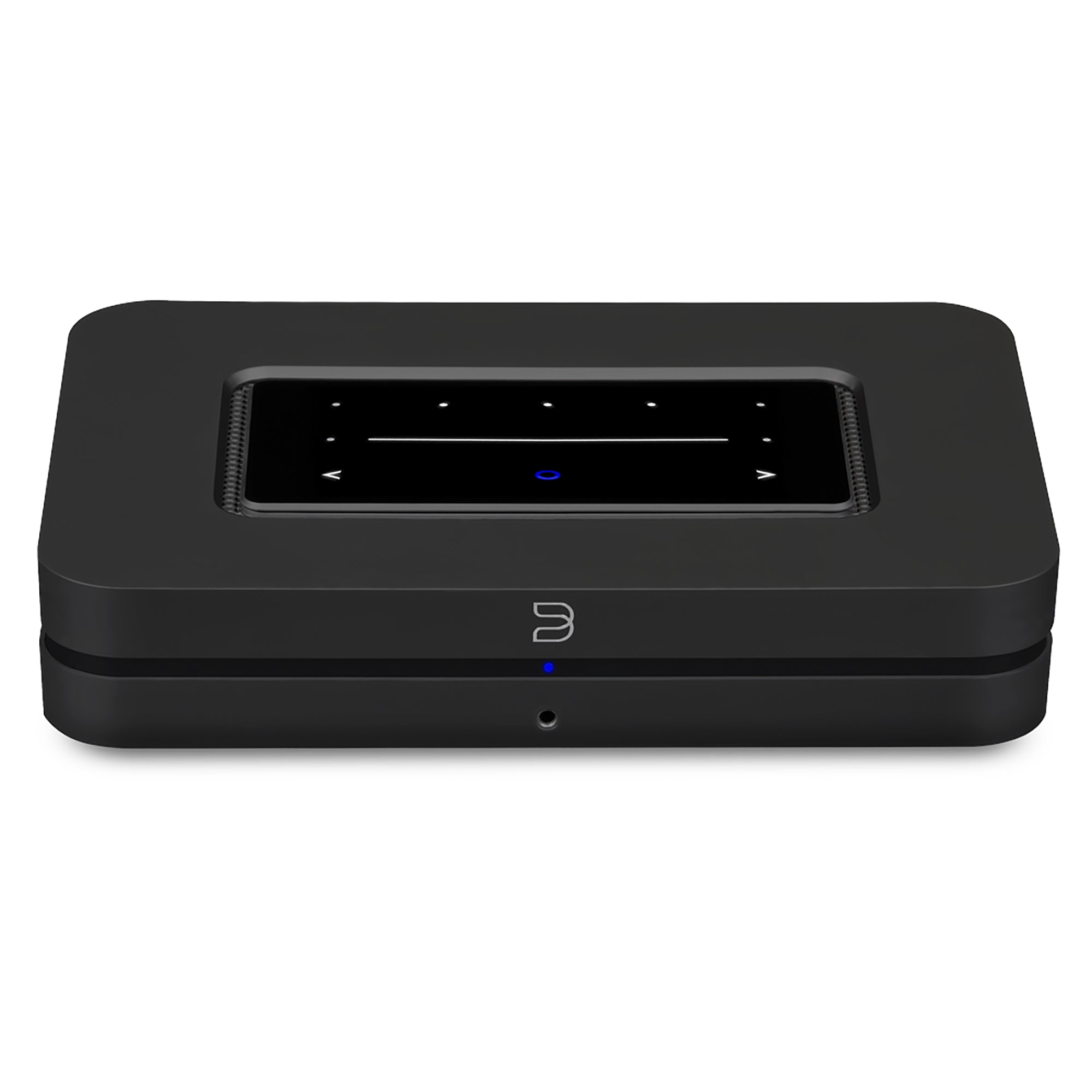
Bluesound Node 2021 Wireless Multi-Room Music Streamer
Bluesound Node
It depends — Its digital output tops out at 24-bit/192kHz versus the MXN10's 32-bit/768kHz path, and its multi-room features are locked to the separate BluOS ecosystem rather than StreamMagic.
A pricier rival streamer with a switchable fixed/variable RCA output and a dedicated subwoofer output the MXN10 lacks. Multi-room only works within Bluesound’s own BluOS ecosystem, so it won’t mix with StreamMagic-based gear.Available at Amazon(paid link) — opens Amazon in a new tab. Price and availability shown there.
Sources
Pages consulted while researching this article. None of these are affiliate links.
- Cambridge Audio MXN10 User Manual (PDF) — cambridgeaudio.com
- Cambridge Audio MXN10 Compact Network Music Streamer — cambridgeaudio.com
- Cambridge Audio MXN10 review - What Hi-Fi? — whathifi.com
- Cambridge Audio MXN10 Review - Trusted Reviews — trustedreviews.com
- In Lisbon for review: the Cambridge Audio MXN10 - Darko.Audio — darko.audio
- Specs for WiiM Pro and Pro Plus — wiimhome.com
- Introducing WiiM Pro Plus: New generation DAC, ADC, and Enhanced Audio-Quality — blog.wiimhome.com
- Just tried the RCA analog input for the first time - WiiM Forum — forum.wiimhome.com