Micro Acoustics 2002e: Rebuild or Replace?
The questionWhere do these come from?
Using a Micro Acoustics cartridge with turntable
Hi all, I recently acquired a Micro-Acoustics MA 2002e cartridge with a missing cantilever as part of a purchase of a Technics SL-1300.
A missing-cantilever 2002e can often be rebuilt, but choose that route for preservation; the AT-VM95ML is the safer daily-use replacement.
A missing-cantilever 2002e can often be rebuilt, but choose that route for preservation; the AT-VM95ML is the safer daily-use replacement. “Safer” here means easier to maintain and match using published specifications—not that a properly rebuilt 2002e is unsafe for records.
The decision in one table
| Option | Verdict | The deciding facts | The catch |
|---|---|---|---|
| Micro Acoustics 2002e stylus rebuild service | Consider | Preserves the uncommon electret cartridge body; the original cartridge weighed 4 grams and was specified for 0.7–1.4 grams tracking force | A missing cantilever requires a complete cantilever-and-stylus replacement, so the result will not retain the original beryllium assembly |
| Audio-Technica AT-VM95ML | Buy | Current 6.1-gram cartridge with a replaceable MicroLinear stylus and a nominal 2.0-gram tracking force | It needs accurate alignment and 100–200 pF recommended load capacitance |
Neither option deserves a blanket skip. Rebuilding is the specialist choice for preserving the Micro Acoustics design; the AT-VM95ML is the more practical answer when you want predictable setup, replaceable parts and a cartridge for regular use.
Why the 2002e is worth considering for repair
The Micro Acoustics 2002e was not an ordinary moving-magnet cartridge. It used directly coupled electret transducers, a passive internal circuit and a user-replaceable stylus assembly with a beryllium cantilever. Its published specifications included a 0.2 × 0.7 mil elliptical diamond, 4-gram cartridge weight, 3.5 mV output and a broad 10–100 kΩ load range. The archived Micro Acoustics 2002 documentation also lists cable capacitance from 100 to 1,500 pF as non-critical.
That unusual construction produced measurable performance worth preserving. In its laboratory evaluation, Stereo Review measured frequency response within approximately ±1 dB from 40 Hz to 20 kHz. At 1.2 grams, intermodulation distortion stayed below 1.5 percent through roughly 26 cm/s and reached only 2 percent at the test record’s 27.1 cm/s maximum. Repetition-rate distortion remained at or below 1 percent through 30 cm/s. Those are historical laboratory results, not current measurements of any individual surviving cartridge. The complete period test is preserved by World Radio History.
That evidence makes a healthy 2002e more than a decorative vintage component. It also explains why repair can be sensible when preserving the original system matters.
A missing cantilever is not a simple retip
A retip normally replaces the diamond while retaining an undamaged cantilever. When the cantilever is absent, the rebuilder must replace the complete cantilever-and-stylus structure and inspect for damage to the suspension or generator.
Soundsmith says cartridges with snapped cantilevers can generally be rebuilt unless the incident also damaged internal components. Its documented options include aluminum, sapphire, ruby and boron cantilevers, but the company does not list the Micro Acoustics 2002e as a model with a predetermined rebuild specification. Treat it as an evaluation case and obtain written confirmation that the service will accept this exact cartridge before shipping it. Soundsmith’s rebuilding documentation explains the inspection and complete-cantilever replacement process.
This distinction matters because the original 2002e used beryllium. A rebuild using another material may perform very well, but it is not an original-spec restoration merely because the old cartridge body remains. Ask the rebuilder to state the cantilever material, diamond profile, target tracking force and whether the work replaces the whole moving assembly or joins a new section to an existing stub.
Do not play a cartridge whose cantilever is missing. The remaining structure cannot trace the groove correctly and may let hard parts of the stylus assembly contact the record.
Check the body before authorizing the work
Repair is worthwhile only if the cartridge body and removable stylus carrier justify it. A competent evaluation should answer four questions:
- Are both electret channels functioning, with acceptable output and channel balance?
- Is the internal suspension or resolver damaged beyond the missing cantilever?
- Is the stylus carrier complete and mechanically secure?
- What post-rebuild compliance and tracking-force range will the technician support?
The fourth answer controls tonearm compatibility. Do not assume that a replacement cantilever and suspension will behave exactly like the original assembly.
Just want the recommendation?
Skip to the picksSend the entire cartridge if that is what the selected rebuilder requests. Soundsmith specifically warns against shipping a cartridge loosely wrapped in tissue or bubble wrap; it should be immobilized with screws in a proper cartridge box. Do not remove more parts or attempt to straighten remnants before the technician sees the damage.
Matching the rebuilt cartridge to a tonearm
The original 2002e was a lightweight, high-compliance design. Period testing found a cartridge-arm resonance of 7–8 Hz in the heavier Philips arm used by Stereo Review and 9.5 Hz in a lighter Dual arm. That is useful evidence that the original cartridge was not restricted to one rare tonearm, although the heavier combination sat near the lower boundary of the desirable range.
Ortofon’s current matching guidance places acceptable cartridge-arm resonance between 7 and 12 Hz, with approximately 10 Hz preferred. Its formula is:
resonance frequency = 1000 / (2 × π × √(total moving mass × compliance))
Total moving mass includes the cartridge, fasteners and the arm’s effective moving mass. Follow the tonearm maker’s definition carefully so a detachable headshell is not counted twice. Ortofon’s tonearm-matching guide explains the calculation and its 7–12 Hz target.
For a rebuilt 2002e, calculate only with the rebuilder’s post-repair compliance figure, including the frequency at which that figure was specified. If the technician cannot supply it, use a suitable resonance test record after installation. A visible or audible resonance inside the music band is not something to solve by guessing at tracking force.
Set tracking force to the rebuilder’s instruction. The historical 1.2-gram measurement is a valuable reference for an original assembly, not automatic permission to use 1.2 grams with different replacement parts.
Why the AT-VM95ML is the practical alternative
The Audio-Technica AT-VM95ML is the replacement to buy when maintainability matters more than preserving the electret design. It uses the standard half-inch mounting arrangement, weighs 6.1 grams and has a separately sold AT-VMN95ML replacement stylus. Audio-Technica specifies a 1.8–2.2-gram tracking range, with 2.0 grams nominal, plus a 47 kΩ load and 100–200 pF capacitance. Its official AT-VM95ML manual provides all of those figures.
Independent measurements give this alternative more support than specifications alone. Audio Appraisal measured the VM95ML’s channel balance at 1.29 dB, inside Audio-Technica’s 1.5 dB specification, and found its output close to the published 3.5 mV figure. The same evaluation used a Technics SL-1200 arm and a 47 kΩ, 100 pF phono input. Its VM95-series test documents the setup and measured results.
The MicroLinear tip also makes alignment less forgiving than a basic elliptical stylus. Set the correct overhang, offset angle, tracking force and anti-skate rather than copying the old 2002e’s position. The related guide to AT-VM95 replacement-stylus compatibility explains why the stylus must match the VM95 body rather than the vintage Micro Acoustics cartridge.
The final repair-or-replace rule
Consider the Micro Acoustics 2002e stylus rebuild service when the body passes professional evaluation, preserving the electret cartridge is the goal, and you accept that a replacement cantilever may alter its original behavior. Request post-rebuild tracking-force and compliance information before approving the work.
Buy the Audio-Technica AT-VM95ML instead when this will be a regularly used turntable, future stylus availability matters, or the rebuilder cannot verify the 2002e’s generator and suspension. What the 2002e gets wrong for that reader is maintainability: its missing beryllium cantilever cannot be restored merely by installing a currently supported replacement stylus.
The bottom line
Two answers, priced differently:
Top pick
It depends
Micro Acoustics 2002e stylus rebuild service
Micro Acoustics
The original beryllium cantilever is missing, so a specialist must inspect the internal suspension and replace the complete cantilever-and-stylus assembly.
The subject service: consider it when preserving a working 2002e electret body matters. Its drawback is that a missing cantilever requires specialist reconstruction, and the replacement will not retain the original beryllium assembly.Available at Amazon(paid link) — opens Amazon in a new tab. Price and availability shown there.The alternative
Buy this
Audio-Technica AT-VM95ML Dual Moving Magnet Cartridge
Audio-Technica
The 6.1-gram standard-mount cartridge has a replaceable AT-VMN95ML stylus, a documented 1.8–2.2-gram tracking range and current manufacturer support.
Alternative: this is the practical daily-use replacement, with a currently replaceable AT-VMN95ML stylus and fully published setup specifications. Its drawback is that the MicroLinear tip requires careful alignment and it does not reproduce the 2002e’s electret design.Available at Amazon(paid link) — opens Amazon in a new tab. Price and availability shown there.
Recommended products
Ordered by how well each one fits the situations above. Each link below is a paid link.
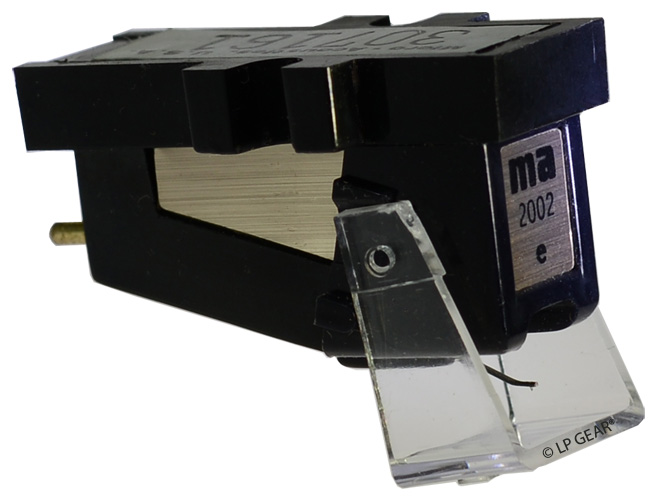
Micro Acoustics 2002e stylus rebuild service
Micro Acoustics
It depends — The original beryllium cantilever is missing, so a specialist must inspect the internal suspension and replace the complete cantilever-and-stylus assembly.
The subject service: consider it when preserving a working 2002e electret body matters. Its drawback is that a missing cantilever requires specialist reconstruction, and the replacement will not retain the original beryllium assembly.Available at Amazon(paid link) — opens Amazon in a new tab. Price and availability shown there.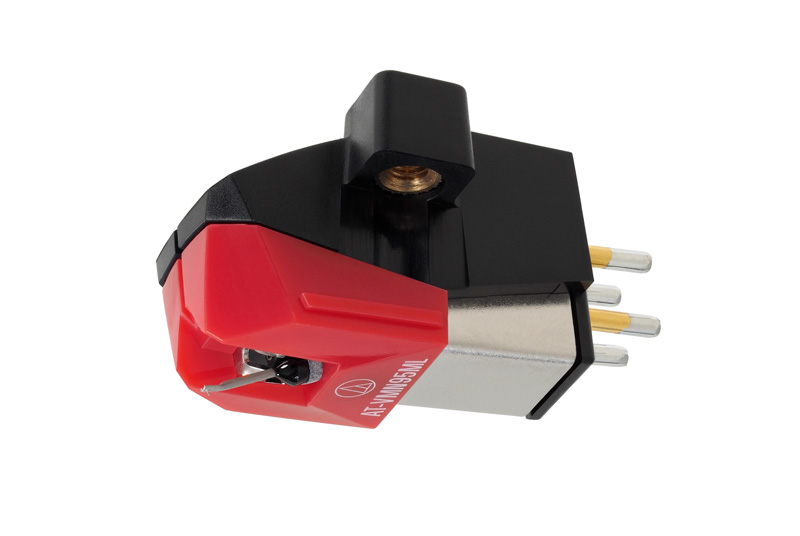
Audio-Technica AT-VM95ML Dual Moving Magnet Cartridge
Audio-Technica
Buy — The 6.1-gram standard-mount cartridge has a replaceable AT-VMN95ML stylus, a documented 1.8–2.2-gram tracking range and current manufacturer support.
Alternative: this is the practical daily-use replacement, with a currently replaceable AT-VMN95ML stylus and fully published setup specifications. Its drawback is that the MicroLinear tip requires careful alignment and it does not reproduce the 2002e’s electret design.Available at Amazon(paid link) — opens Amazon in a new tab. Price and availability shown there.
Sources
Pages consulted while researching this article. None of these are affiliate links.
- Stereo Review, December 1976: Micro Acoustics 2002-e Laboratory Test — worldradiohistory.com
- Micro-Acoustics 2002 Low-Mass Stereo Phono Cartridge Manual — vinylengine.com
- Soundsmith Cartridge Rebuilding / Retipping — sound-smith.com
- Ortofon: Find the Right Cartridge — ortofon.com
- Audio-Technica AT-VM95ML User Manual — docs.audio-technica.com
- Audio-Technica AT-VM95 Detailed Review and Measurements — audioappraisal.com