TP04 Filters or a New PC1? The Better Spend
The question
Dyson TP04 replacement filters — User is deciding whether to spend on filters for an aging TP04 or replace it with a discounted PC1. They need to know if the PC1 is a downgrade or sensible value.
Replace the filter if your TP04 runs properly; choose the PC1 only for a failing machine, quieter operation, or a fresh warranty.
Replace the filters if your Dyson TP04 still moves air normally, oscillates correctly and responds to its controls. The Dyson Purifier Cool PC1 (TP11) is a sensible replacement for a TP04 developing hardware faults, but it is not a meaningful airflow or purification upgrade—and it removes some TP04 features.
The PC1 gets the replacement decision wrong for anyone with a healthy TP04 who uses its VOC and NO2 readings or backward airflow: you give up those functions without increasing Dyson’s stated maximum airflow.
| Option | Airflow and filtration evidence | Features that decide it | Verdict |
|---|---|---|---|
| TP04 with a new Dyson filter | 290 L/s stated maximum; HEPA plus activated carbon | PM2.5, PM10, VOC and NO2 reporting; forward and diffused airflow | Buy if the machine is mechanically healthy |
| Dyson Purifier Cool PC1 (TP11) | 290 L/s stated maximum; HEPA plus activated carbon | New hardware and warranty, but particle-only indoor reporting and no diffused airflow | Consider if the TP04 is becoming unreliable |
There is no blanket skip here: both choices are legitimate under different conditions. The filter is the better default for a working TP04; the PC1 is the narrower choice when continuing to maintain an aging machine would also mean accepting a motor, control or oscillation problem.
Why a new filter is usually the better decision
A filter warning does not mean the TP04 itself is worn out. The HEPA and activated-carbon elements are consumable parts, and Dyson specifies approximately one year of filter life at 12 hours of daily operation, or six months at continuous operation. Both the TP04 and PC1 use ten speed settings, 350-degree oscillation and a stated maximum airflow of 290 litres per second. Dyson also gives both machines the same 27 m² POLAR room-coverage figure in its technical documents. Dyson’s TP04 technical specification and PC1 technical specification document those figures.
That makes the PC1 a newer implementation of the same basic fan-purifier job, not a step up in published airflow. Buying the PC1 also does not eliminate future filter spending: its HEPA-and-carbon filter has the same stated replacement interval. When a TP04 passes the mechanical checks below, replacing the consumable is more rational than replacing the entire appliance.
The TP04 also retains the more informative monitoring system. Dyson’s owner documentation lists separate displays for PM2.5, PM10, VOCs and nitrogen dioxide, as well as remaining life for both filters. Dyson’s TP04 owners page explains each reading. The PC1 reports PM2.5 and PM10 but does not detect VOCs or indoor temperature, according to Live Science’s feature review. Live Science’s PC1 assessment also confirms that omission during its testing.
What independent measurements actually show
The available measurements do not establish the PC1 as a major purification upgrade. ENERGY STAR’s certified-product dataset records the TP04 at 89.8 CFM dust CADR, 80.7 CFM smoke CADR and a calculated PM2.5 CADR of 85.13. ENERGY STAR’s room-air-cleaner dataset identifies the model explicitly as TP04.
RTINGS measured the PC1 at 76 CFM for PM1.0 CADR and calculated a recommended maximum-speed room size of 118 square feet. It also measured 53.8 dBA at the highest setting and 35.5 dBA at the lowest. RTINGS’ measured PC1 results provide the test figures.
Those CADR numbers should not be treated as a direct contest because the particle sizes and test protocols differ. They do support the narrower conclusion that both machines occupy a similar performance class. The independent evidence provides no reason to discard a sound TP04 solely to obtain stronger purification from a PC1.
The features the PC1 leaves behind
Backward—or diffused—airflow is the most practical loss. A TP04 can continue filtering while directing its air out of the rear, which is useful when you want purification without a continuous breeze aimed into the room. Dyson’s TP04 specification explicitly includes a Diffused mode control; the PC1 control list contains no equivalent airflow-direction function.
The PC1 also narrows indoor monitoring to particles. That is harmless if the display is used only as a general clean-or-dirty indicator. It is a real downgrade if you watch VOC changes after painting, cleaning or using aerosols, or monitor NO2 around combustion sources.
Just want the recommendation?
Skip to the picksConversely, the PC1 has a defensible noise advantage on paper. Dyson declares up to 64.4 dBA for the TP04 in maximum fan mode and 61.4 dBA for the PC1. A fresh two-year warranty is included in the PC1 specification as well. Those are worthwhile hardware benefits when the existing TP04 has become noisy or unreliable, but they do not turn the PC1 into a higher-capacity purifier.
When the PC1 becomes the sensible replacement
Choose the PC1 instead of another TP04 filter when at least one fault remains after basic cleaning and inspection:
- Airflow is weak or unstable even with the old filters temporarily removed for diagnosis—not for normal operation.
- The motor produces grinding, scraping or persistent high-pitched mechanical noise.
- Oscillation sticks, slips or no longer completes its selected sweep.
- The power button, remote receiver or app connection is unreliable enough to affect everyday control.
- The machine displays a persistent fault code that Dyson support cannot resolve without a substantial repair.
A clogged filter can reduce airflow, so weak output alone does not automatically condemn the machine. Check the air inlets and amplifier loop for external dust, make sure the filter covers are seated, and use Dyson’s model-specific troubleshooting before deciding. Do not run the purifier without filters except for a brief diagnostic check recommended by support.
If the fault cannot be separated from the filter condition, contact Dyson with the serial number before buying either option. A filter will not repair a worn bearing, damaged oscillation mechanism or failed sensor, while replacing an otherwise sound machine wastes functional hardware.
Get the correct TP04 filter, not merely a similar-looking one
Dyson’s part numbers differ by market. In the United States, Dyson lists the 360° Glass HEPA and Activated Carbon Filter, part 969048-05, for the TP04, HP04 and DP04. Dyson’s US compatibility page is the checkable source for that fitment.
In the United Kingdom, Dyson lists part 965432-01 as compatible with both the TP04 and PC1, along with several other purifiers. Dyson’s UK PC1 support page provides that broader compatibility list. This means a UK-market filter need not necessarily become stranded if you later move from a TP04 to a PC1.
Do not assume those regional part numbers are interchangeable everywhere. Match the filter against the exact model and serial number on Dyson’s support site for the country where the machine was sold. The correct product must include both the glass HEPA and inner activated-carbon elements; these purifier filters are non-washable.
Reset both filter counters after installation
The TP04 tracks its HEPA and carbon elements separately. After unplugging the machine, replacing both elements and securing the covers, switch it back on and perform both resets:
- Hold the remote’s Night mode button until the display completes its five-second countdown. This resets HEPA filter life.
- Hold the remote’s Oscillation button until the second five-second countdown completes. This resets carbon-filter life.
The two-button procedure comes directly from the TP04 operating manual. Resetting only one counter can leave the machine displaying a filter warning even though both elements were replaced.
The short buying rule
Buy the genuine TP04 replacement filter when the fan, controls, oscillation and sensors still work. Consider the PC1 when the TP04 has an unresolved hardware fault, when lower declared maximum noise matters more than gas monitoring, or when a new warranty justifies replacing the whole machine.
Do not buy the PC1 expecting more airflow, larger published coverage or richer air-quality data. Its strongest case is dependable new hardware; its weak case is upgrading a TP04 that only needs its normal consumable replaced.
The bottom line
Neither is wrong; the use case separates them:
Top pick
Buy this
Dyson 360° Glass HEPA and Activated Carbon Filter 969048-05
Dyson
Dyson lists part 969048-05 as compatible with the Pure Cool TP04 and specifies both HEPA and activated-carbon filtration.
Buy this for a mechanically healthy US-market TP04; it replaces both the glass HEPA and activated-carbon elements. Dyson uses different part numbers in other regions, so confirm compatibility against the machine’s serial number.Available at Amazon(paid link) — opens Amazon in a new tab. Price and availability shown there.The alternative
It depends
Dyson Purifier Cool PC1 TP11
Dyson Purifier
Dyson specifies the same 290 L/s maximum airflow and 27 m² POLAR coverage as the TP04, while the PC1 control list omits the TP04’s Diffused mode.
Consider the PC1 when the TP04 also has a motor, control or oscillation fault and new hardware is the real purchase. The drawback is the loss of TP04 gas sensing and diffused airflow without an increase in Dyson’s stated 290 L/s maximum airflow.Available at Amazon(paid link) — opens Amazon in a new tab. Price and availability shown there.
Recommended products
Ordered by how well each one fits the situations above. Each link below is a paid link.

Dyson 360° Glass HEPA and Activated Carbon Filter 969048-05
Dyson
Buy — Dyson lists part 969048-05 as compatible with the Pure Cool TP04 and specifies both HEPA and activated-carbon filtration.
Buy this for a mechanically healthy US-market TP04; it replaces both the glass HEPA and activated-carbon elements. Dyson uses different part numbers in other regions, so confirm compatibility against the machine’s serial number.Available at Amazon(paid link) — opens Amazon in a new tab. Price and availability shown there.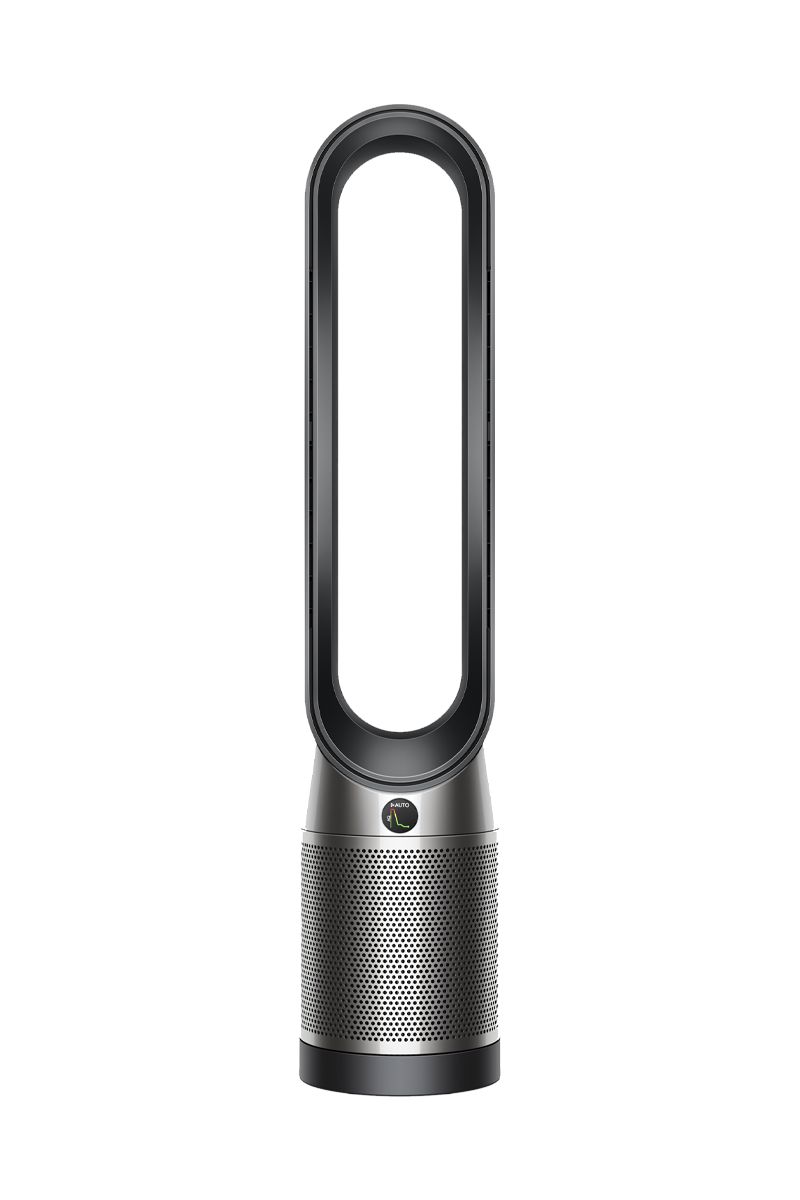
Dyson Purifier Cool PC1 TP11
Dyson Purifier
Consider — Dyson specifies the same 290 L/s maximum airflow and 27 m² POLAR coverage as the TP04, while the PC1 control list omits the TP04’s Diffused mode.
Consider the PC1 when the TP04 also has a motor, control or oscillation fault and new hardware is the real purchase. The drawback is the loss of TP04 gas sensing and diffused airflow without an increase in Dyson’s stated 290 L/s maximum airflow.Available at Amazon(paid link) — opens Amazon in a new tab. Price and availability shown there.
Sources
Pages consulted while researching this article. None of these are affiliate links.
- Dyson Pure Cool TP04 Technical Specification — dyson.com
- Dyson Purifier Cool PC1 Technical Specification — dyson.com
- Dyson Pure Cool TP04 Owners Guide — dyson.com
- Dyson Purifier Cool PC1 TP11 Review and Measurements — livescience.com
- ENERGY STAR Room Air Cleaner Data and Analysis — energystar.gov
- RTINGS Dyson Purifier Cool PC1 Measurements — rtings.com
- Dyson 360° Glass HEPA and Activated Carbon Filter 969048-05 — dyson.com
- Dyson UK Purifier Cool PC1 Support and Filter Compatibility — dyson.co.uk