RS3 Mini vs RS4 Mini Payload: The FX3 Answer
The questionWhere do these come from?
DJI RS3 vs RS4 Mini for FX3 + Sigma 24-70 II (Same price used)?
Hey everyone, looking for a quick sanity check before pulling the trigger. I can buy a used RS3 Standard or a used RS4 Mini for the exact same price. My Setup: Sony FX3 + SmallRig Cage Sigma 24-70mm f2.
The RS3 Mini and RS4 Mini both top out at 2 kg, while the DJI RS3 Standard gives an FX3 kit a safer 3 kg payload ceiling.
The DJI RS3 Mini and DJI RS4 Mini have the same official tested payload: 0.4-2 kg, or 4.4 lb at the top end. If the camera is a Sony FX3 with a Sigma 24-70mm F2.8 and occasional 70-200mm rentals, the payload answer points away from both Minis and toward the DJI RS3 Standard, because the RS3 Standard is rated to 3 kg / 6.6 lb by DJI.
| Spec | DJI RS3 Mini | DJI RS4 Mini | DJI RS3 Standard |
|---|---|---|---|
| Official tested payload | 0.4-2 kg / 0.8-4.4 lb | 0.4-2 kg / 0.88-4.4 lb | 3 kg / 6.6 lb |
| Gimbal weight | 795 g portrait, 850 g horizontal | Approx. 890 g | Approx. 990 g gimbal + 200 g grip |
| Battery runtime rating | 10 hours | 13 hours stationary | 12 hours |
| Payload headroom over 2 kg | 0 g | 0 g | 1,000 g |
Those payload numbers come from DJI’s own specifications for the RS3 Mini, RS4 Mini, and RS3. The important part is that RS4 Mini is not a higher-payload replacement for RS3 Mini. It is newer, lighter-featured, and more refined, but DJI still rates it at the same 2 kg tested payload ceiling.
The Minis tie at a 2 kg payload
There is no payload win for the RS4 Mini. Both Minis are 2 kg-class gimbals.
The RS4 Mini can still be the better Mini for other reasons: DJI lists automatic axis locks, supported vertical shooting, 13-hour stationary runtime, and a 3100 mAh battery in the RS4 Mini specs. The RS3 Mini is older and lighter in some configurations, with DJI listing 795 g in portrait mode and 850 g in horizontal shooting mode.
But if the deciding line is payload, the RS4 Mini does not move the ceiling. It remains a 0.4-2 kg gimbal. That means any setup that was marginal on RS3 Mini is still marginal on RS4 Mini. A heavier lens, cage, matte box, filter stack, follow focus motor, monitor, HDMI cable, or top handle can push the kit into the zone where balancing gets fussy and motor performance becomes less forgiving.
For a narrower Sony FX3-specific comparison, this site already has a separate guide to RS3 or RS4 Mini for a Sony FX3 kit. The short version for payload is simpler: the Mini line is fine for stripped-down mirrorless builds, not for treating every rental lens as safe.
The FX3 and Sigma kit fits under 2 kg on paper
A bare Sony FX3 plus a Sigma 24-70mm F2.8 DG DN can fit under the 2 kg Mini limit on paper.
Sony lists the FX3 at 715 g with battery and memory card. Sigma lists the original 24-70mm F2.8 DG DN Art for Sony E-mount at 830 g, which puts that two-item combination at 1,545 g. Sigma lists the newer 24-70mm F2.8 DG DN II Art for Sony E-mount at 735 g, which puts that body-and-lens combination at 1,450 g.
That leaves roughly 455-550 g before hitting the 2 kg Mini ceiling, depending on which Sigma version is mounted. That sounds like enough until real video rigging is added. The FX3 often gets used with a cage, cable clamp, variable ND, lens support, wireless audio receiver, small monitor, HDMI cable, or the XLR handle. Sony lists the FX3 XLR handle unit at about 300 g in its help guide. Add that handle to the original Sigma 24-70 calculation and the kit rises to about 1,845 g before filters, plates, cables, or a cage.
So the answer is not that the RS3 Mini or RS4 Mini cannot carry an FX3 with a 24-70. The answer is that they do it with limited reserve. For a clean FX3, battery, card, and Sigma 24-70 build, either Mini can be inside DJI’s payload rating. For a working FX3 rig that changes accessories during a shoot, the DJI RS3 Standard’s 3 kg rating gives much more practical headroom.
Choose the RS3 Standard for 70-200mm rentals
Choose the DJI RS3 Standard if 70-200mm rentals are genuinely part of the kit.
The problem with a 70-200mm is not only scale weight. It is also length, balance travel, and front-heavy torque. A gimbal payload rating is tested mass, not a promise that every long lens inside the number will balance easily in every position.
Just want the recommendation?
Skip to the picksThe difference between 70-200mm lenses matters. Sony lists the FE 70-200mm F2.8 GM OSS II at about 1,045 g without hood and tripod foot. With the FX3 at 715 g, that two-part combination is about 1,760 g, still under the Mini payload rating before accessories. Sony’s original FE 70-200mm F2.8 GM OSS is listed at 1,480 g without tripod mount, which puts the FX3 plus lens at about 2,195 g before adding any plate, filter, cable, or support. That is already above the 2 kg rating for both Minis.
Rental houses may hand over the original GM, the GM II, a third-party 70-200, or a lens with collar hardware attached. Since the search scenario includes occasional rentals rather than one known owned lens, the RS3 Standard is the safer payload choice. Its 3 kg / 6.6 lb tested payload gives room for the heavier version and the normal video accessories that appear on real FX3 builds.
The RS4 Mini is not a payload upgrade
The RS4 Mini being newer does not make it the RS3 Standard replacement for payload. It is closer to an updated Mini-class stabilizer.
Pick RS4 Mini over RS3 Mini when the setup stays below 2 kg and the useful improvements are the newer handling features, auto axis locks, updated battery rating, and compact travel size. That is a valid choice for stripped-down FX3 work with a standard zoom.
Pick DJI RS3 Standard when the camera package may cross 2 kg or when the lens list includes uncertain rentals. The RS3 Standard costs more weight in the hand, but the payload rating is the reason it exists in this decision. It is not just a comfort margin; it changes which lens combinations are inside the official tested payload.
Count the complete shooting build
Add the actual shooting build, not the catalog body-and-lens build.
Weigh the FX3 with battery, card, lens, lens hood if used, filter, quick-release plate, cage, top handle, mic receiver, HDMI cable, monitor mount, and any focus motor. Do not count only the camera body and lens unless that is exactly how it will be flown.
Then check whether the lens can balance mechanically. The gimbal must balance on tilt, roll, and pan before motor strength matters. A setup can be under 2 kg and still feel wrong if the center of gravity sits too far forward, especially with long zooms. With 70-200mm lenses, use the lens collar or a proper support strategy when possible, and expect more setup time than with a short 24-70mm.
After balancing, run auto tune in the DJI Ronin app or on the gimbal, then test the exact move: low-angle tilt, walking push-in, pan follow, vertical framing if used, and a quick start-stop. If the gimbal vibrates, drops an axis, overheats, or requires stiffness settings that make movement twitchy, the payload number is not the only issue; the build is outside the comfortable working range.
Either Mini is plausible for this FX3 setup
For only an FX3 plus Sigma 24-70mm F2.8, the RS3 Mini and RS4 Mini are both plausible on payload because the bare combination is under 2 kg. Between those two, RS4 Mini does not add payload, so do not buy it expecting more lifting capacity than RS3 Mini.
For an FX3, Sigma 24-70, and occasional 70-200mm rentals, choose the DJI RS3 Standard. The 3 kg tested payload gives the margin the Mini models do not, especially when the rented 70-200mm is the heavier Sony FE 70-200mm F2.8 GM OSS or when the FX3 is rigged with normal video accessories.
The limit of this answer is compatibility, not arithmetic. DJI’s payload rating does not confirm every camera, lens, plate, and accessory geometry. Before relying on a specific rental build, check DJI’s Ronin compatibility page for camera control support and do a balance test with the actual lens. If the rig cannot physically balance, no firmware setting turns a Mini into a 3 kg-class gimbal.
The bottom line
Neither is wrong; the use case separates them:
Top pick
It depends
DJI RS 3 Mini, Camera Gimbal Stabilizer, Canon/Sony/Nikon/Fujifilm
DJI
The RS3 Mini suits a stripped-down FX3 and Sigma 24–70mm build under 2 kg, but the article recommends the 3 kg RS3 Standard for uncertain 70–200mm rentals.
This is the practical fit when the FX3 kit includes heavier 70-200mm rentals, because DJI rates it for 3 kg instead of the Mini models’ 2 kg. The drawback is the larger, heavier handheld setup.Available at Amazon(paid link) — opens Amazon in a new tab. Price and availability shown there.The alternative
Buy this
DJI RS 5 Lower Quick-Release Plate, Compatibility: DJI RS 5, DJI RS 4
DJI
The article makes no case against this plate, though it requires including plate weight in the complete build and checking actual balance because payload ratings do not confirm accessory geometry.
A spare compatible plate helps keep repeat FX3 builds consistent when swapping between standard zoom and telephoto setups. The drawback is that it does not solve an over-payload or front-heavy lens by itself.Available at Amazon(paid link) — opens Amazon in a new tab. Price and availability shown there.
Recommended products
Ordered by how well each one fits the situations above. Each link below is a paid link.
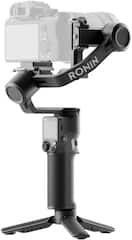
DJI RS 3 Mini, Camera Gimbal Stabilizer, Canon/Sony/Nikon/Fujifilm
DJI
It depends — The RS3 Mini suits a stripped-down FX3 and Sigma 24–70mm build under 2 kg, but the article recommends the 3 kg RS3 Standard for uncertain 70–200mm rentals.
This is the practical fit when the FX3 kit includes heavier 70-200mm rentals, because DJI rates it for 3 kg instead of the Mini models’ 2 kg. The drawback is the larger, heavier handheld setup.Available at Amazon(paid link) — opens Amazon in a new tab. Price and availability shown there.
DJI RS 5 Lower Quick-Release Plate, Compatibility: DJI RS 5, DJI RS 4
DJI
Buy — The article makes no case against this plate, though it requires including plate weight in the complete build and checking actual balance because payload ratings do not confirm accessory geometry.
A spare compatible plate helps keep repeat FX3 builds consistent when swapping between standard zoom and telephoto setups. The drawback is that it does not solve an over-payload or front-heavy lens by itself.Available at Amazon(paid link) — opens Amazon in a new tab. Price and availability shown there.
Sources
Pages consulted while researching this article. None of these are affiliate links.
- DJI RS 3 Mini - Specs - DJI — dji.com
- DJI RS 4 Mini - Specs - DJI — dji.com
- Support for DJI RS 3 - DJI United States — dji.com
- ILME-FX3 Specifications | Sony USA — sony.com
- ILME-FX3 | Help Guide | Specifications — helpguide.sony.net
- SIGMA 24-70mm F2.8 DG DN | Art | SIGMA Corporation of America — sigmaphoto.com
- SIGMA 24-70mm F2.8 DG DN II | Art | SIGMA Corporation of America — sigmaphoto.com
- Sony FE 70-200mm F2.8 GM OSS II Full-Frame Constant-Aperture Telephoto Zoom G Master Lens — electronics.sony.com