Find Your Mignon Zero Espresso Setting
The questionWhere do these come from?
Help me choose a grinder: Eureka Mignon Zero (used) vs Fellow Opus Gen 2 (new) [~$300]
Hi all, I’m am torn between an used Mignon zero in FB Marketplace for $200 and a new Fellow Opus Gen 2 ($270). I mostly drink espresso and milk drinks, and filter is not a priority.
There is no universal setting: find true zero, move about three dial numbers coarser, then tune by shot time and taste.
The Eureka Mignon Zero has no universal espresso number. Find your grinder’s true zero, turn about three numbered steps counterclockwise toward coarse, then make small corrections until a fixed dose reaches the desired yield and tastes balanced.
As an initial diagnostic recipe, use the dose recommended for your portafilter basket and aim for a 1:2 ratio in roughly 25–30 seconds. For example, 18 grams of grounds would produce 36 grams of espresso. This is a starting point rather than a rule for every coffee; La Marzocco’s espresso preparation guide recommends the same baseline before adjusting for taste.
Establish true zero before dialing in
First establish true zero. This is the point immediately before the burrs touch—not necessarily the printed 0 on the dial. Mignon dials can rotate through multiple revolutions, and their numbers are reference marks rather than calibrated grind sizes. Consequently, another owner’s setting of 2 may bear no relationship to setting 2 on your grinder.
Use this procedure only with a new, empty grinder or after the grinding chamber has been properly cleaned:
- Remove all beans and keep fingers and tools away from the burr opening.
- Start the grinder with no coffee passing through it.
- Turn the adjustment knob slowly clockwise, toward finer.
- Stop as soon as the burrs produce a faint chirping sound.
- Immediately turn counterclockwise just far enough for the chirp to disappear. Record that position as true zero.
- From that just-silent position, move approximately three numbered marks counterclockwise and pull the first test shot.
That three-mark position is a practical starting point supplied in Clive Coffee’s Mignon zero-point instructions, not an official universal setting from Eureka. Do not leave the grinder chirping or grind coffee at burr contact; prolonged metal-on-metal contact can damage the burrs.
Eureka’s own Mignon Zero manual confirms that clockwise is finer and counterclockwise is coarser. It also says to adjust gradually, grinding a little coffee after no more than two notches, and warns that turning the knob a full revolution with the motor stopped can stall the grinder.
Change only the grind setting
Keep the coffee, basket, dose, yield, distribution and tamp unchanged. Adjust only the grinder so the effect of each change is visible.
- If the target yield arrives too quickly and the espresso tastes thin or sharply sour, turn clockwise toward finer.
- If the machine barely produces espresso, the shot takes much too long, or the coffee tastes harsh and dry, turn counterclockwise toward coarser.
- If the shot is close, change about one-quarter of a printed number.
- If it is clearly far from the target, change up to one-half of a number.
Those quarter- to half-number corrections follow the sensitivity guidance in Clive Coffee’s Mignon Zero operating guide. A whole numbered step can be a large espresso adjustment, so repeatedly making large jumps usually sends the shot from fast to completely choked.
After each test dose, close the hopper shutter once the beans have entered the burr chamber. With the grinder still running and the shutter closed, operate the bellows before switching off. Eureka specifies four or five bellows presses in its manual. Following the same sequence for every dose reduces leftover grounds as a variable while dialing in.
Shot time is a diagnostic measurement, not the final definition of a good setting. Once the shot is near the target range, taste it. A balanced shot outside 25–30 seconds is preferable to an unpleasant shot forced into that window.
Just want the recommendation?
Skip to the picksDial in the espresso before adding milk
There is no separate “latte setting.” Dial in the espresso exactly as it will be used, then add milk. Milk can soften acidity and bitterness, but it does not correct an espresso shot that gushes, chokes or channels.
For an espresso-and-milk routine, leave the Zero near the current espresso position instead of moving between espresso and filter ranges every day. Large repeated changes are harder to reproduce because the stock dial spans multiple rotations. They also create more opportunities to lose track of which revolution contains the espresso setting.
Record the bean, basket dose, beverage yield, shot time, displayed number and the number of dial revolutions from true zero. That record is more useful than copying a setting from another owner.
Why printed dial numbers vary
A working espresso position close to printed 0, 2 or 5 can all be legitimate. The printed zero does not establish burr contact, and the scale does not describe microns or another standardized particle size.
Use removable tape or a written note to mark the successful position. Include the revolution, because the same printed number reappears whenever the dial completes another turn. Expect to make small corrections when changing beans, roast level or dose; the grinder’s setting controls resistance through a particular coffee puck, not an abstract category called “espresso.”
Open the burrs to restore coffee flow
First turn the knob counterclockwise to open the burrs. A setting that is too fine can trap coffee or prevent the motor from starting. When making a substantial adjustment from coarse back toward espresso, run the empty grinder while turning finer; do not make a full fineward revolution with the motor stopped.
If the grinder still will not feed, the motor labors, or a chirping sound continues during normal grinding, stop using it. Do not insert tools through the hopper or improvise shims and burr modifications. Eureka’s manual directs unresolved troubleshooting and internal maintenance to specialized personnel and warns against makeshift repairs or non-original parts.
A new standard Mignon Zero that cannot create espresso resistance even immediately above its safely established true-zero point needs dealer or authorized-service assessment. Continuing to run at burr contact is not a calibration method. Provide support with the true-zero position, coffee dose, beverage yield, shot time and a short recording of the sound; replacement or warranty service may be the real resolution.
Confirm whether yours is the Mignon Zero Brew
Check the exact model before treating coarse grounds as a fault. The standard Mignon Zero and Mignon Zero Brew share a body and adjustment concept, but Eureka specifies different burr purposes.
| Check | Mignon Zero | Mignon Zero Brew |
|---|---|---|
| Burrs | 55 mm flat hardened steel | 55 mm flat hardened steel, brew geometry |
| Adjustment | Stepless micrometric, Extra-Comfort dial | Stepless micrometric, Easy Setting System |
| Published output | 1.8–2.5 g/s espresso; 2.5–3.5 g/s brew | 2.5–3.5 g/s brew |
| Product positioning | Single-dose grinder | Single-dose filter grinder |
These are Eureka’s published specifications for the Mignon Zero and Mignon Zero Brew. For someone prioritizing espresso and milk drinks rather than filter versatility, the standard Mignon Zero is the relevant model. Zero Brew owners should not expect an espresso starting point intended for the standard Zero to transfer directly.
The bottom line
What you need for this:
Top pick
Buy this
Eureka Mignon Zero
Eureka
The article recommends the standard Mignon Zero for espresso and milk drinks, citing its 55 mm flat hardened-steel burrs and published espresso output of 1.8–2.5 g/s.
Available at Amazon(paid link) — opens Amazon in a new tab. Price and availability shown there.
Recommended products
Ordered by how well each one fits the situations above. Each link below is a paid link.
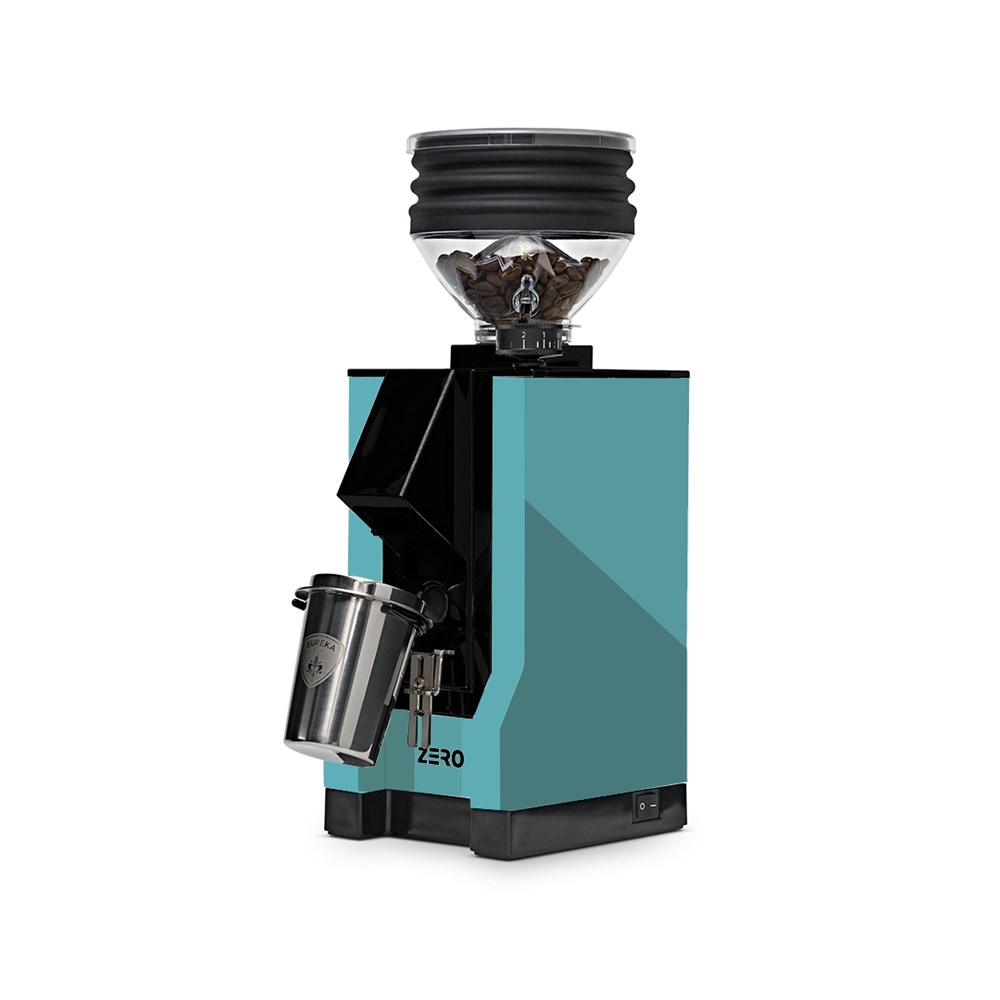
Eureka Mignon Zero
Eureka
Buy — The article recommends the standard Mignon Zero for espresso and milk drinks, citing its 55 mm flat hardened-steel burrs and published espresso output of 1.8–2.5 g/s.
Available at Amazon(paid link) — opens Amazon in a new tab. Price and availability shown there.
Sources
Pages consulted while researching this article. None of these are affiliate links.
- Eureka Mignon Zero product specifications — eureka.co.it
- Eureka Mignon Zero and Zero Brew user handbook — links.imagerelay.com
- Eureka Mignon Series: How to Dial In from the Zero Point — support.clivecoffee.com
- Eureka Mignon Zero Espresso Grinder operating guide — support.clivecoffee.com
- La Marzocco Home: How to Make Espresso — home.lamarzoccousa.com
- Eureka Mignon Zero Brew product specifications — eureka.co.it