Eva-Dry E-333 or Silica Gel Packs for Electronics?
The questionWhere do these come from?
Tip: place silica gel sachets in the storage case of your macbook
The Eva-Dry E-333 keeps a sealed drawer or safe dry long-term, but it can't pull moisture out of a device that's already wet inside.
The Eva-Dry E-333 is built to keep the air inside a closed drawer, small safe, or cabinet dry over weeks — it is not built to pull moisture out of a device that already has liquid inside it. If you’re still worried about residual moisture in something that got wet, the dehumidifier is the wrong tool for that part of the problem; it only takes over once the device itself is already dry and you’re trying to keep the air around it that way going forward.
That distinction matters more than the coverage numbers on the box, so it’s worth settling first before getting into specs.
If a device is still wet inside, drying the air around it won’t help
An ambient dehumidifier, whether it’s the E-333, its bigger sibling the E-500, or a jar of loose silica gel packets, works by slowly equalizing with the humidity of the air already in a sealed space. It has no way to reach water that’s sitting on a logic board or trapped under a battery — that requires either the liquid evaporating on its own or someone opening the case to clean and dry it directly.
Packaging-industry desiccant dosage charts illustrate the mismatch in scale. Protective Packaging’s calculation chart rates desiccant by drying capacity rather than volume: a sealed 4.16-cubic-foot container needs roughly 5 standard one-ounce desiccant units to control humidity, and a 10-cubic-foot container needs about 12. The E-333 holds a single sealed charge rated at up to 13 oz for an entire 333-cubic-foot space — a fraction of the desiccant density that chart calls for even in a small sealed box, because it’s sized for gradual air maintenance, not for pulling a wet object dry on a deadline.
If liquid contacted the device recently, the standard steps are: power it off and leave it off, don’t plug it in to charge or test it, remove any case or cover so trapped moisture can evaporate, and either have it opened and inspected for corrosion or place it in a sealed container packed with several rechargeable desiccant packets — not just one E-333 sitting in an open drawer — for 48 to 72 hours before assuming it’s dry. Past that point, and once you’re confident the device itself is dry, a unit like the E-333 is exactly the right tool for keeping it that way in storage.
How much space 333 cubic feet actually covers
Eva-Dry rates the E-333 for spaces up to 333 cubic feet and up to 13 oz of absorbed moisture before the indicator needs recharging. At a standard 8-foot ceiling, 333 cubic feet works out to roughly 40 square feet of floor space — closer to a large drawer, gun safe, or small cabinet than a walk-in closet, so the manufacturer’s own number was never meant to cover a room. One independent review site that tested the unit went further, recommending you treat real-world coverage as closer to 50 square feet of enclosed footprint and reserve it for small, fairly sealed spaces — closets, cabinets, and drawers — rather than anything larger or leakier.
Part of the gap between the marketing number and what you’ll actually see comes down to humidity itself. Desiccant absorption capacity swings hard with relative humidity: general silica gel guidance puts absorption at only around 5–10% of the gel’s own weight at 20% relative humidity, climbing to 30–40% at 80% relative humidity. A dehumidifier tested or rated in a humid lab environment will report a much higher capacity than the same unit sitting in a house that runs a comfortable 40–50% RH — which is the likely reason Eva-Dry’s own 13 oz figure and independent reviewers’ observed 4–6 oz range don’t match. Neither number is wrong; they’re measured under different conditions.
Just want the recommendation?
Skip to the picksEva-Dry E-333 vs. rechargeable silica gel packets
If you’ve been using loose or packeted silica gel and are wondering whether the E-333 is actually a step up, the honest answer is: it depends on what you’re optimizing for.
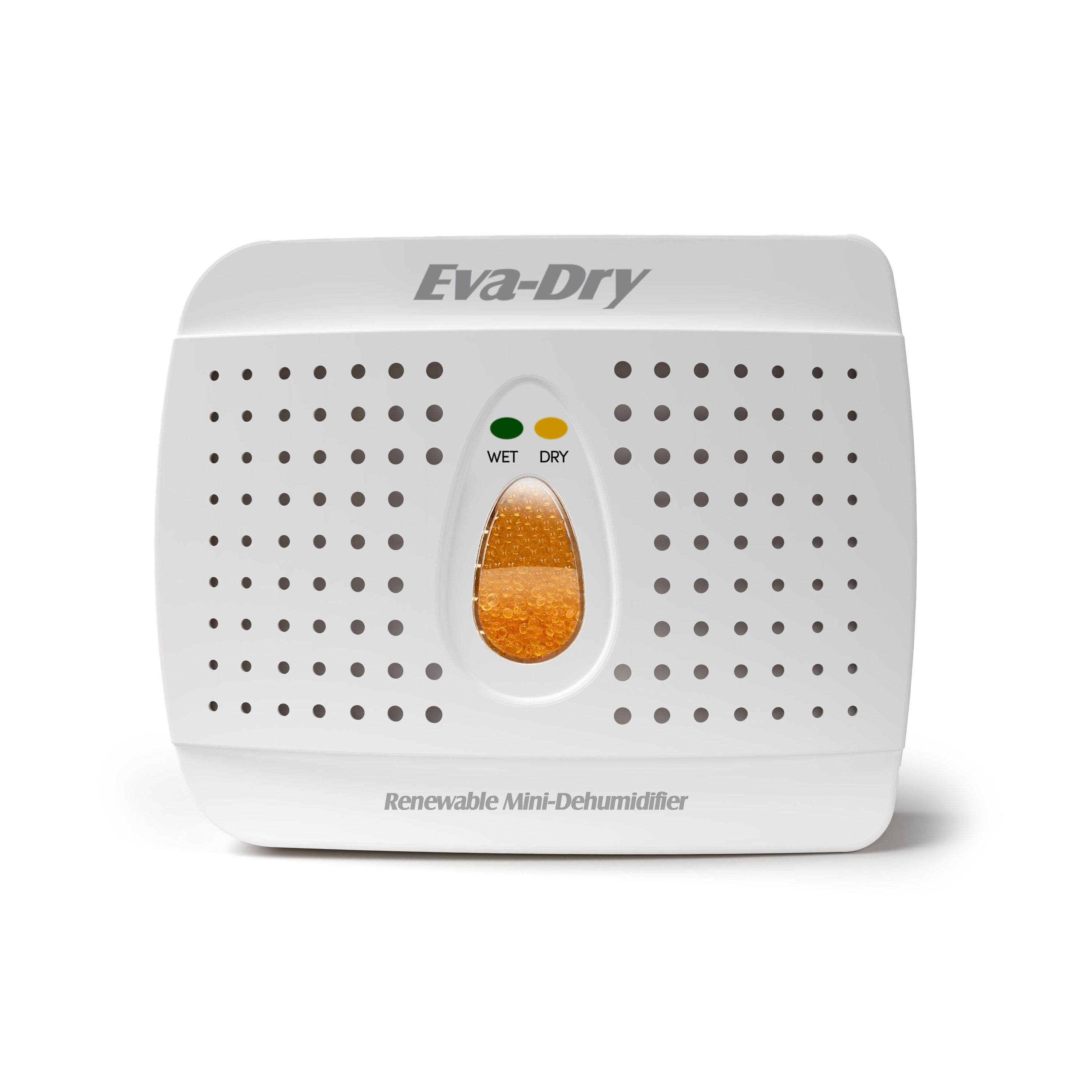
The E-333’s silica gel beads live inside a sealed plastic housing that Eva-Dry states will not leak or spill even at full saturation, and the unit has a built-in indicator and a built-in heater — plug it into an outlet for about 10 to 12 hours and it recharges itself, no oven or microwave required. That matters specifically for a setup protecting electronics: a torn desiccant packet spilling loose beads into the same drawer as a laptop or phone is a real, if minor, failure mode that a sealed unit avoids entirely.
Loose and packeted silica gel wins on flexibility and cost per ounce of desiccant. A 50-gram silica gel packet absorbs roughly 35% of its own weight in moisture at high humidity, and modern reactivating packets — Wisedry’s, for example — recharge in about two minutes in a microwave rather than the 10-plus hours an Eva-Dry unit needs on a wall outlet. Packets also fit spaces the E-333’s rigid shell doesn’t: a padded camera bag, a small ammo can, a Pelican-style hard case. The catch is that not all rechargeable packets include a way to tell when they’re spent. Wisedry’s packets mix in about 10% orange indicating beads that shift toward dark green as they saturate, but other cobalt-chloride-free packets — Dry & Dry’s 200-gram packs, for instance — ship with plain white beads and no visual indicator at all, because cobalt chloride, the dye behind the classic blue-to-pink color change, has been phased out of most consumer silica gel for safety reasons. If you go the loose-packet route specifically because you want to see saturation coming, check that the listing explicitly says the beads are indicating — it isn’t a given anymore.
| Product | Buy / Skip | Coverage or capacity | The catch |
|---|---|---|---|
| Eva-Dry E-333 | Buy | Up to 333 cu ft / 13 oz rated (independent testing suggests ~50 sq ft real-world) | Manages air humidity only — does nothing for a device still wet inside |
| Wisedry rechargeable silica gel packets | Consider | ~35% of packet weight in moisture at high RH; recharges in ~2 min in a microwave | No single sealed unit — you’re placing and tracking multiple packets by volume |
| Eva-Dry E-500 | Consider | Up to 500 cu ft / 20 oz rated | Takes 4–8 weeks to saturate vs. the E-333’s 2–4 — slower turnover, sized for bigger spaces |
| Pro Breeze Electric Mini Dehumidifier | Skip | 161–215 sq ft / 52 oz tank, up to 18 oz removed per day | Water reservoir sits inside the same enclosure you’re trying to keep dry |
When to size up to the E-500 instead
Once the enclosed space you’re protecting is bigger than a drawer or small cabinet — a real closet, an RV cabin, a gun safe large enough to stand a rifle in — the E-500 is the more sensible pick. Eva-Dry rates it for up to 500 cubic feet and up to 20 oz of absorbed moisture, against the E-333’s 333 cubic feet and 13 oz. The tradeoff is speed: one independent comparison found the E-500 takes roughly 4 to 8 weeks to reach saturation versus 2 to 4 weeks for the E-333, so for a single drawer or small safe, the bigger unit just means longer stretches between visible feedback from the indicator, not a real benefit.
Why a compressor mini dehumidifier is the wrong tool here
Small electric dehumidifiers like the Pro Breeze line show up constantly in searches for “mini dehumidifier for closet” or “small dehumidifier for safe,” and for an open room they’re a reasonable pick — Pro Breeze’s 2200-cubic-foot (roughly 161–215 sq ft) model uses Peltier thermoelectric cooling to pull up to 18 oz of water per day into a 52 oz tank, auto-shutting off with an LED alert once the tank is full.
That tank is exactly the problem for a sealed drawer, gun safe, or storage box holding electronics: it holds standing liquid water inside the same enclosure you’re trying to protect, and it only stops collecting once it’s already full, not before. Bump it, tip it, or let it run past a check-in, and you’ve introduced the liquid-near-electronics risk you started this whole search to avoid. It also needs continuous mains power run into the enclosure, and Pro Breeze’s own spec sheet lists a minimum operating range starting around 59°F, which rules it out for a garage, shed, or unheated cabinet where an E-333 or a silica packet works regardless of temperature.
Recharging the E-333 without cutting the cycle short
The E-333’s beads run through a color change as they absorb moisture — orange when dry and shifting toward green as the unit saturates, at which point it’s time to recharge. (A handful of older listings describe a blue-to-pink cobalt chloride indicator instead; that dye has since been phased out of most current units, so if yours doesn’t match, it’s likely just an older formulation rather than a fault.) To recharge, plug the unit directly into a wall outlet — Eva-Dry specifies about 10 to 12 hours — and do it somewhere other than the enclosed space you’re protecting. Recharging vents warm, moisture-laden air as the built-in heater drives water out of the beads, and one independent review specifically recommends doing this in a garage or utility room rather than next to the drawer or safe you just took the unit out of, since venting that moisture back into the same enclosure defeats the point of the cycle.
The bottom line
Both are defensible — the split is what you do with it:
Top pick
Buy this
Eva-Dry E-333 Renewable Mini Dehumidifier
Eva-Dry
Its 13 oz-rated silica gel bed and sealed, no-spill housing match the small enclosed-space size class — around 333 cubic feet, or roughly 40-50 sq ft of floor space — that an ambient dehumidifier is actually built for.
The right scale for a single drawer, small safe, or cabinet holding electronics — it recharges in place with a built-in heater and its beads live in a sealed shell that won’t spill. It only manages air humidity going forward; it won’t dry out a device that’s already wet.Available at Amazon(paid link) — opens Amazon in a new tab. Price and availability shown there.The alternative
It depends
Wisedry 50 Gram Rechargeable Silica Gel Packets Orange Indicating Beads
Wisedry
A single packet absorbs roughly 35% of its own weight at high humidity and reactivates in about two minutes in a microwave, but only some rechargeable packet brands include a color indicator at all — check before assuming yours will show saturation.
Cheaper per ounce of desiccant and small enough to line an odd-shaped case or camera bag where the E-333’s rigid shell won’t fit, but you’re doing the microwave recharging yourself and tracking several packets instead of one sealed unit.Available at Amazon(paid link) — opens Amazon in a new tab. Price and availability shown there.
Recommended products
Ordered by how well each one fits the situations above. Each link below is a paid link.
Eva-Dry E-333 Renewable Mini Dehumidifier
Eva-Dry
Buy — Its 13 oz-rated silica gel bed and sealed, no-spill housing match the small enclosed-space size class — around 333 cubic feet, or roughly 40-50 sq ft of floor space — that an ambient dehumidifier is actually built for.
The right scale for a single drawer, small safe, or cabinet holding electronics — it recharges in place with a built-in heater and its beads live in a sealed shell that won’t spill. It only manages air humidity going forward; it won’t dry out a device that’s already wet.Available at Amazon(paid link) — opens Amazon in a new tab. Price and availability shown there.
Wisedry 50 Gram Rechargeable Silica Gel Packets Orange Indicating Beads
Wisedry
Consider — A single packet absorbs roughly 35% of its own weight at high humidity and reactivates in about two minutes in a microwave, but only some rechargeable packet brands include a color indicator at all — check before assuming yours will show saturation.
Cheaper per ounce of desiccant and small enough to line an odd-shaped case or camera bag where the E-333’s rigid shell won’t fit, but you’re doing the microwave recharging yourself and tracking several packets instead of one sealed unit.Available at Amazon(paid link) — opens Amazon in a new tab. Price and availability shown there.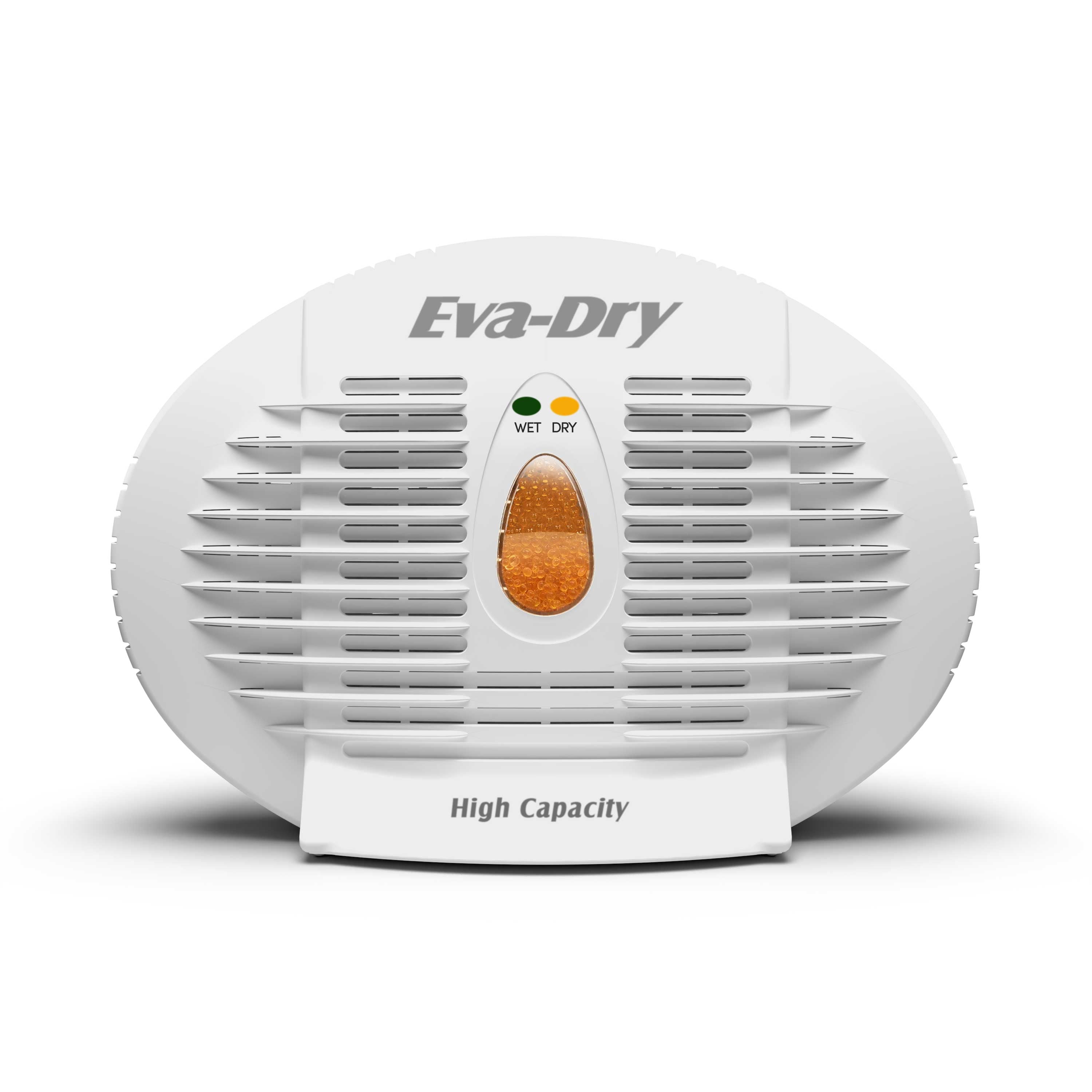
Eva-Dry E-500 High Capacity Renewable Dehumidifier
Eva-Dry
Consider — Rated for 500 cubic feet and up to 20 oz of moisture versus the E-333's 333 cubic feet and 13 oz, but independent testing found it takes 4 to 8 weeks to saturate instead of 2 to 4.
Worth stepping up to once you’re protecting a real closet, gun safe, or RV cabin rather than a single drawer or small case — the tradeoff is a slower recharge cycle that makes less sense for a space that small.Available at Amazon(paid link) — opens Amazon in a new tab. Price and availability shown there.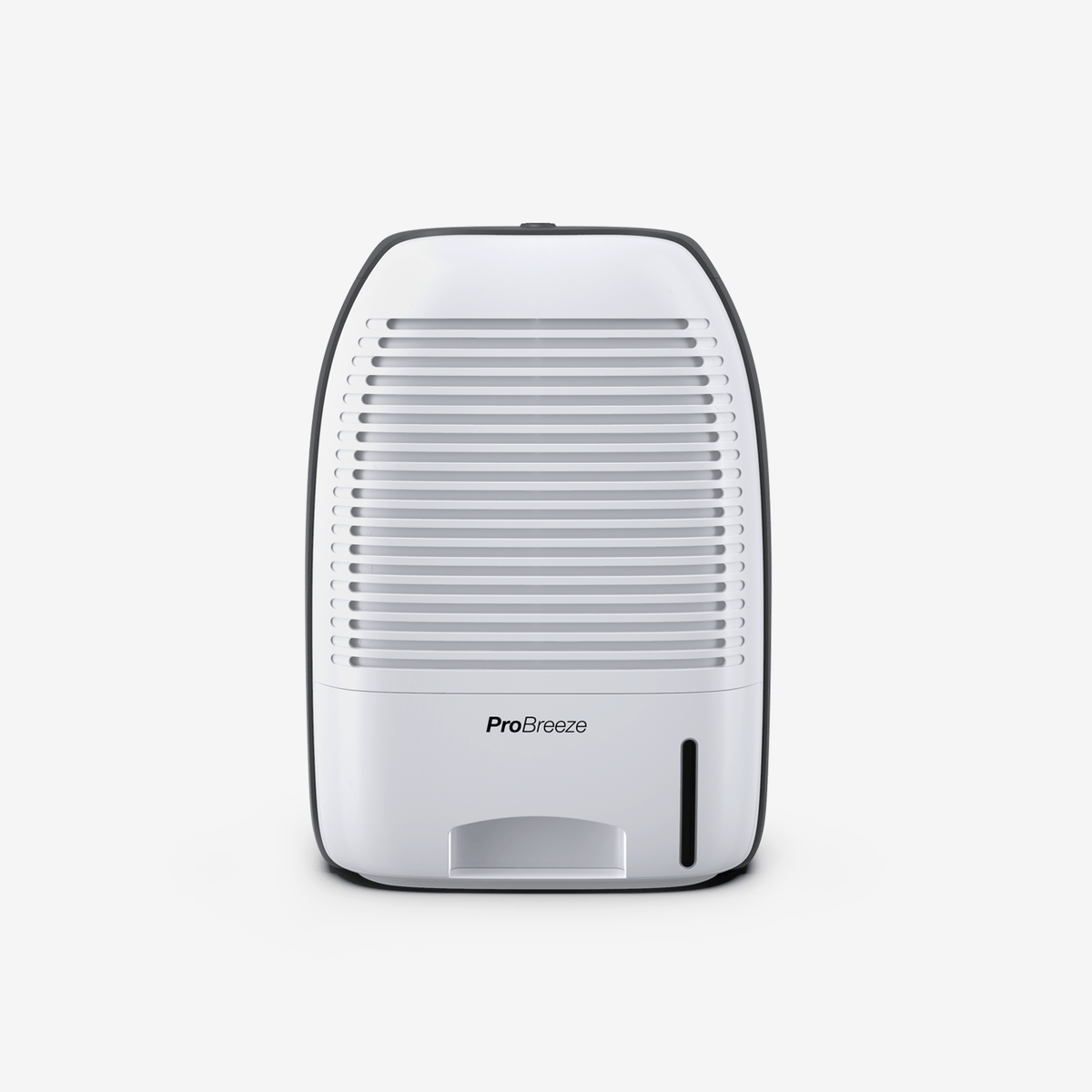
Pro Breeze Electric Mini Dehumidifier 2200 Cubic Feet
Breeze Electric
Skip — Its 52 oz water tank sits inside the same enclosure it's drying and only auto-shuts-off once it's already full, reintroducing the liquid-near-electronics risk a sealed drawer or safe is meant to prevent.
Fine for an open bedroom or bathroom, wrong for a sealed drawer or case protecting electronics — it needs continuous power routed into the enclosure and carries a liquid reservoir that can spill if bumped, on top of a roughly 59°F minimum operating temperature.Available at Amazon(paid link) — opens Amazon in a new tab. Price and availability shown there.
Sources
Pages consulted while researching this article. None of these are affiliate links.
- Eva-Dry E-333 Mini Dehumidifier — manufacturer specifications — eva-dry.com
- Eva-Dry E-500 High-Capacity Dehumidifier — manufacturer specifications — eva-dry.com
- Eva-Dry E-333 Review | Comparison To Other Rechargeable Dehumidifiers — dehumidifierbuyersguide.com
- Desiccant Calculation Chart — Protective Packaging — protectivepackaging.net
- Dry & Dry 200g Reusable Silica Gel Desiccant — product specifications — dryndry.com
- Wisedry Silica Gel Sachets — indicator beads and absorption specifications — wisedry.net
- Pro Breeze Premium Electric Dehumidifier — manufacturer specifications — intl.probreeze.com
- What Is the Absorption Capacity of Desiccant Silica Gel? — Yomesorb — yomesorb.com