Edifier MR4 vs a Soundbar: Does It Work in a Flat?
The questionWhere do these come from?
Anyone here using regular speakers instead of a soundbar?
The MR4 can replace a soundbar in a flat, but only with an analog TV input and hand-turned volume—a soundbar's remote and night mode solve control better.
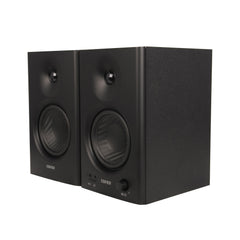
Yes, but only under specific conditions — and for most flats, a compact soundbar still beats the MR4 on the one thing that actually matters here: controlling volume without getting up. The Edifier MR4 is a genuinely good-sounding pair of active bookshelf speakers, and 21W RMS per side is more output than an apartment ever needs. The problem isn’t loudness. It’s that the MR4 has no remote, no Bluetooth, no digital input, and a volume knob that moves in fixed steps — all of which matter more in a flat with volume constraints than raw wattage does.
Power was never the constraint
The MR4 pairs a 1-inch silk dome tweeter with a 4-inch woofer per side, rated at 21W + 21W RMS combined, with a frequency response of 60Hz–20kHz, according to Edifier’s own spec sheet. That’s engineered for near-field desktop listening at a few feet, not for filling a living room — but a living room in a flat with volume constraints doesn’t need filling. ecoustics’ review of the MR4 found the speakers stayed “very transparent throughout the bass and midrange” up to about 75% of the volume dial, with distortion creeping in only above that point. In practice, you’ll never get near 75% in an apartment where the concern is keeping things quiet, not loud. If your worry is “will this be loud enough,” it will be. That’s not the question that decides this.
The connection the MR4 doesn’t have
The MR4 accepts only analog input: a 3.5mm AUX jack, unbalanced RCA, and a 1/4-inch TRS balanced input, plus a front headphone jack for monitoring. There’s no Bluetooth, no optical digital input, and no HDMI of any kind. That’s fine for a desktop audio interface or a turntable with a phono preamp. It’s a real obstacle for a TV, because a growing number of TVs don’t output analog audio at all.
Check your TV’s rear or side panel before assuming this works. Some sets still carry a headphone jack alongside their digital optical output — Trusted Reviews’ hands-on with the LG C3 OLED confirms that model has both a headphone jack and a digital optical output. Others drop the analog jack entirely and leave you with optical and HDMI eARC only. There’s no single rule across brands or model years, so this is a five-second check worth doing before you buy: if there’s a labeled headphone or “audio out” jack near the optical port, a standard 3.5mm-to-RCA cable gets you into the MR4 directly. If there isn’t, the MR4 can’t take a feed from that TV at all without an adapter.
If your TV already has a headphone or RCA output
This is the case where the MR4 is a straightforward, practical soundbar replacement. Run a cable from the TV’s analog output to the MR4’s RCA or AUX input, and you get noticeably cleaner mids and vocals than most soundbars in the same size class manage, with none of the boxy compression that budget soundbars apply to keep their small drivers from breaking up.
Bridging a digital-only TV to the MR4’s analog input
If your TV only outputs digital audio, you need a digital-to-analog converter between the TV’s optical port and the MR4’s RCA input. A small box like the FiiO D03K (also sold as the D3/Taishan) takes an optical or coaxial digital signal and outputs standard stereo RCA — iLounge’s review confirms it handles 24-bit/192kHz PCM but explicitly does not decode Dolby Digital or DTS multichannel bitstreams.
Just want the recommendation?
Skip to the picksThat limitation matters here, but not because you’re losing surround channels you’d have used anyway — the MR4 is a two-channel stereo pair regardless. It matters because most TVs default their optical output to a compressed Dolby Digital bitstream for compatibility with 5.1 soundbars, and a PCM-only converter will produce silence or garbled noise on that setting. You have to go into the TV’s audio output menu and switch it from “Dolby Digital” or “Auto” to “PCM” before a converter like this will pass sound to the MR4 at all. It’s a one-time menu change, but it’s the kind of thing that makes a “simple” upgrade take an extra twenty minutes the first time.
The volume knob is stepped, not smooth
This is the detail that matters most for a flat where you’re actively managing how loud things get, and it’s easy to miss from a spec sheet. The MR4’s rear-panel control is a “multi-functional knob for power, volume and sound effects,” per Edifier’s listing — but it isn’t a continuous dial. A hands-on review at The Frugal Noodle counted thirteen quantized volume “clicks” across the full range, leaving only around six usable levels at normal listening distance. There’s no remote at all, so every adjustment means walking to the speaker and turning a stepped knob by hand.
For someone dialing in exactly how loud a movie can be at 11pm without carrying through a shared wall, coarse, walk-up-and-turn volume control is a real practical limitation — not a dealbreaker, but a genuine point against the MR4 relative to anything with a remote.
What a soundbar’s night mode does that stereo speakers can’t
A compact soundbar built for TV use, like the Sonos Ray, solves the exact problem the MR4 doesn’t: it syncs with your existing TV remote via an IR receiver, so volume goes up and down with the same clicker you already use, according to TechHive’s review. More relevant to volume constraints specifically, it also has a Night Sound mode and a Speech Enhancement mode, controlled from the Sonos app. Users on Sonos’s own support forum describe Night Sound as compressing the dynamic range of the audio — pulling down loud effects and gunshots while keeping dialogue at a listenable level — specifically to avoid disturbing neighbors late at night, per a thread on the Sonos community forum. That same thread notes these modes are tuned around Dolby Digital 5.1 content and some users report them not engaging over certain optical setups, so it’s worth testing with your own TV’s audio output setting rather than assuming it behaves identically to a demo.
No pair of passive stereo speakers, including the MR4, does this. Turning the MR4 down uniformly turns dialogue down with the explosions — there’s no separate compression stage pulling the loud parts in while leaving speech alone.
MR4 vs. a compact soundbar, side by side
| Inputs | Volume control | Output | Low-end for shared walls | |
|---|---|---|---|---|
| Edifier MR4 | Analog only: RCA, 3.5mm AUX, 1/4" TRS | Stepped rear knob, ~6 usable levels, no remote | 21W + 21W RMS, clean to ~75% of dial | Rolls off below 80Hz, no sub output |
| Sonos Ray | Optical digital only, no HDMI/eARC | Syncs with TV remote (IR) + app; Night Sound & Speech Enhancement | Unpublished RMS; 4 Class-D amps, 2 tweeters + 2 mid-woofers | No sub included; Sonos Sub sold separately |
| FiiO D03K (complement) | Optical/coaxial in, RCA + 3.5mm analog out | N/A — passthrough only | N/A | N/A — PCM stereo only, no Dolby/DTS decode |
Where the MR4 actually beats a soundbar
Two things work in its favor for a flat specifically. First, its bass genuinely rolls off below 80Hz rather than being boosted, which ecoustics’ review flags as a weakness for music and movies but is arguably a benefit for shared walls and floors — low-frequency rumble is what actually travels through structure to neighbors, and the MR4 simply doesn’t produce much of it. Second, the stereo separation and vocal clarity from real 4-inch woofers and silk tweeters are well ahead of what a soundbar of similar size can do with smaller drivers crammed into one cabinet — that’s the tradeoff you’re making if you pick the Ray’s convenience over the MR4’s sound.
Which one matches your setup
- If your TV already has a working headphone or RCA output, and you’re fine adjusting volume by hand instead of from the couch, the MR4 is a legitimately better-sounding, practical replacement.
- If your TV only outputs digital audio, the MR4 still works, but only after you add a PCM-only DAC like the D03K and switch the TV’s audio output setting from Dolby Digital to PCM.
- If the actual goal is controlling volume at night without walking across the room — dialogue up, explosions down, adjusted from the same remote you already hold — a compact soundbar with a night mode and remote sync, like the Sonos Ray, does the job the MR4 structurally can’t.
- If the specific worry is bass thumping through a floor or shared wall, the MR4’s natural rolloff below 80Hz works in your favor either way, and neither option here needs a subwoofer to satisfy that concern.
Nothing about this needs a listening test to resolve — the MR4’s own input list, its stepped volume control, and the Ray’s remote-synced night mode are all fixed, documented facts that answer the “practical for a flat” question without ever turning either one on.
The bottom line
Neither is wrong; the use case separates them:
Top pick
It depends
Edifier MR4 Powered Studio Monitor Speakers
Edifier
Right for a TV that already has a headphone or RCA output and a listener willing to adjust volume by hand — its 21W+21W RMS output and 60Hz-20kHz range are more than an apartment needs, but there's no remote and no digital input.
The subject of the question: a genuinely better-sounding pair of active speakers than a same-price soundbar, but analog-only inputs and a stepped, remote-less volume knob work against the exact ‘controlling volume in a flat’ problem this question is about.Available at Amazon(paid link) — opens Amazon in a new tab. Price and availability shown there.The alternative
Buy this
Sonos Ray Soundbar
Sonos Ray
Its IR remote sync and Night Sound dynamic-range compression solve the specific 'controlling volume in a flat' problem the MR4's stepped rear knob and lack of remote cannot.
The compact soundbar rival the question is really weighing the MR4 against: it syncs with your existing TV remote and adds a Night Sound mode built specifically to keep loud scenes down without losing dialogue, which is the couch-side volume control the MR4 lacks.Available at Amazon(paid link) — opens Amazon in a new tab. Price and availability shown there.
Recommended products
Ordered by how well each one fits the situations above. Each link below is a paid link.
Edifier MR4 Powered Studio Monitor Speakers
Edifier
It depends — Right for a TV that already has a headphone or RCA output and a listener willing to adjust volume by hand — its 21W+21W RMS output and 60Hz-20kHz range are more than an apartment needs, but there's no remote and no digital input.
The subject of the question: a genuinely better-sounding pair of active speakers than a same-price soundbar, but analog-only inputs and a stepped, remote-less volume knob work against the exact ‘controlling volume in a flat’ problem this question is about.Available at Amazon(paid link) — opens Amazon in a new tab. Price and availability shown there.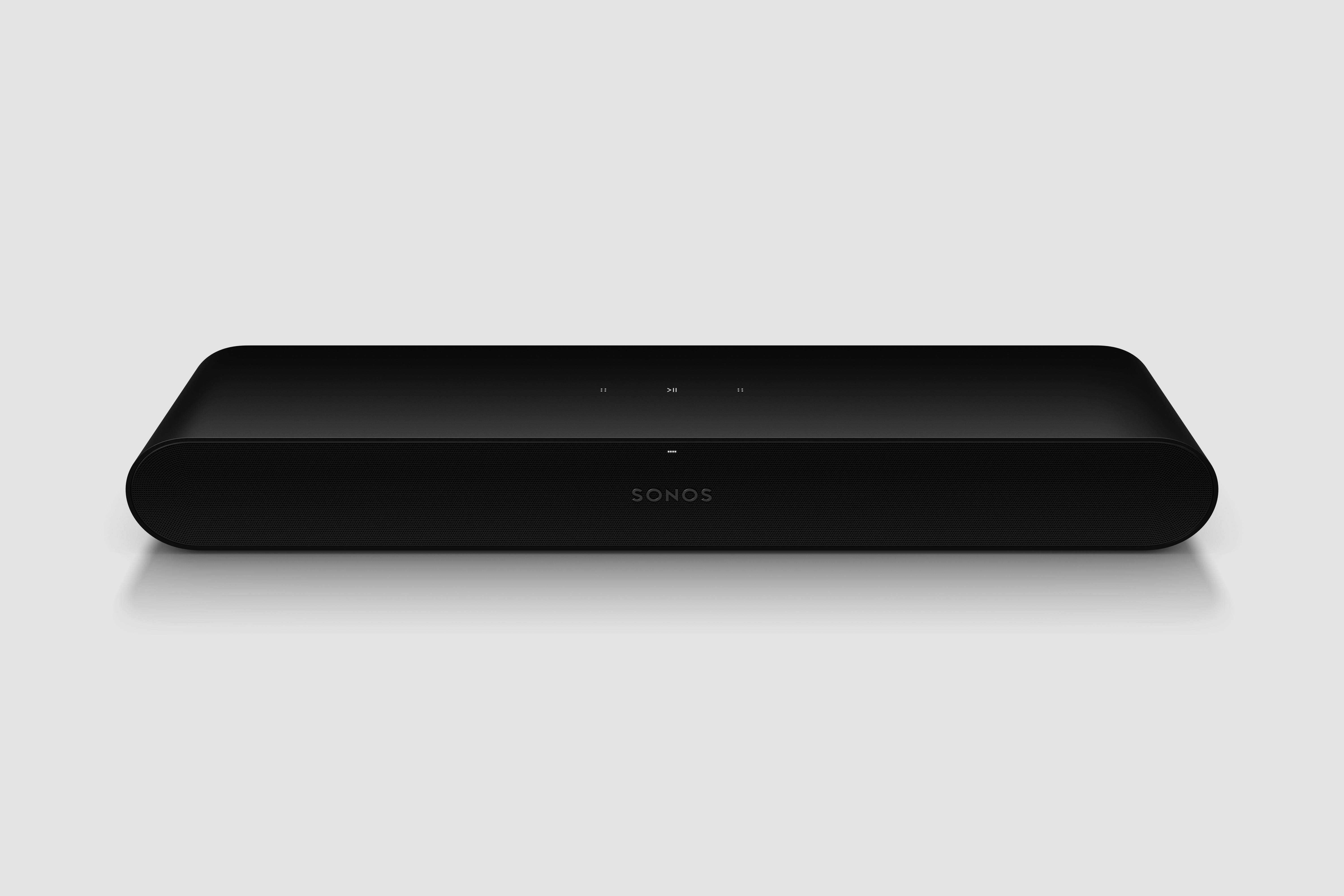
Sonos Ray Soundbar
Sonos Ray
Buy — Its IR remote sync and Night Sound dynamic-range compression solve the specific 'controlling volume in a flat' problem the MR4's stepped rear knob and lack of remote cannot.
The compact soundbar rival the question is really weighing the MR4 against: it syncs with your existing TV remote and adds a Night Sound mode built specifically to keep loud scenes down without losing dialogue, which is the couch-side volume control the MR4 lacks.Available at Amazon(paid link) — opens Amazon in a new tab. Price and availability shown there.
FiiO D03K Taishan Digital to Analog Audio Converter
FiiO
It depends — Necessary only when the TV lacks a headphone or RCA output, and it will pass no sound at all until the TV's digital audio output is manually set to PCM instead of Dolby Digital.
The complement the MR4 needs if your TV has no analog audio output: it converts the TV’s optical digital signal into the RCA input the MR4 requires, but only decodes stereo PCM, so the TV’s audio output has to be switched from a Dolby Digital bitstream to PCM first.Available at Amazon(paid link) — opens Amazon in a new tab. Price and availability shown there.
Sources
Pages consulted while researching this article. None of these are affiliate links.
- MR4 Powered Studio Monitor Speakers — Edifier official specs — edifier.com
- Edifier MR4 Powered Studio Monitor Speakers: Review — ecoustics.com — ecoustics.com
- Review of the Edifier MR4 Studio Monitors: The Good and the Bad — thefrugalnoodle.com
- Sonos Ray review: This sweet-sounding budget soundbar skimps on HDMI — TechHive — techhive.com
- Loudness/speech enhancement/night mode — Sonos Community — en.community.sonos.com
- LG C3 (OLED65C3) OLED Review — Trusted Reviews — trustedreviews.com
- Review: FiiO D03K Taishan Digital to Analog Converter — iLounge — ilounge.com