Lenovo Legion 5 Pro AMD: Single-Core Power for Trading
The questionWhere do these come from?
Need an AMD laptop for trading, Ryzen 8940hx or Ryzen AI 9?
Hi everyone, I need a laptop for trading and occasional gaming. I mainly use Sierra Chart, which benefits from strong single-core performance, but some multi-core performance is useful as well.
The current Legion 5 Pro AMD, sold since 2023 as the Legion Pro 5, delivers enough single-core clock for Sierra Chart once you pick the HX-series CPU.
The current Legion 5 Pro AMD — sold under that name through 2022, then renamed Legion Pro 5 from the 2023 model onward — carries enough single-core headroom for Sierra Chart and similar real-time trading platforms, provided you buy the HX-series configuration (Ryzen 7 7745HX or Ryzen 9 7945HX) rather than the older H-series chips still listed under the same family name. Sierra Chart’s own engineering team confirms that chart updates and study calculations run on a single thread, so clock speed decides responsiveness far more than core count, and the HX-series chips in the current chassis hold a 5.1–5.4GHz boost that the 2021–2022 Legion 5 Pro never reached.
Why single-core speed decides this, not core count
Sierra Chart’s support board addresses this directly: study calculations and chart graphics “are all done on a single thread,” and adding cores only helps if multiple instances of the program run side by side. For a single running copy — how almost everyone actually uses it — the stated minimum is a quad-core CPU, but the number that decides how the platform actually feels is how fast that one thread clocks and how long the laptop can hold that clock before throttling. Sierra Chart also ranks a solid-state drive as the next priority after CPU speed, ahead of extra RAM, for cutting the time it takes to load historical chart data.
The Legion 5 Pro name covers two different chip generations
Lenovo sold this laptop tier as “Legion 5 Pro” through 2022, then renamed it “Legion Pro 5” starting with the 2023 refresh — both names still show up on retail listings for the same laptop family, since older stock and secondhand units haven’t disappeared. That naming overlap matters here because the CPU generation changed along with the name.
The 2021–2022 Legion 5 Pro (model 16ACH6H) shipped with the Ryzen 5 5600H (3.3GHz base, 4.2GHz max boost) or Ryzen 7 5800H (3.2GHz base, 4.4GHz max boost), both standard 45W mobile chips with no configurable headroom above that. The 2023-onward Legion Pro 5 (16ARX8) switched to AMD’s HX-series: Ryzen 5 7645HX (up to 5GHz), Ryzen 7 7745HX (up to 5.1GHz), and Ryzen 9 7945HX (up to 5.4GHz) — chips built on the same die as AMD’s desktop Ryzen processors and rated for a 55–75W configurable TDP rather than a fixed 45W. NotebookCheck measured the Ryzen 7 7745HX configuration at 1,846 points in Cinebench R23’s single-core test, and the laptop pairs it with the Legion ColdFront 5.0 cooling system and an optional 300W power adapter to hold that clock under a multi-hour load rather than just a short burst. Airflow blockage undercuts that regardless of which chip is inside — see Legion 5 Pro Airflow: Clear the Vents That Matter for what actually restricts it.
Just want the recommendation?
Skip to the picksComparing the single-core numbers across the shortlist
| Laptop | CPU (top single-core option) | Max boost clock | Power delivery | Verdict |
|---|---|---|---|---|
| Legion Pro 5 16ARX8 (“Legion 5 Pro” current gen) | Ryzen 9 7945HX | 5.4GHz | ColdFront 5.0, up to 300W adapter | Buy |
| Legion 5 Pro 16ACH6H (2021–2022) | Ryzen 7 5800H | 4.4GHz | Fixed 45W chip, no HX headroom | Skip |
| Legion Slim 5 16APH8 | Ryzen 7 7840HS | 5.1GHz | ColdFront 5.0, up to 230W adapter | Consider |
| ASUS ROG Strix G16 (2025, G614) | Ryzen 9 9955HX | 5.4GHz | Up to 280W adapter | Consider |
Skip the 2021–2022 Legion 5 Pro listings still in circulation
The Ryzen 5 5600H and Ryzen 7 5800H in the original Legion 5 Pro (16ACH6H) top out at 4.2GHz and 4.4GHz boost — close to a full gigahertz below the HX-series chips in the current model — and they were never rated past a 45W power envelope, so there’s no configurable-TDP headroom to unlock extra sustained clock even with the cooling system running flat out. That’s not disqualifying for browsing or older games, but it’s the wrong pick for a laptop that needs to hold a high single-thread clock through a full trading session, which is the exact gap the HX-series generation was built to close. These units are still commonly sold secondhand and on clearance under the plain “Legion 5 Pro” name, along with the similarly non-HX 2022 refresh (16ARH7H), so check the model number before buying rather than the marketing name alone.
If portability matters more than sustained clock: Legion Slim 5 AMD
The Legion Slim 5 (16APH8) uses the Ryzen 7 7840HS, which still boosts to 5.1GHz — nearly matching the Legion Pro 5’s Ryzen 7 7745HX on paper. The difference shows up in what’s built around the chip: the Slim 5 ships with up to a 230W power adapter against the Pro chassis’s 300W option, and its RTX 4050 configuration is capped at 100W TGP versus 140W TGP for the identical GPU in the Pro model. Lenovo uses the same ColdFront 5.0 branding on both, but the thinner Slim 5 chassis (as little as 19.9mm thick versus the Pro’s 22.45mm) has less internal volume for the heat pipes and fan capacity that keep a boost clock pinned during a long session. It’s the right pick if the laptop needs to travel often and single-instance chart work is the heaviest load it sees; the Pro chassis is the safer choice if it runs a trading platform for a full session most days.
The ASUS ROG Strix G16 AMD is a genuine rival, not just an alternative
ASUS’s 2025 ROG Strix G16 (G614) configures the same Ryzen 9 9955HX used in Lenovo’s current lineup — 2.5GHz base, up to 5.4GHz boost, 16 cores and 32 threads — paired with up to a 280W adapter, close to the Legion Pro 5’s power budget. On single-core clock alone there’s no meaningful gap between the two chassis, since both start from identical AMD silicon specifications. Consider the Strix G16 if it’s more readily available on a given shortlist than the Legion Pro 5, or if its display configuration fits better; it doesn’t carry a documented sustained-clock advantage over the Legion, only a comparable one, so switching to it isn’t a performance upgrade for trading — it’s a choice between two similarly capable chassis.
What “occasional gaming” adds to the decision
None of the above changes because gaming is occasional rather than primary. The HX-series chips and RTX 40-series GPU options in the current Legion Pro 5 and its rivals are the same silicon whether the laptop is running a game or a chart window — the chassis that sustains a high CPU clock through a multi-hour trading session is the same one that avoids GPU throttling through a long gaming session, because both draw on the same cooling system’s sustained wattage budget rather than its peak. The practical difference for occasional gaming is GPU tier rather than CPU choice: the RTX 4060 and 4070 options (140W TGP in both the Pro and Slim chassis) handle current titles at the laptop’s native 1600p resolution more comfortably than the RTX 4050, which is capped lower specifically in the Slim 5 configuration.
RAM and storage matter less than clock speed, but still matter
Sierra Chart’s engineering team ranks a solid-state drive as the single biggest upgrade after CPU speed — ahead of extra memory — for cutting chart-data load times. Every laptop in the comparison above ships with PCIe 4.0 NVMe SSD slots as standard, so that requirement is already covered by default configurations. Memory capacity matters mainly when running multiple chart instances or heavy multi-monitor layouts at once, in line with Sierra Chart’s own guidance that extra cores — and by extension the added memory pressure that comes with them — primarily benefit multi-instance setups rather than a single running copy of the platform.
The bottom line
Both work; your situation picks one:
Top pick
Buy this
Lenovo Legion Pro 5 16ARX8 AMD Ryzen 9 7945HX RTX 4070 Gaming Laptop
Lenovo
NotebookCheck measured a sibling 7745HX configuration at 1,846 points in Cinebench R23 single-core, and the 300W adapter option gives the HX-series chip more sustained-power headroom than any other laptop on this list.
The HX-series Ryzen 9 7945HX boosts to 5.4GHz and the ColdFront 5.0 cooling system with an optional 300W adapter is built to hold that clock through a full trading session, not just a short benchmark burst.Available at Amazon(paid link) — opens Amazon in a new tab. Price and availability shown there.The alternative
Skip this
Lenovo Legion 5 Pro 16ACH6H Ryzen 7 5800H RTX 3070 Laptop
Lenovo
Lenovo's own spec sheet caps this generation's Ryzen 7 5800H at a 4.4GHz boost on a fixed 45W envelope, close to a full gigahertz below the HX-series chips in the renamed 2023-onward Legion Pro 5.
An older generation still sold under the same ‘Legion 5 Pro’ name; it’s the laptop shoppers land on by accident when comparing listings by name instead of model number.Available at Amazon(paid link) — opens Amazon in a new tab. Price and availability shown there.
Recommended products
Ordered by how well each one fits the situations above. Each link below is a paid link.
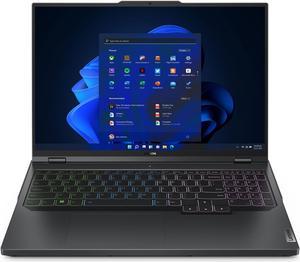
Lenovo Legion Pro 5 16ARX8 AMD Ryzen 9 7945HX RTX 4070 Gaming Laptop
Lenovo
Buy — NotebookCheck measured a sibling 7745HX configuration at 1,846 points in Cinebench R23 single-core, and the 300W adapter option gives the HX-series chip more sustained-power headroom than any other laptop on this list.
The HX-series Ryzen 9 7945HX boosts to 5.4GHz and the ColdFront 5.0 cooling system with an optional 300W adapter is built to hold that clock through a full trading session, not just a short benchmark burst.Available at Amazon(paid link) — opens Amazon in a new tab. Price and availability shown there.
Lenovo Legion 5 Pro 16ACH6H Ryzen 7 5800H RTX 3070 Laptop
Lenovo
Skip — Lenovo's own spec sheet caps this generation's Ryzen 7 5800H at a 4.4GHz boost on a fixed 45W envelope, close to a full gigahertz below the HX-series chips in the renamed 2023-onward Legion Pro 5.
An older generation still sold under the same ‘Legion 5 Pro’ name; it’s the laptop shoppers land on by accident when comparing listings by name instead of model number.Available at Amazon(paid link) — opens Amazon in a new tab. Price and availability shown there.
Lenovo Legion Slim 5 16APH8 AMD Ryzen 7 7840HS Gaming Laptop
Lenovo
It depends — Lenovo's spec sheet caps its power adapter at 230W against the Pro chassis's 300W option and limits its RTX 4050 configuration to 100W TGP versus 140W TGP in the Pro model, so it throttles sooner under a full-day load.
A thinner alternative in Lenovo’s own lineup with a nearly identical single-core boost clock, for readers who value portability over guaranteed sustained performance.Available at Amazon(paid link) — opens Amazon in a new tab. Price and availability shown there.ASUS ROG Strix G16 2025 G614 AMD Ryzen 9 9955HX Gaming Laptop
ASUS
It depends — ASUS's own spec page lists the same 2.5GHz base and 5.4GHz boost clock as the Legion Pro 5's top chip with a comparable 280W adapter, so it offers no documented single-core advantage over the Legion, only parity.
A rival brand configuring the identical Ryzen 9 9955HX used in Lenovo’s current lineup, worth considering if it’s more available on a given shortlist than the Legion.Available at Amazon(paid link) — opens Amazon in a new tab. Price and availability shown there.
Sources
Pages consulted while researching this article. None of these are affiliate links.
- Sierra Chart Support Board — Processor and RAM Requirements — sierrachart.com
- NotebookCheck — Ryzen 7 7745HX performance debut: Lenovo Legion Pro 5 16 Gen 8 laptop review — notebookcheck.net
- Lenovo PSREF — Legion Pro 5 16ARX8 Spec Sheet — psref.lenovo.com
- Lenovo PSREF — Legion Slim 5 16APH8 Spec Sheet — psref.lenovo.com
- Lenovo PSREF — Legion 5 Pro 16ACH6H Spec Sheet — psref.lenovo.com
- ASUS ROG — Strix G16 (2025) G614 Specifications — rog.asus.com
- AMD — Ryzen 9 7945HX Product Page — amd.com