Lily 2 Active Too Big on a Small Wrist? Keep the Classic
The questionWhere do these come from?
Garmin Lily 2 Classic — The user is deciding whether to keep a Garmin Lily 2 Active that feels too large on a 13.5 cm wrist or return it for the smaller Lily 2 Classic. They also question whether built-in GPS matters for mostly indoor workouts.
On a 13.5 cm wrist, the Lily 2 Classic's smaller case fits better than the Active, whose built-in GPS only helps outdoor workouts.
If your wrist measures around 13.5 cm (about 5.3 inches) in circumference, keep the Garmin Lily 2 Classic and return the Lily 2 Active — but only if your workouts are mostly indoors. The Active’s built-in GPS is the one feature actually worth its extra size and weight, and indoor training never uses it anyway.
The size difference, in real numbers
The two watches are not different tiers of the same case — they’re physically different watches built around different priorities.
| Garmin Lily 2 Classic | Garmin Lily 2 Active | |
|---|---|---|
| Case | 35.4 × 35.4 × 10.1 mm | 38 × 38 × 11 mm |
| Weight | 20.6 g (nylon) / 21.4 g (leather) | 29 g |
| GPS | Connected only (uses phone’s GPS chip) | Built-in GPS, GLONASS, Galileo |
| Battery, smartwatch mode | Up to 5 days | Up to 9 days |
| Battery, GPS mode | Up to 18 hours (phone-connected) | Up to 9 hours (on-watch) |
| Band | 14 mm quick-release | 14 mm quick-release |
That’s a 2.6 mm larger case width and roughly 8 grams more weight on the Active — about a third heavier than the Classic. Both watches use the same standard 14 mm quick-release band, and Garmin lists both as fitting wrist circumferences from roughly 110 mm to 175 mm, so a 135 mm wrist will physically buckle into either strap without issue. That’s not what’s happening when a watch “feels too large” — the strap isn’t the problem, the case is. At 135 mm circumference, you’re near the bottom quarter of that fit range, which is exactly where the extra 2.6 mm of case width and 8 grams of weight on the Active becomes noticeable: the case sits proud of the wrist rather than following its curve, and the added mass makes the watch rock slightly when your arm swings. On the Classic’s smaller, lighter case, the same wrist sits closer to the middle of the comfortable range instead of the edge of it.
This is a proportion problem, not a compatibility problem. Both watches will work on a 13.5 cm wrist. The question is whether you want to feel the difference every time you look down at it.
Does built-in GPS matter for mostly indoor workouts
No — and this is the part worth being specific about, because it changes the calculus on returning the Active.
GPS, on either watch, only does anything during an activity that involves outdoor movement over distance: an outdoor run, a walk, a bike ride, a hike. It has no function during a treadmill session, a stationary bike class, strength training, yoga, or any other workout that happens in a fixed location. For those, both the Lily 2 Active and the Lily 2 Classic fall back on the same accelerometer-based tracking to estimate steps, cadence, and calories — the Active’s satellite chip sits idle. If your workouts are mostly indoor, the single feature that justifies the Active’s larger case and higher price is not doing anything for you most of the time you’re wearing it.
Where the difference actually shows up is on the occasions you do go outside. The Lily 2 Active has its own GPS, GLONASS, and Galileo receiver, so it can record a route and pace without your phone nearby. Independent testing site DC Rainmaker put the Active’s GPS accuracy against a Fenix 8 and an Apple Watch Ultra 2 on a trail run and found it “near identical,” and on an interval workout in a built-up urban area with tall buildings, it matched the Fenix 7S Pro Solar Sapphire and Fenix 8. That’s a genuinely capable GPS chip for a watch this size, not a token inclusion.
Just want the recommendation?
Skip to the picksThe Lily 2 Classic handles the same outdoor activity differently: it uses “connected GPS,” meaning it borrows your phone’s GPS radio over Bluetooth to log location, distance, and pace, then syncs that to Garmin Connect. Garmin’s own owner’s manual for the Lily 2 line notes this requires the paired phone to have location-sharing permission enabled for the Garmin Connect app, and the phone needs to be with you — in a pocket, armband, or bag — for the activity to record a route at all. Leave the phone at home on an outdoor walk and the Classic will still count steps and estimate distance from its accelerometer, but it won’t produce a GPS track or an accurate pace.
So the real question isn’t “do I need GPS,” it’s “do I want to carry my phone every time I go outside.” If the answer is yes — you already bring your phone on walks — the Classic’s connected GPS covers you and the size tradeoff isn’t worth it. If you’d rather leave the phone behind on an outdoor run or hike, that’s the one scenario where the Active’s extra bulk earns its keep, even on a small wrist.
What you gain and lose by keeping the Classic
Returning the Active for the Classic isn’t a pure downgrade. Along with the smaller, lighter case, you get:
- A longer GPS-mode runtime when you do go outside with your phone: 18 hours of connected GPS versus 9 hours of built-in GPS on the Active, because the phone’s radio and battery are doing the satellite work instead of the watch’s.
- The same core health tracking: both watches share the same optical heart rate sensor, Pulse Ox sensor, and 5 ATM water rating, so sleep tracking, stress tracking, and swim-safe wear are identical between the two.
- A shorter charge cycle for daily wear, offset by a smaller battery: up to 5 days in smartwatch mode versus the Active’s 9 days. The Active’s longer number comes from a bigger battery compensating for a more power-hungry GPS chip, not from being more efficient — for a watch used mostly for time, notifications, and step tracking rather than GPS activities, 5 days is still a single mid-week charge.
What you lose is standalone outdoor tracking and, per DC Rainmaker’s testing, GPS accuracy that holds up against Garmin’s higher-end watches. For someone whose workouts are mostly indoors, that’s a feature you’d be carrying rather than using.
The decision
If your wrist is around 13.5 cm and most of your workouts happen indoors — treadmill, stationary bike, strength training, classes — keep the Lily 2 Classic and return the Active. The size difference is measurable (2.6 mm wider, about 8 grams heavier), it’s the thing you’ll feel every day, and the feature that would justify carrying that extra size — built-in GPS — has nothing to do during an indoor session.
If you regularly train outdoors without your phone and want a standalone GPS track, the Active’s larger case is a fair trade for real functionality rather than a spec-sheet number, and its accuracy has held up against Garmin’s more expensive GPS watches in independent testing.
If you’re unsure how the Active will feel on your specific wrist before deciding, put the band on its tightest hole and check whether the case’s edge sits flush against your wristbone or extends past it. Garmin doesn’t publish a minimum recommended wrist size below its stated 110 mm strap range, so this is a fit call best made by trying the smaller Classic side by side rather than relying on the adjustable strap alone.
For anyone weighing a different Garmin size question — a bigger, more rugged watch rather than a smaller one — see Garmin Instinct 3 for Backpacking: The Catch for how case size and battery tradeoffs play out at the other end of Garmin’s lineup.
The bottom line
Two of these work — the difference is which situation you are in:
Top pick
Buy this
Garmin Lily 2 Classic Smartwatch
Garmin Lily
At 2.6mm narrower and about 8 grams lighter than the Active, it's the proportionally better fit for a 13.5cm wrist, and its connected GPS covers outdoor tracking for anyone who already carries a phone.
The smaller, lighter case (35.4mm, ~21g) that sits better on wrists near the small end of Garmin’s fit range, at the cost of needing your phone nearby for outdoor GPS tracking.Available at Amazon(paid link) — opens Amazon in a new tab. Price and availability shown there.The alternative
It depends
Garmin Lily 2 Active Smartwatch
Garmin Lily
Its larger 38mm/29g case only pays off if you train outdoors without your phone; for mostly indoor workouts the built-in GPS sits unused while the extra size and weight remain.
Garmin’s smallest built-in GPS smartwatch, with GPS accuracy that DC Rainmaker measured as near-identical to the Fenix 8 on a trail run — but its 38mm case is the one causing the too-large complaint on small wrists.Available at Amazon(paid link) — opens Amazon in a new tab. Price and availability shown there.
Recommended products
Ordered by how well each one fits the situations above. Each link below is a paid link.
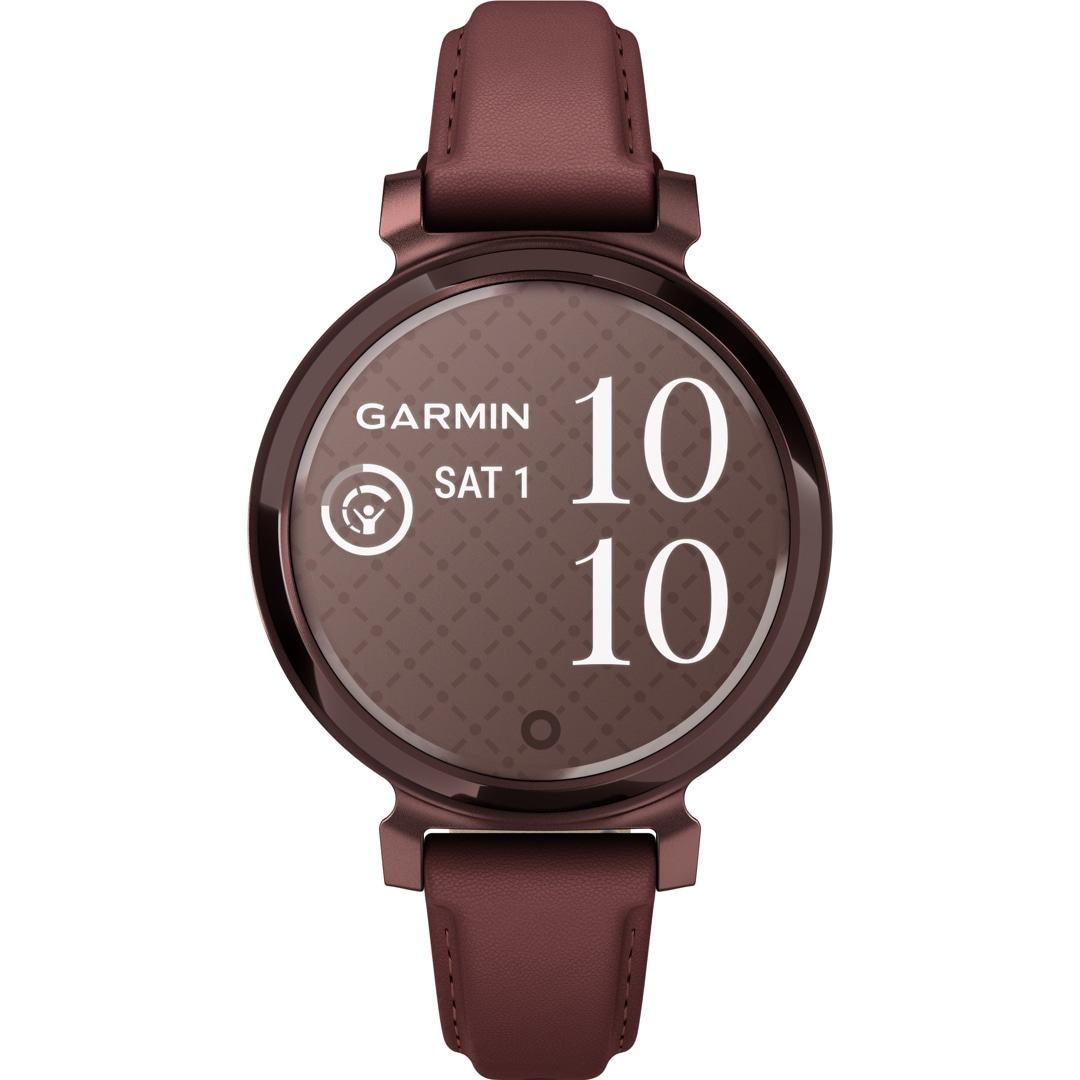
Garmin Lily 2 Classic Smartwatch
Garmin Lily
Buy — At 2.6mm narrower and about 8 grams lighter than the Active, it's the proportionally better fit for a 13.5cm wrist, and its connected GPS covers outdoor tracking for anyone who already carries a phone.
The smaller, lighter case (35.4mm, ~21g) that sits better on wrists near the small end of Garmin’s fit range, at the cost of needing your phone nearby for outdoor GPS tracking.Available at Amazon(paid link) — opens Amazon in a new tab. Price and availability shown there.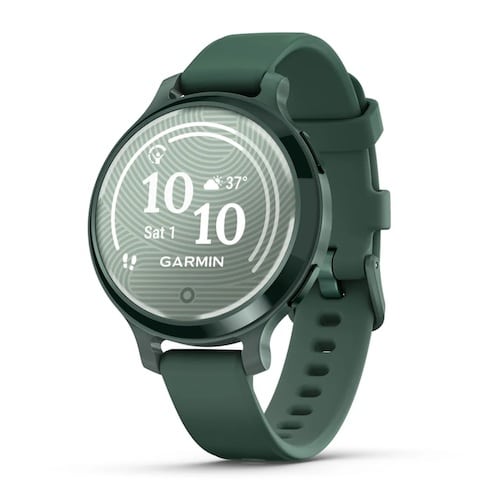
Garmin Lily 2 Active Smartwatch
Garmin Lily
Consider — Its larger 38mm/29g case only pays off if you train outdoors without your phone; for mostly indoor workouts the built-in GPS sits unused while the extra size and weight remain.
Garmin’s smallest built-in GPS smartwatch, with GPS accuracy that DC Rainmaker measured as near-identical to the Fenix 8 on a trail run — but its 38mm case is the one causing the too-large complaint on small wrists.Available at Amazon(paid link) — opens Amazon in a new tab. Price and availability shown there.
Sources
Pages consulted while researching this article. None of these are affiliate links.
- Garmin Lily 2 Active Specs and Features - Gadgets & Wearables — gadgetsandwearables.com
- Garmin Lily 2 Classic Specs and Features - Gadgets & Wearables — gadgetsandwearables.com
- Lily 2 – Garmin Wiki — wiki.garminrumors.com
- Garmin Lily 2 Active Size & Fit — 38mm Case - WatchFitTool — watchfittool.com
- Garmin Lily 2: Case Size, Dimensions & Wrist Fit - WatchFitTool — watchfittool.com
- Garmin Lily 2 Active In-Depth Review: Now with GPS! - DC Rainmaker — dcrainmaker.com
- Lily 2 Owner's Manual - Connected GPS — www8.garmin.com
- Garmin Lily 2 Active | Stylish Smartwatch for Women — garmin.com