AirPods 4 for All-Day Calls? Not Without Breaks
The question
AirPods 4 — The user needs wireless headphones for a heavy call workload and is worried that battery life on AirPods 4 will not survive 8 to 10 hour workdays. They need a realistic product fit, not just quoted battery specs.
AirPods 4 cannot cover an 8- to 10-hour call load without charging breaks; a work headset with verified all-day talk time is safer.
No—AirPods 4 are not a reliable single-charge choice for an eight- to ten-hour call workload. Both versions were rated for up to 4.5 hours of talk time, so a call-heavy shift requires charging interruptions, alternating earbuds, or a different headset.
For eight to ten hours of actual calls, skip both AirPods 4 versions: their 4.5-hour talk-time ceiling leaves less than half the required endurance. The Jabra Evolve2 65 Flex is the stronger fit because an independent laboratory measured 19 hours of calling from one charge.
| Product | Single-charge evidence | Best fit | Verdict |
|---|---|---|---|
| AirPods 4 | Up to 4.5 hours of talk; TechGearLab measured 5h 40m of music playback | Scattered, shorter calls on Apple devices | Skip for heavy calls |
| AirPods 4 with ANC | Up to 4.5 hours of talk; SoundGuys measured 6h 21m of playback with noise control off | Short calls where compact size and open-ear ANC matter | Skip for heavy calls |
| Jabra Evolve2 65 Flex | Up to 20 hours of talk with ANC and busylight off; CHIP measured 19 hours of calls | Full workdays of meetings and phone calls | Buy |
| Shokz OpenComm2 UC 2025 Upgrade | Up to 16 hours of talk; CHIP measured 16h 12m of battery runtime | Quiet rooms where you need uncovered ears | Consider |
The 4.5-hour figure is the one that matters
Apple’s original AirPods 4 specifications gave both the standard and ANC models up to 4.5 hours of talk time per charge and up to 20 hours when repeated recharges from the case were included. Apple conducted the call test at 50% volume and stopped it when the first earbud could no longer play call audio. For the ANC model, Noise Control was switched off during that test. Apple’s original AirPods 4 technical document also warns that settings, environment and usage affect the result.
That makes 4.5 hours a best-case planning ceiling, not a guaranteed working minimum. There is no published Apple figure promising that the ANC model will last 4.5 hours while noise cancellation is active.
Independent testing does not turn AirPods 4 into all-day call earbuds. TechGearLab obtained 5 hours and 40 minutes of music playback at 75% volume, while SoundGuys measured 6 hours and 21 minutes with noise control disabled. Those are playback tests, not microphone-active calls. The independent AirPods tests cited here measured playback endurance and microphone performance separately; neither demonstrated an eight-hour continuous phone call.
Why the charging case does not provide 20 continuous hours
The case’s 20-hour talk-time figure is cumulative. The earbuds must leave your ears and sit in the case between sessions, which means the case cannot prevent an ongoing meeting from being interrupted.
Apple’s launch specification said five minutes in the case supplied approximately 45 minutes of talk time. That is useful between appointments, but a five-minute break does not restore enough battery for another four-hour block. A fully charged case can cover a long day only when the schedule contains real charging windows.
This distinction is why “20 hours with the case” is the wrong number for a call center shift, a training session, live customer support, consecutive interviews or any other workload where dropping out is unacceptable. Total stored energy and uninterrupted runtime answer different questions.
When AirPods 4 can still cover a workday
An eight-hour workday is not necessarily eight hours of calls. AirPods 4 remain reasonable when actual call time is closer to two or three hours, meetings are separated by desk work, and the earbuds return to their case during every gap.
They also make sense when compactness and Apple integration outweigh continuous endurance. Voice Isolation, automatic device switching and stem controls are convenient on an iPhone or Mac. With non-Apple devices, basic Bluetooth audio works, but Apple says functionality may be limited; SoundGuys also found that the microphone benefits from processing performed by the connected iPhone.
The ANC version does not solve the battery problem. It adds useful noise control, but it retains the same published 4.5-hour talk ceiling—and that ceiling was established with Noise Control off. Choose it for its listening features, not because it will survive a longer meeting day.
Just want the recommendation?
Skip to the picksAlternating one AirPod is a workaround, not a clean solution
AirPods can operate one earbud at a time. Under Settings on an iPhone or iPad, or System Settings on a Mac, the Microphone option can remain on Automatically Switch AirPods; Apple confirms that the earbud being worn then acts as the microphone.
That permits a rotation: wear one AirPod while the other charges, insert the charged earbud, confirm that call audio continues, and then return the depleted one to the case. It sacrifices stereo audio and adds a handoff during the call. Conferencing software and non-Apple computers can also handle device changes differently, so this should be tested before relying on it for customers, interviews or live events.
A rotation may rescue AirPods already owned. It is a poor reason to buy them specifically for an uninterrupted professional workload.
Call quality is not the main weakness
TechGearLab tested AirPods 4 microphones using a Brüel & Kjær head simulator in office, subway and quiet-room conditions. Speech remained understandable, although the lab found slight distortion and inconsistent volume. SoundGuys recorded microphone samples in office, street, windy and reverberant environments and judged typical performance positively, especially with an iPhone.
The problem is therefore product fit rather than an inability to make clear calls. AirPods 4 can sound acceptable and still be the wrong battery format for someone who remains connected for most of a shift.
The work headset that removes the charging calculation
The Jabra Evolve2 65 Flex is the safer all-purpose choice for heavy calling. Jabra specifies up to 20 hours of talk with ANC and the busylight off, or 15 hours with both enabled. More importantly, CHIP’s laboratory recorded 19 hours of actual call runtime, rather than merely repeating the manufacturer’s claim.
It includes a retractable boom microphone, Bluetooth multipoint, ANC and a USB adapter for computer calls. The tradeoff is physical: this is a 136-gram on-ear headset rather than two 4.3-gram earbuds. It is more visible, presses against the ears and occupies more bag space. CHIP also found that voices could become choppy in strong background noise, so its microphone processing is not infallible.
For someone spending six, eight or ten hours on calls, those drawbacks are easier to manage than an earbud battery that must be recharged halfway through the day.
The open-ear option for quiet offices
Consider the Shokz OpenComm2 UC 2025 Upgrade when keeping both ear canals uncovered is essential. Shokz documents up to 16 hours of talk time, a two-hour talk boost from five minutes of charging and a USB-C connection. CHIP independently measured 16 hours and 12 minutes of runtime and found its microphone clear in office and street tests.
The limitation is fundamental: its bone-conduction design intentionally provides almost no isolation from nearby conversations, typing or ventilation noise. Music also has weaker bass than conventional headphones, and the wraparound band is not adjustable. It is therefore a narrower recommendation for a quiet home office or anyone who must remain aware of people nearby—not the universal replacement for AirPods.
The buying line is simple: AirPods 4 are fine for a workday containing short, separated calls, but their case must be part of the routine. When the workload itself is eight to ten hours of calls, buy the Jabra Evolve2 65 Flex; its independently measured 19-hour call runtime provides the margin that AirPods 4 lack.
The bottom line
Two good answers to different versions of the question:
Top pick
Skip this
Apple AirPods 4 Wireless Earbuds with USB-C Charging Case
Apple
Apple rated AirPods 4 for up to 4.5 hours of talk per charge, which cannot cover an eight- to ten-hour call load without interruptions.
These suit lighter, separated calls when Apple integration and pocketability matter. The drawback is the 4.5-hour rated talk ceiling and the need to stop using them while they recharge.Available at Amazon(paid link) — opens Amazon in a new tab. Price and availability shown there.The alternative
Skip this
Apple AirPods 4 Wireless Earbuds with Active Noise Cancellation
Apple
Its rated talk time remains 4.5 hours per charge, and Apple did not publish a longer ANC-on call figure.
The ANC model helps with surrounding noise while preserving the open-ear AirPods shape. It does not extend rated talk time, and Apple established its 4.5-hour call figure with Noise Control switched off.Available at Amazon(paid link) — opens Amazon in a new tab. Price and availability shown there.
Recommended products
Ordered by how well each one fits the situations above. Each link below is a paid link.
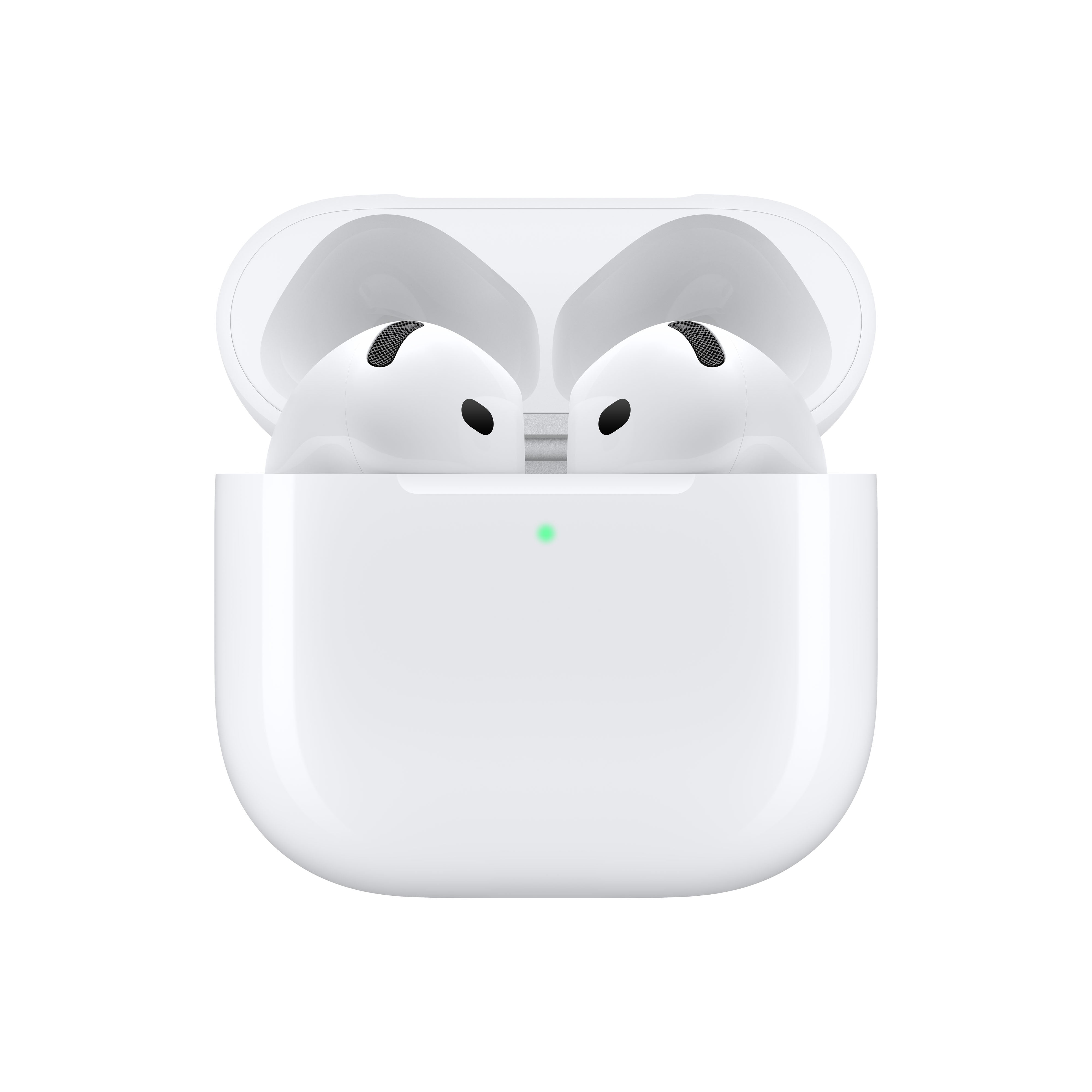
Apple AirPods 4 Wireless Earbuds with USB-C Charging Case
Apple
Skip — Apple rated AirPods 4 for up to 4.5 hours of talk per charge, which cannot cover an eight- to ten-hour call load without interruptions.
These suit lighter, separated calls when Apple integration and pocketability matter. The drawback is the 4.5-hour rated talk ceiling and the need to stop using them while they recharge.Available at Amazon(paid link) — opens Amazon in a new tab. Price and availability shown there.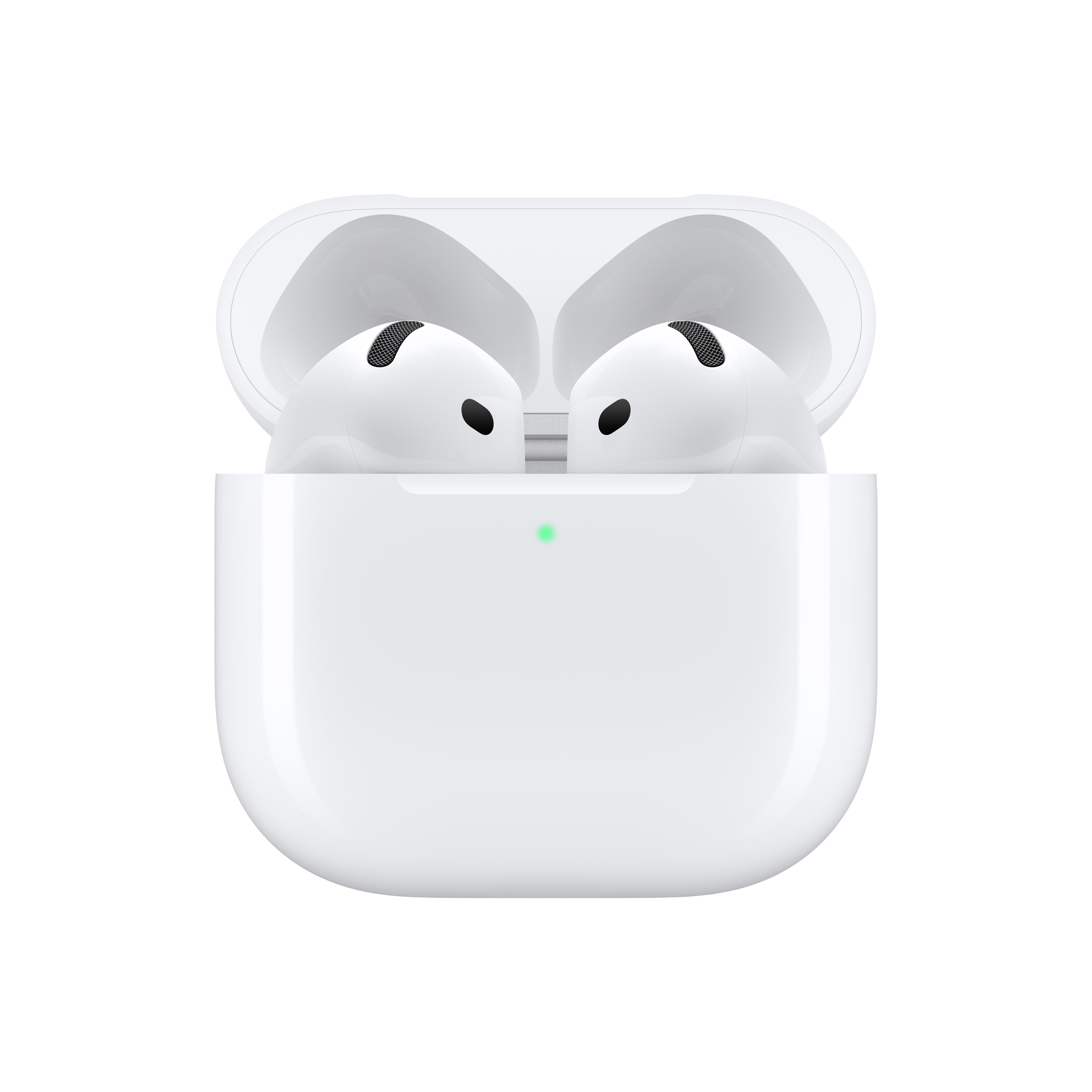
Apple AirPods 4 Wireless Earbuds with Active Noise Cancellation
Apple
Skip — Its rated talk time remains 4.5 hours per charge, and Apple did not publish a longer ANC-on call figure.
The ANC model helps with surrounding noise while preserving the open-ear AirPods shape. It does not extend rated talk time, and Apple established its 4.5-hour call figure with Noise Control switched off.Available at Amazon(paid link) — opens Amazon in a new tab. Price and availability shown there.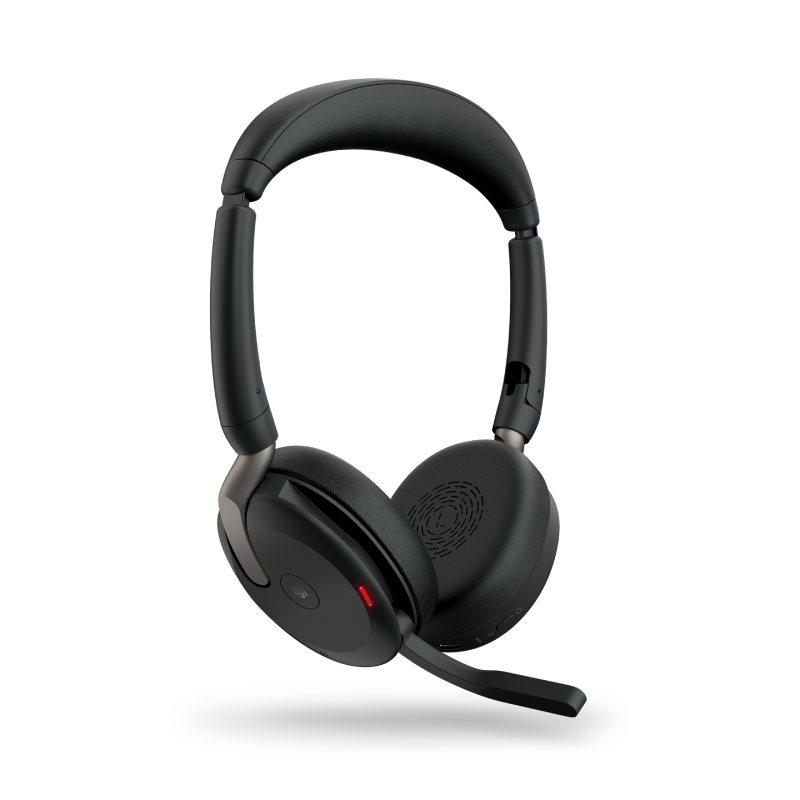
Jabra Evolve2 65 Flex UC Stereo Wireless Headset
Jabra
Buy — CHIP measured 19 hours of calling, while Jabra specifies up to 20 hours with ANC and the busylight disabled.
This is the all-day choice for consecutive computer and phone calls, with a boom mic, ANC, multipoint and a USB adapter. It is substantially heavier and less discreet than earbuds, and strong background noise can make processed speech sound choppy.Available at Amazon(paid link) — opens Amazon in a new tab. Price and availability shown there.
Shokz OpenComm2 UC 2025 Upgrade USB-C Wireless Adapter
Shokz
Consider — Shokz specifies 16 hours of talk time and CHIP measured 16 hours 12 minutes of battery runtime, but the open-ear design provides almost no acoustic isolation.
Choose this when a quiet workplace and uncovered ears matter more than isolation or music quality. Its open-ear bone-conduction design admits surrounding noise and produces weaker bass.Available at Amazon(paid link) — opens Amazon in a new tab. Price and availability shown there.
Sources
Pages consulted while researching this article. None of these are affiliate links.
- AirPods 4 Tech Specs – Apple Support (UK) document copy — device.report
- Apple AirPods 4 Review: Tested and Rated – TechGearLab — techgearlab.com
- Apple AirPods 4 with Active Noise Cancellation Review – SoundGuys — soundguys.com
- Change Settings for AirPods or AirPods Pro – Apple Support — support.apple.com
- Jabra Evolve2 65 Flex Overview and Technical Specifications — jabra.com
- Jabra Evolve2 65 Flex Laboratory Test – CHIP — chip.de
- Shokz OpenComm2 UC 2025 Upgrade Specifications — shokz.com
- Shokz OpenComm2 UC Laboratory Test – CHIP — chip.de