29er 140mm Fork on a 27.5 Bike: What Actually Fits
The questionWhere do these come from?
29 fork on 27.5
I am wanting to put a rockshox recon silver 140mm 29er fork on a 27.5 120mm bike. I’m hoping to adjust the recon with either spacers or air shaft to the same travel as the og fork.
A 29-inch 140mm fork won't drop onto a 27.5 hardtail as a neutral swap — its axle-to-crown length and lower-leg clearance are sized for the bigger wheel.
A 29-inch, 140mm-travel fork will not simply bolt onto a 27.5 hardtail and ride the way the bike was designed to. The steerer taper, axle spacing, and brake mount usually match between the two versions, but the fork’s axle-to-crown length and lower-leg clearance are built around the bigger wheel. Fitting one raises the front end and slackens the head angle, and it only makes full sense if a 29-inch front wheel goes in along with it — not just the fork on its own.
Why the axle-to-crown length is the real blocker
RockShox’s own 2022 front suspension specifications list two different Recon Silver RL forks at 140mm travel, and they are not the same length. The 27.5-inch Boost version has an axle-to-crown measurement of 534mm (540mm on the fender-compatible build). The 29-inch Boost version, at the identical 140mm travel, measures 553mm (559mm fender-compatible) — 19mm taller at the axle for the same amount of travel. That 19mm shows up entirely as extra height under the head tube, whether or not you wanted it there.
Offset changes too. The 27.5-inch Recon Silver RL at 140mm ships with 37mm or 46mm offset; the 29-inch version uses 42mm or 51mm. A longer offset shortens trail and quickens the steering slightly, which is RockShox’s way of partly compensating for the taller front end — it doesn’t cancel out the extra axle-to-crown height, it just softens how the handling change feels.
The 27.5 fork’s lowers were never rated for a 29-inch wheel
Wheel compatibility isn’t only about internals and travel. RockShox publishes a maximum tire diameter for each version: 732mm for the 27.5-inch Boost lowers (728mm with a fender fitted), and 770mm for the 29-inch Boost lowers (766mm fender-rated). A 29-inch wheel and tire is built to a diameter the 27.5 fork’s crown and arch were never designed to clear.
Enduro Mountainbike Magazine tested exactly this shortcut — squeezing a 29-inch wheel into a 27.5-inch fork — and reported that “clearances are extremely tight” and it “limits tire choice,” calling it a swap they wouldn’t recommend even in the cases where it technically fits. If the goal is a 29-inch front wheel, it needs the 29-inch-specific fork, not a 140mm fork borrowed from a 29er catalog page and squeezed onto the wrong wheel.
Just want the recommendation?
Skip to the picksWhat changes in how the bike rides
Independent testing of mixed-wheel conversions gives a consistent picture of what a taller front end does to a bike. Enduro Mountainbike Magazine measured roughly 20mm of front-axle rise from fitting a 29-inch wheel and fork in place of a 27.5-inch pairing, which worked out to about 7mm more bottom bracket height and a head angle that slackened by close to a degree on their test bike. Singletracks reports the same direction of change across its own mullet conversions, with head tube angle “generally” slackening by about a degree and bottom bracket height shifting depending on which end gets the bigger wheel.
None of that is dangerous by itself, but it’s not the geometry the frame was designed around either. A slacker head angle and taller front end make low-speed steering feel heavier and shift weight rearward on climbs — noticeable on a hardtail built around a 120-140mm 27.5 fork with a specific reach and stack figure in mind.
RockShox Recon Silver RL, 27.5 vs 29, at matched 140mm travel
| Fork | Axle-to-crown | Offset | Max tire diameter | Verdict |
|---|---|---|---|---|
| Recon Silver RL 27.5" Boost, 140mm | 534mm (540mm fender-rated) | 37mm or 46mm | 732mm (728mm fender-rated) | Buy — matches stock 27.5 geometry |
| Recon Silver RL 29" Boost, 140mm | 553mm (559mm fender-rated) | 42mm or 51mm | 770mm (766mm fender-rated) | Consider — only for a deliberate 29-front build |
Both versions share the same 1.5-inch tapered-aluminum steerer, the same Boost 110mm axle spacing, and the same 160-220mm rotor range, so the frame-side interface — headset, axle, brake mount — isn’t what stops a straight swap. The wheel-size mismatch is.
Where a 29-inch front actually makes sense
A handful of 27.5+ hardtails are built with enough head tube and fork-crown clearance to run either wheel size deliberately. Vital MTB’s spec database lists the Trek Roscoe 6, for example, as a 27.5+ platform that’s also listed as compatible with 29-inch wheels — Trek engineered the frame for both from the start. On a bike like that, running a 29-inch-specific 140mm fork with a narrower, non-plus 29-inch front tire is a real, supported mullet conversion rather than a workaround. The catch is that it only works because the frame was designed with that clearance in the first place. Not every 27.5 hardtail has it, and the only reliable way to know is to check the frame’s own geometry chart or ask the manufacturer, since guessing from a photo of the fork crown isn’t accurate enough to bet a build on.
If the plan is a full switch to a 29-inch front wheel and a 140mm 29-inch fork, it’s also worth reconsidering rear tire casing at the same time — a taller, slacker front end usually invites riding the bike harder, and a rear tire chosen for a shorter-travel 27.5 setup may not hold up to that.
What to check before ordering the fork
- Confirm the fork’s wheel size matches the wheel actually going into it. A 29-inch fork paired with a 27.5 wheel just adds unnecessary axle-to-crown height with no benefit.
- Check the frame’s own spec sheet for 29-inch front-wheel compatibility instead of assuming it. Not every 27.5 hardtail has the crown and down-tube clearance for a bigger wheel.
- Confirm steerer length before buying. A taller fork sits the crown race higher, and a steerer already cut to length for the shorter 27.5 fork can come up short on a 29-inch fork.
- Match the axle standard — Boost 110mm versus an older 100mm quick release — and rotor size to what the frame and brake caliper already use.
If any of that doesn’t line up — the frame isn’t rated for a 29-inch front wheel, or the steerer is already cut for the shorter fork — the straightforward answer is the 27.5-inch, 140mm Recon Silver RL. It adds the same amount of travel without changing the axle-to-crown length, offset, or tire clearance the frame was built around.
The bottom line
Two options, and the revision you own picks one:
Top pick
Buy this
RockShox Recon Silver RL 27.5-inch 140mm Boost Suspension Fork
RockShox Recon
Its 534mm axle-to-crown and 37/46mm offset keep the head angle and front-end height close to what the 27.5 frame was designed around.
This is the size- and geometry-matched fork for a 27.5 hardtail wanting more travel: same axle-to-crown family as the bike’s stock setup, just more travel. The tradeoff is that it caps you at 27.5-inch wheels — it won’t accept a 29-inch wheel at all.Available at Amazon(paid link) — opens Amazon in a new tab. Price and availability shown there.The alternative
It depends
RockShox Recon Silver RL 29-inch 140mm Boost Suspension Fork
RockShox Recon
At 553mm axle-to-crown it's 19mm taller than the 27.5 version at the same travel, which slackens the head angle and raises the front end if bolted onto a 27.5 wheel instead.
This is the fork the question is actually asking about — the 29er 140mm option. It’s the right complement to a 27.5 frame only when you’re also fitting a 29-inch front wheel as a deliberate mullet build, on a frame with the clearance for it.Available at Amazon(paid link) — opens Amazon in a new tab. Price and availability shown there.
Recommended products
Ordered by how well each one fits the situations above. Each link below is a paid link.

RockShox Recon Silver RL 27.5-inch 140mm Boost Suspension Fork
RockShox Recon
Buy — Its 534mm axle-to-crown and 37/46mm offset keep the head angle and front-end height close to what the 27.5 frame was designed around.
This is the size- and geometry-matched fork for a 27.5 hardtail wanting more travel: same axle-to-crown family as the bike’s stock setup, just more travel. The tradeoff is that it caps you at 27.5-inch wheels — it won’t accept a 29-inch wheel at all.Available at Amazon(paid link) — opens Amazon in a new tab. Price and availability shown there.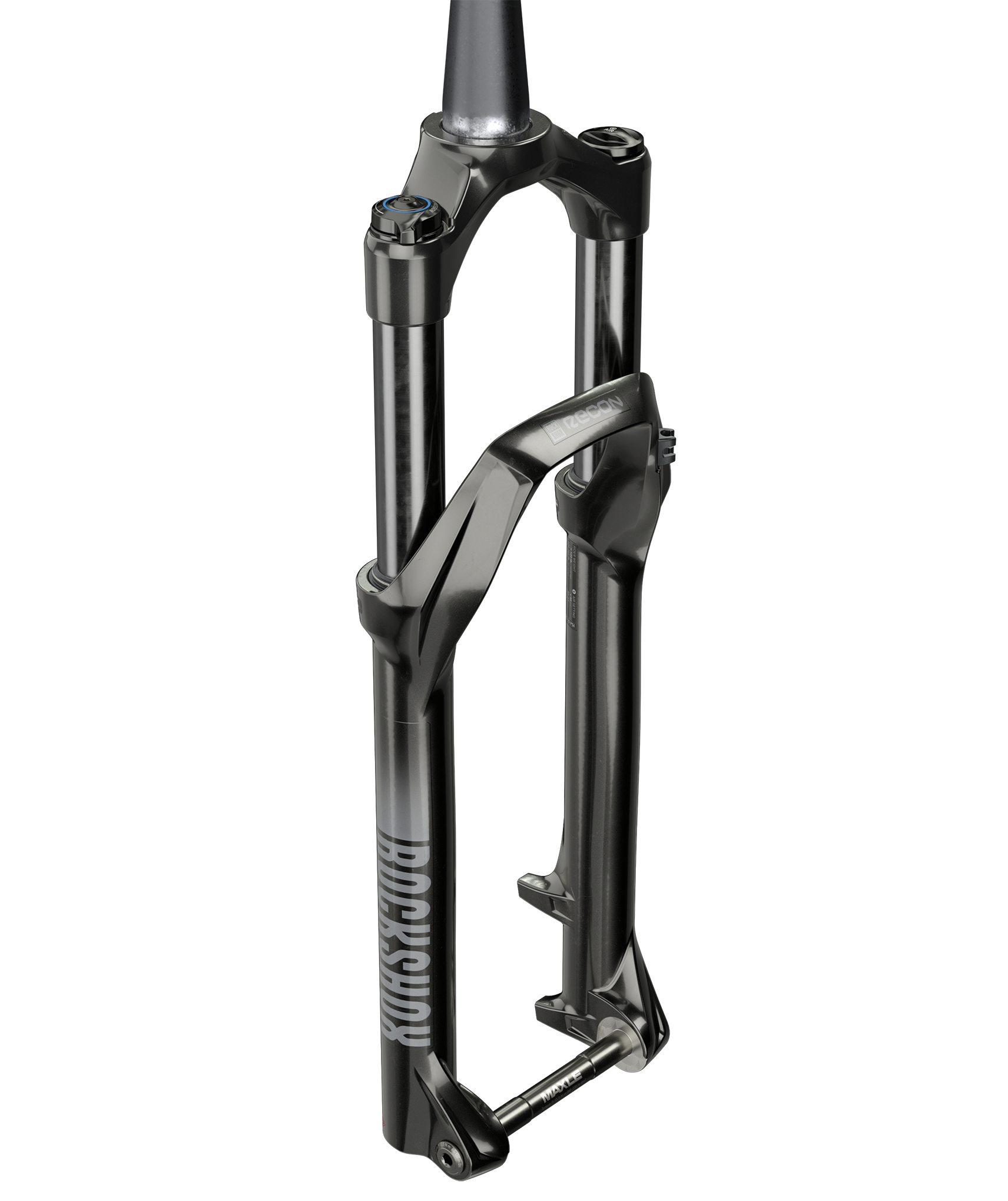
RockShox Recon Silver RL 29-inch 140mm Boost Suspension Fork
RockShox Recon
It depends — At 553mm axle-to-crown it's 19mm taller than the 27.5 version at the same travel, which slackens the head angle and raises the front end if bolted onto a 27.5 wheel instead.
This is the fork the question is actually asking about — the 29er 140mm option. It’s the right complement to a 27.5 frame only when you’re also fitting a 29-inch front wheel as a deliberate mullet build, on a frame with the clearance for it.Available at Amazon(paid link) — opens Amazon in a new tab. Price and availability shown there.
Sources
Pages consulted while researching this article. None of these are affiliate links.
- 2022 Front Suspension Specifications — sram.com
- Recon Silver RL | FS-RCNS-RL-D1 | RockShox — sram.com
- Should I Mullet My Mountain Bike? - Singletracks Mountain Bike News — singletracks.com
- 29/27.5" – Should I mullet my mountain bike? | ENDURO Mountainbike Magazine — enduro-mtb.com
- 2022 Trek Roscoe 6 Bike - Reviews, Comparisons, Specs - Bikes - Vital MTB — vitalmtb.com